Agadir
-

- Agadir
We are beginning our Moroccan experiences in Agadir in southern Morocco. A classmate from high school has lived most of her life in Morocco and we were privileged to visit her. She was an exceptional host and tour leader.
-

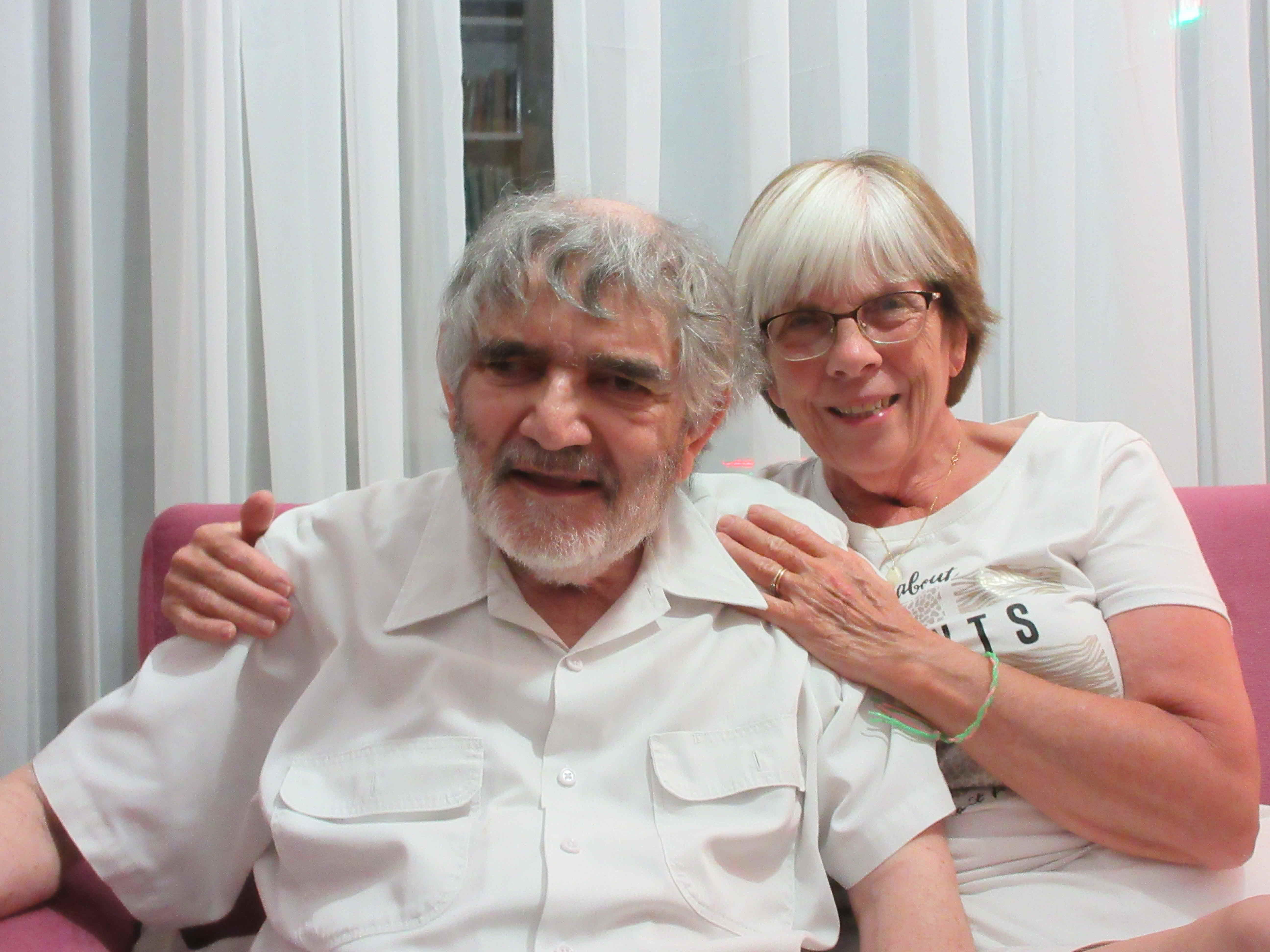
- Susie and Mimmo
-

- Mimmo describing his childhood

-

- Khadija – househelper

-

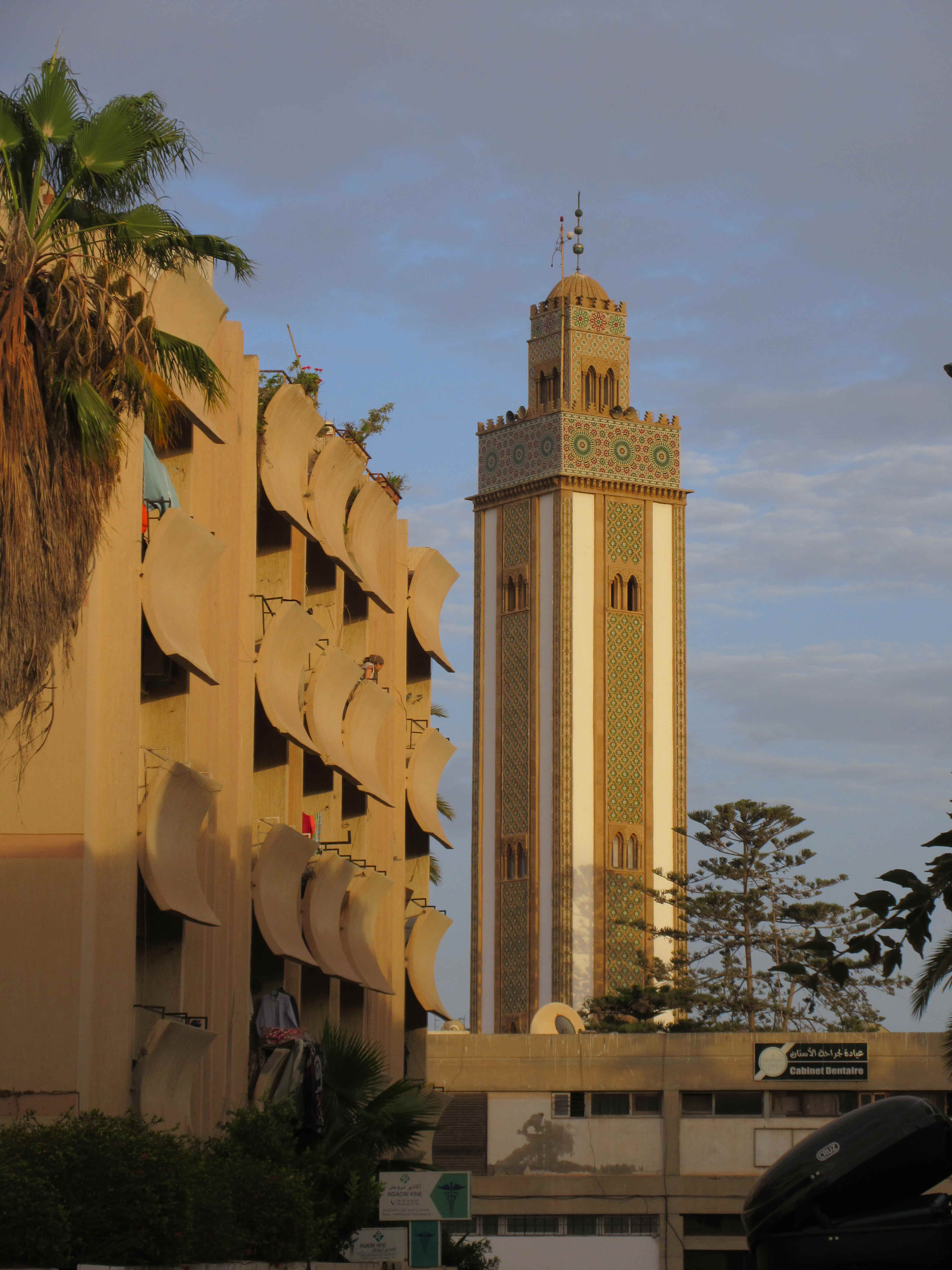
- neighborhood mosque
-

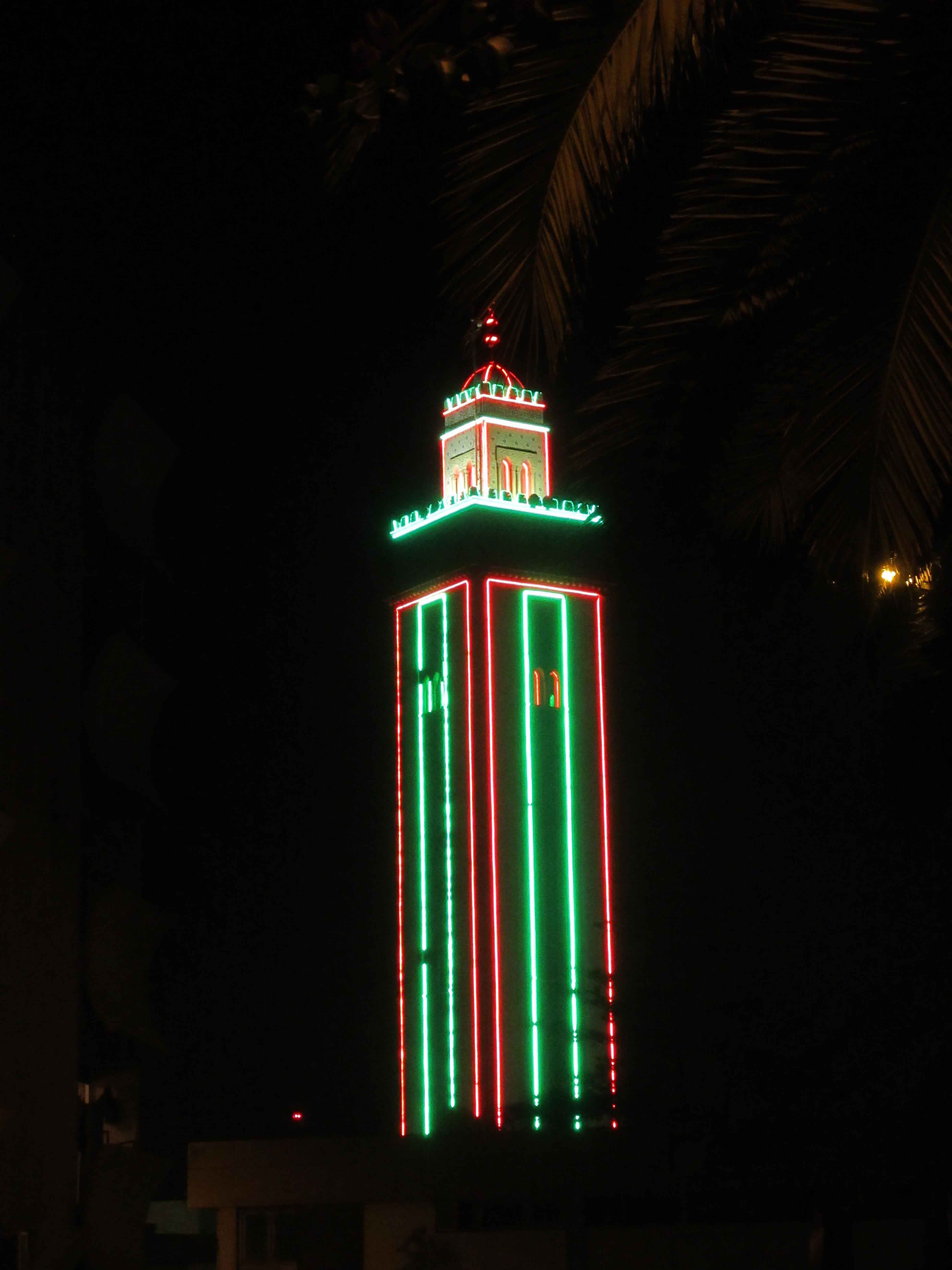
- at night
-

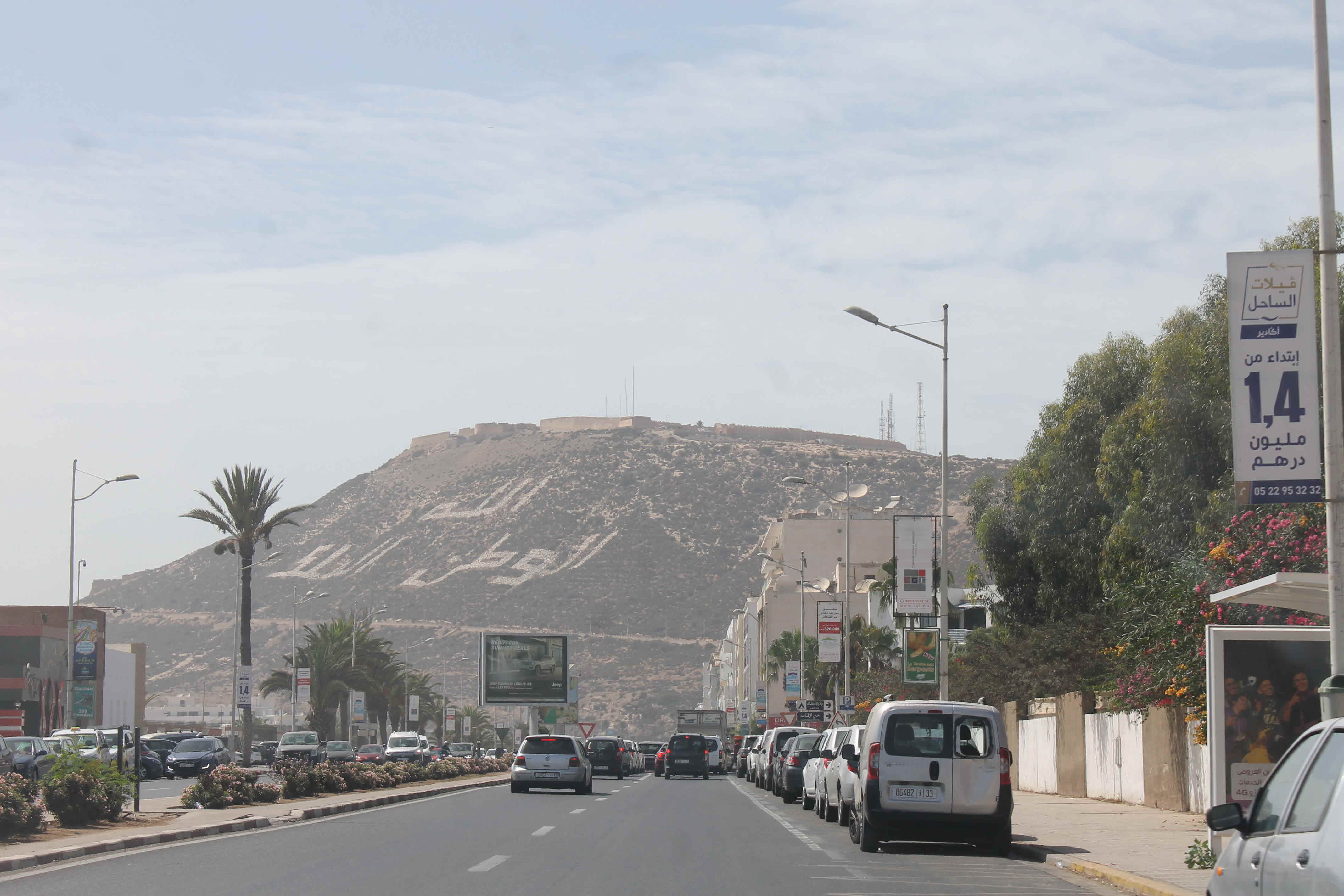
- kesbah overlooking Agadir
-

- at night
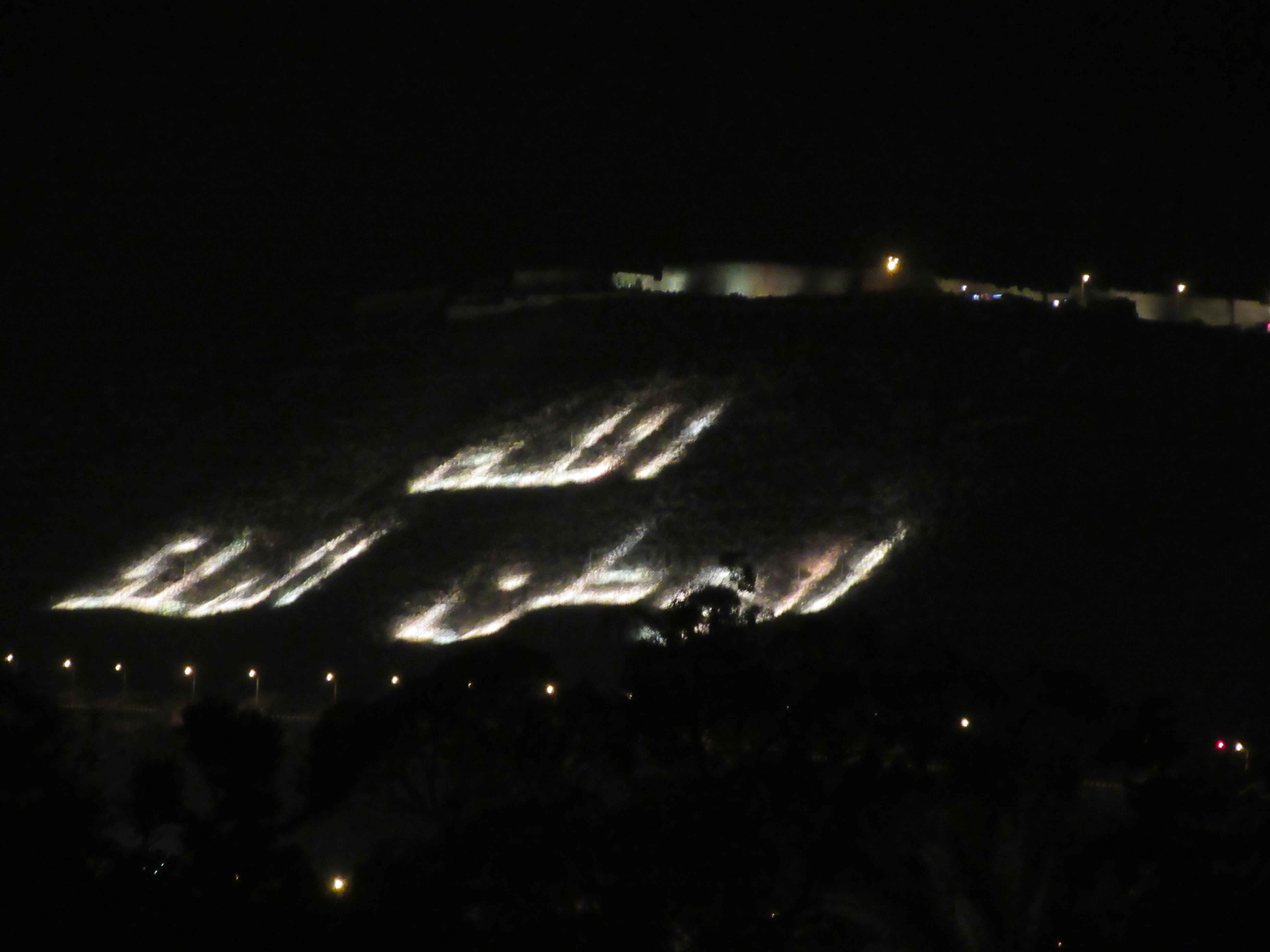
The words on the side of hill are Allah, Al Watan, al Malik (God, Homeland, King).
According to Wikipedia, the oldest mention of Agadir is 1325 after the name of a Berber tribe. The Portuguese, Berbers, Spanish, French all have had interests in Agadir at one time or another. At the beginning of 1900s it was very small. In 1930 a modern city was planned and built. By 1960, Agadir numbered over 40,000 residents when at 15 minutes to midnight on 29 February 1960, it was almost totally destroyed by an earthquake of magnitude 5.7 on the Richter scale that lasted 15 seconds, burying the city and killing more than a third of the population. The death toll was estimated at 15,000. The earthquake destroyed the ancient kesbah (fort/ old city). Today the population is over 400,000.
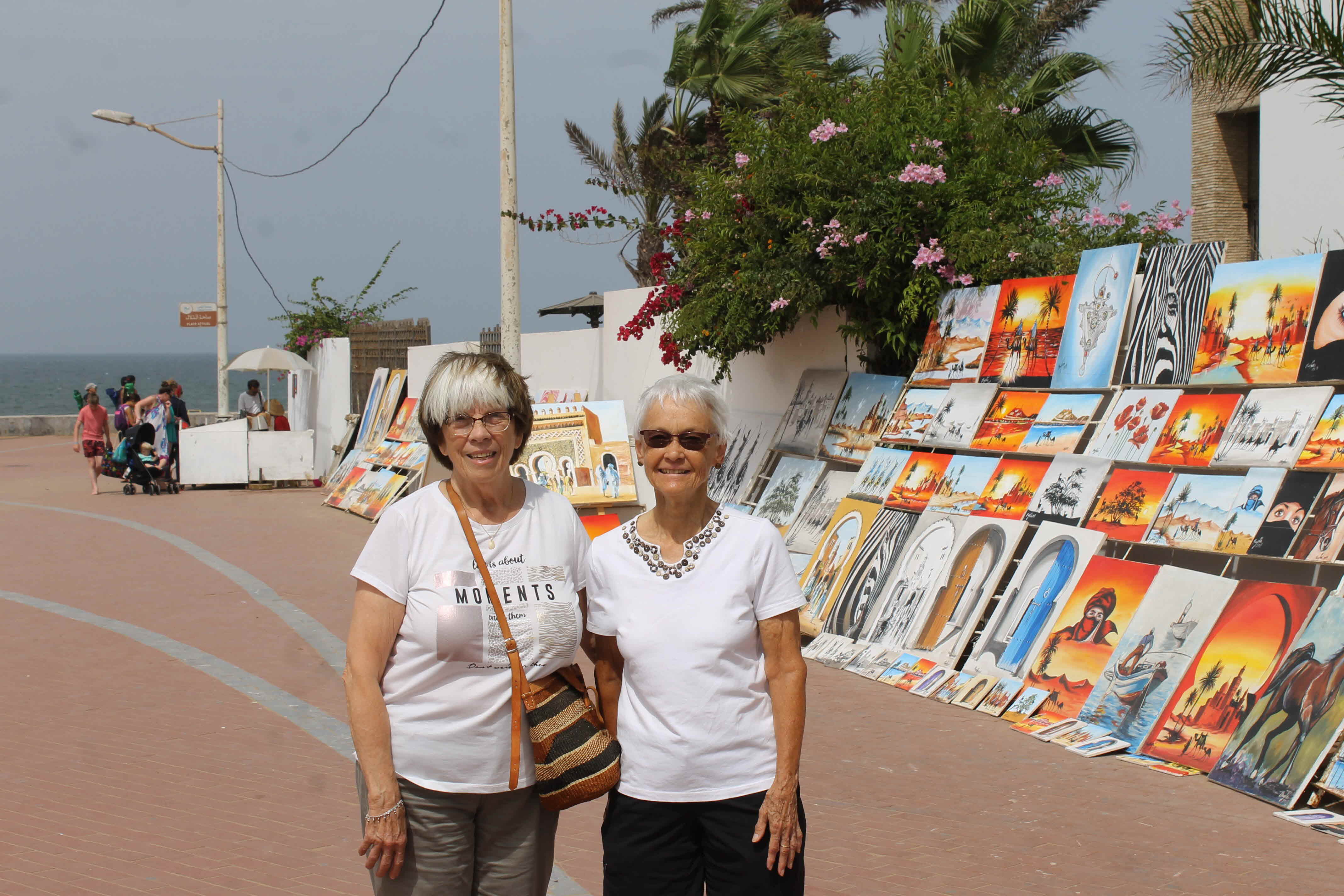
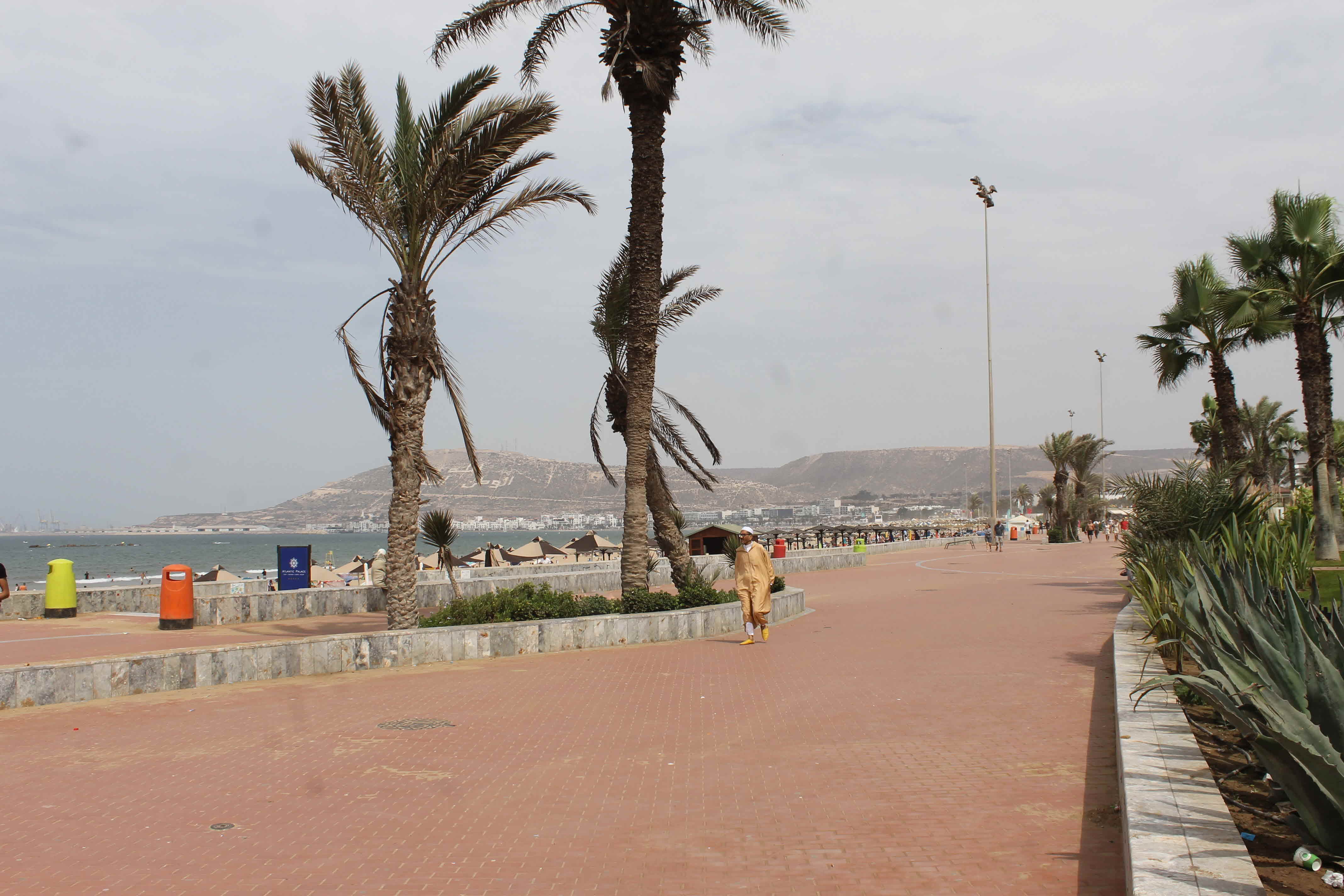
Agadir has beautiful long sandy beaches which have become a tourist destination. We enjoyed a walk along the promenade the first morning.
-

- near beach
-

- promenade
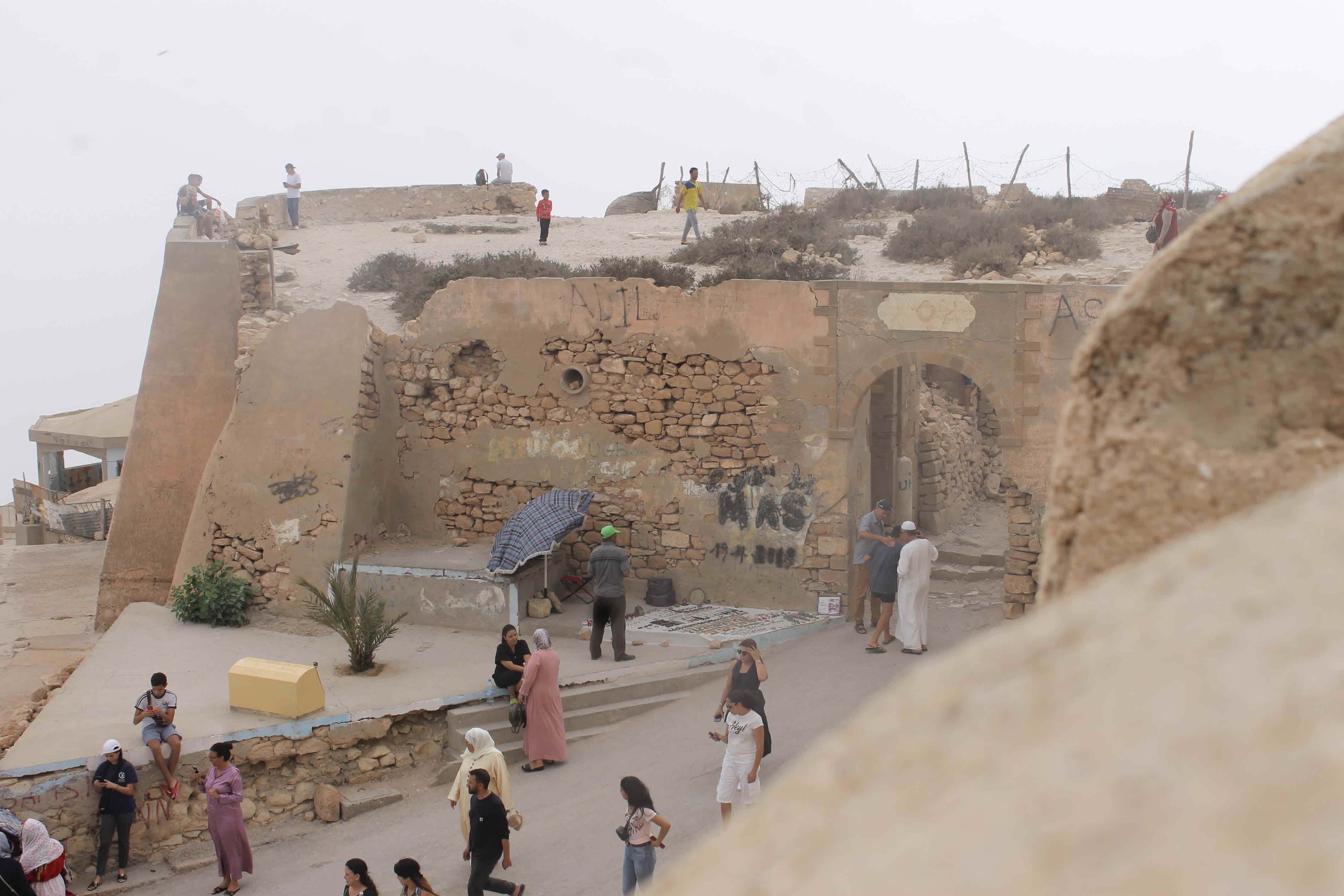
We visited the kesbah on the hill overlooking the present city. It is hard to imagine what that night of the earthquake must have been like when this whole area was destroyed. The entire city within the walls was flattened and remains that way to this day.
-

- leading to entry
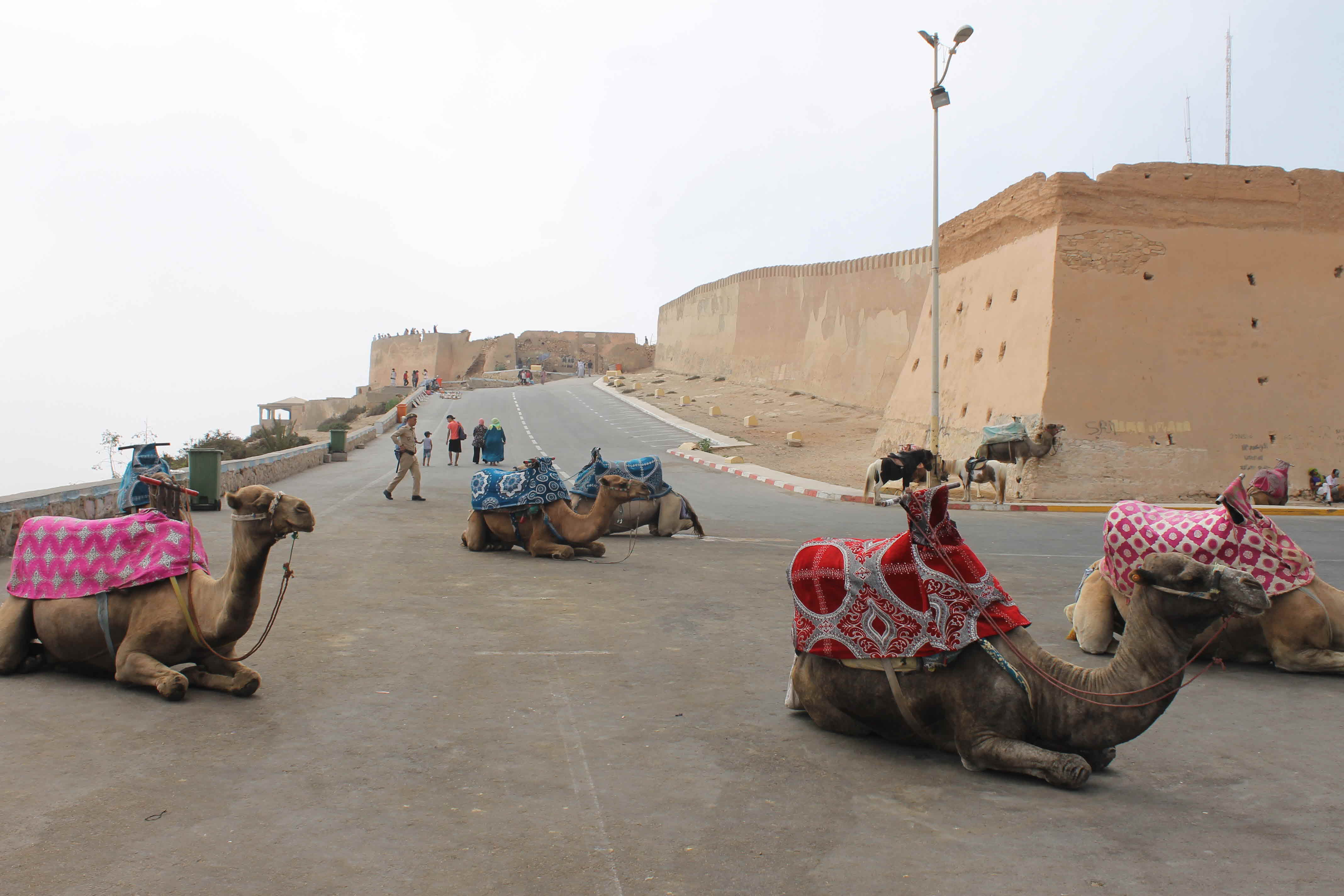
-

- looking down at Agadir
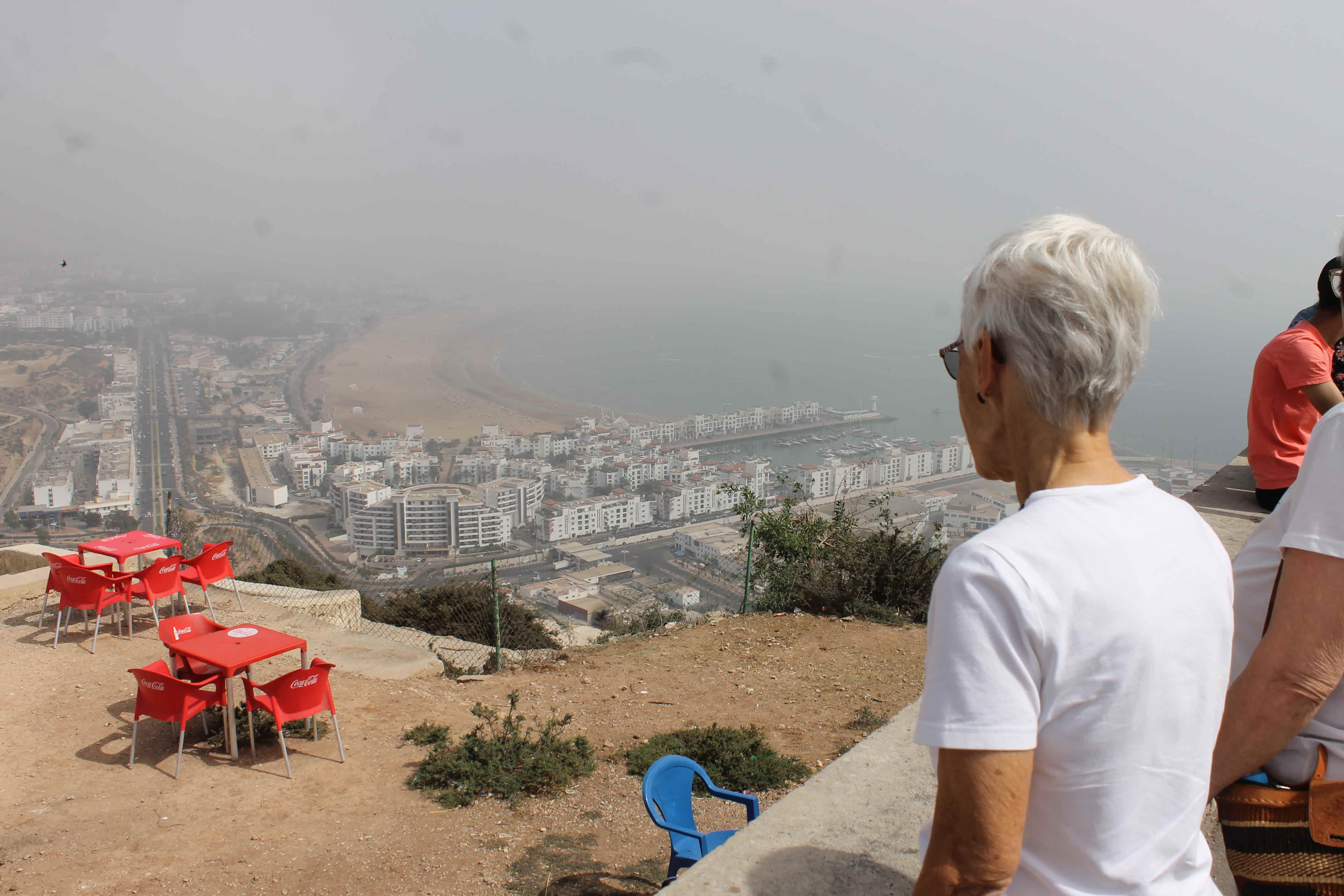
-

- walking around the remaining walls
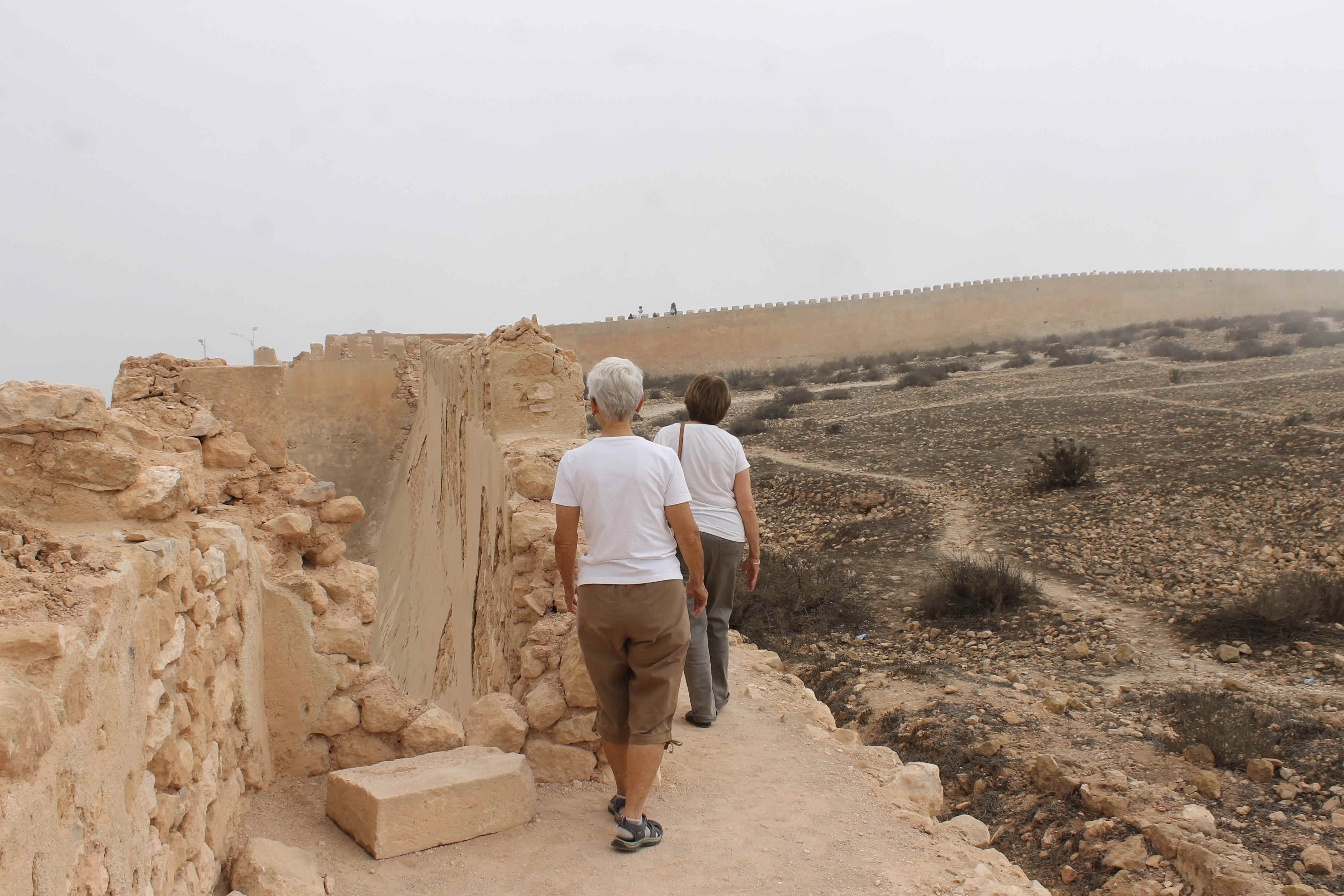
-

- looking down at entrance
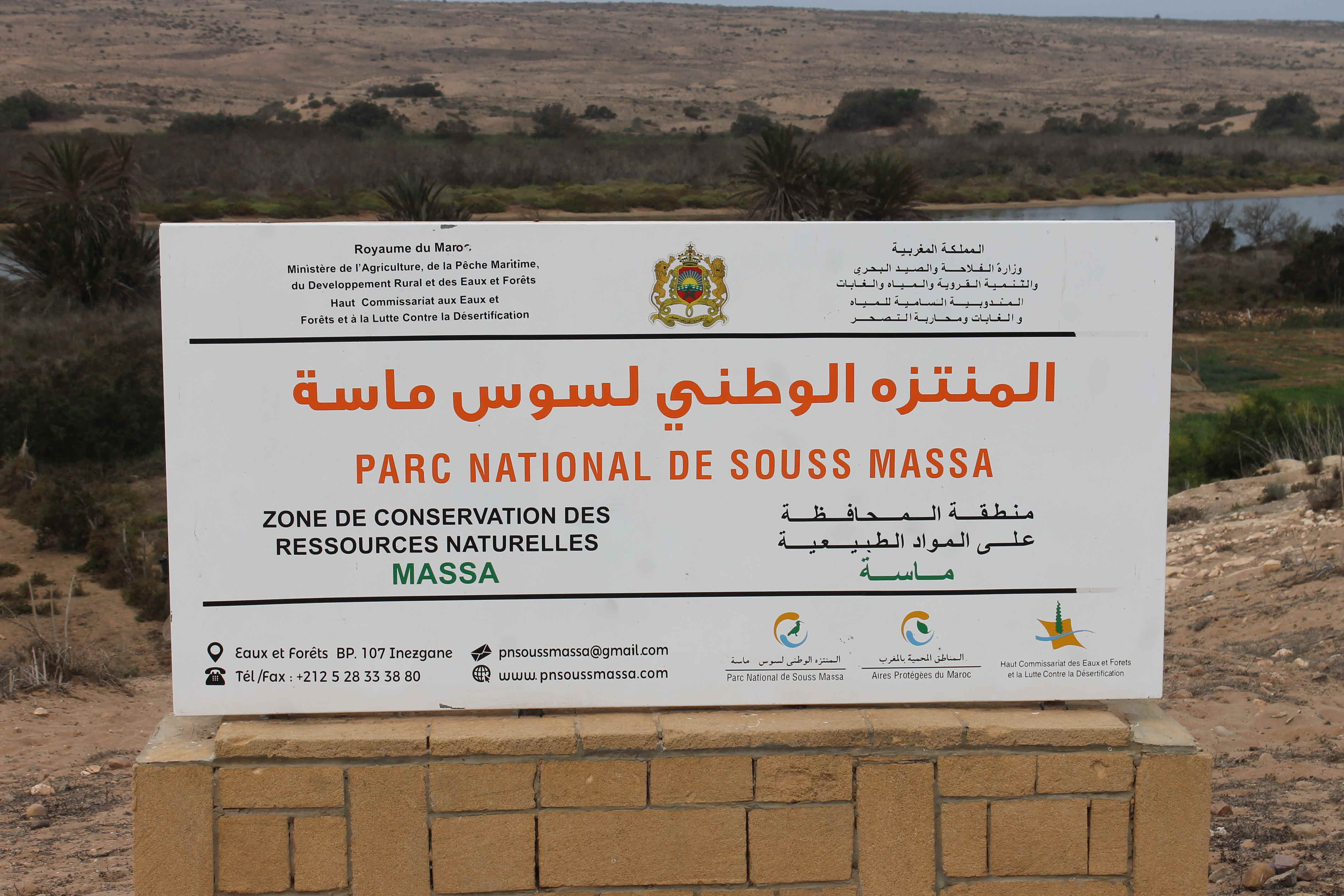
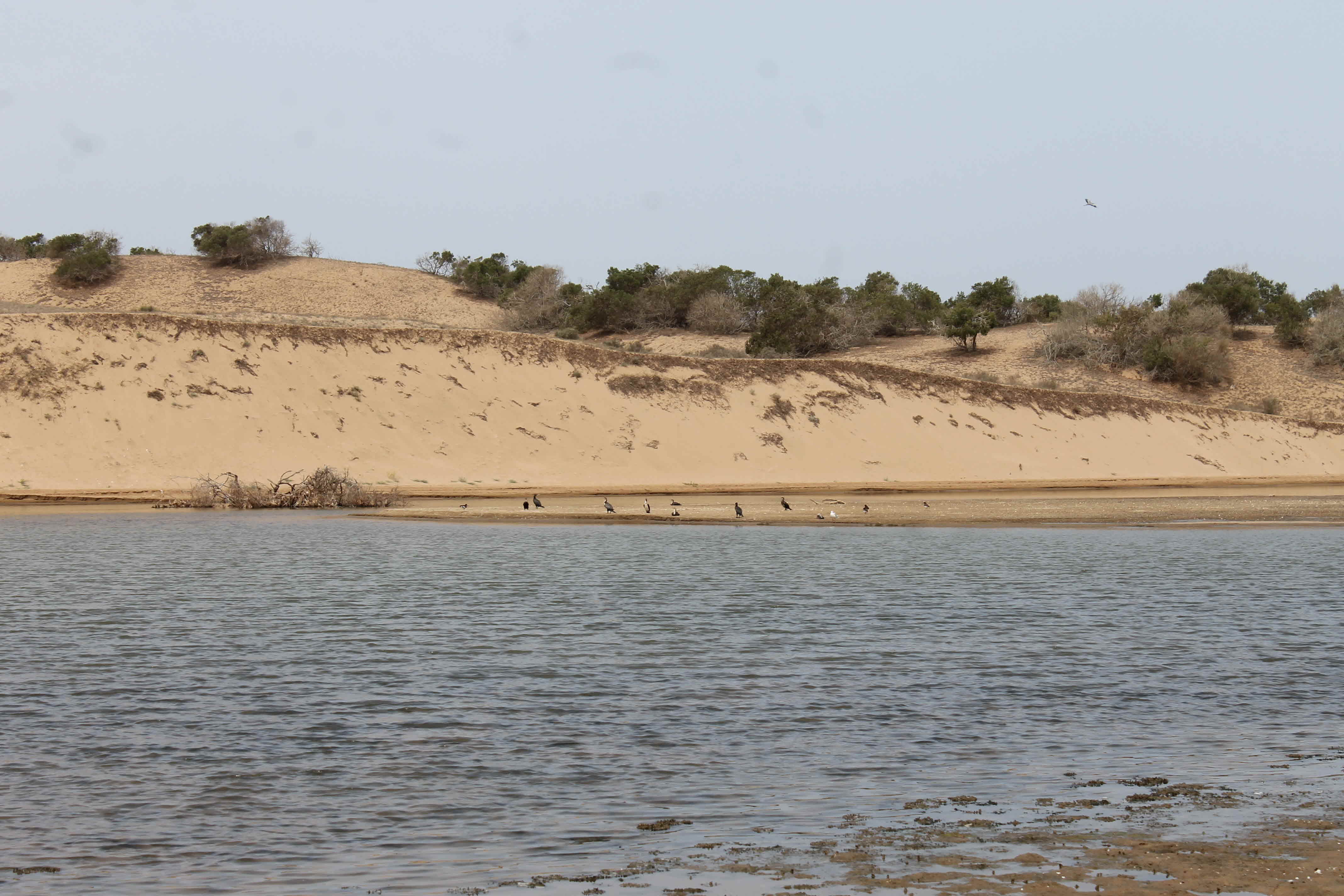
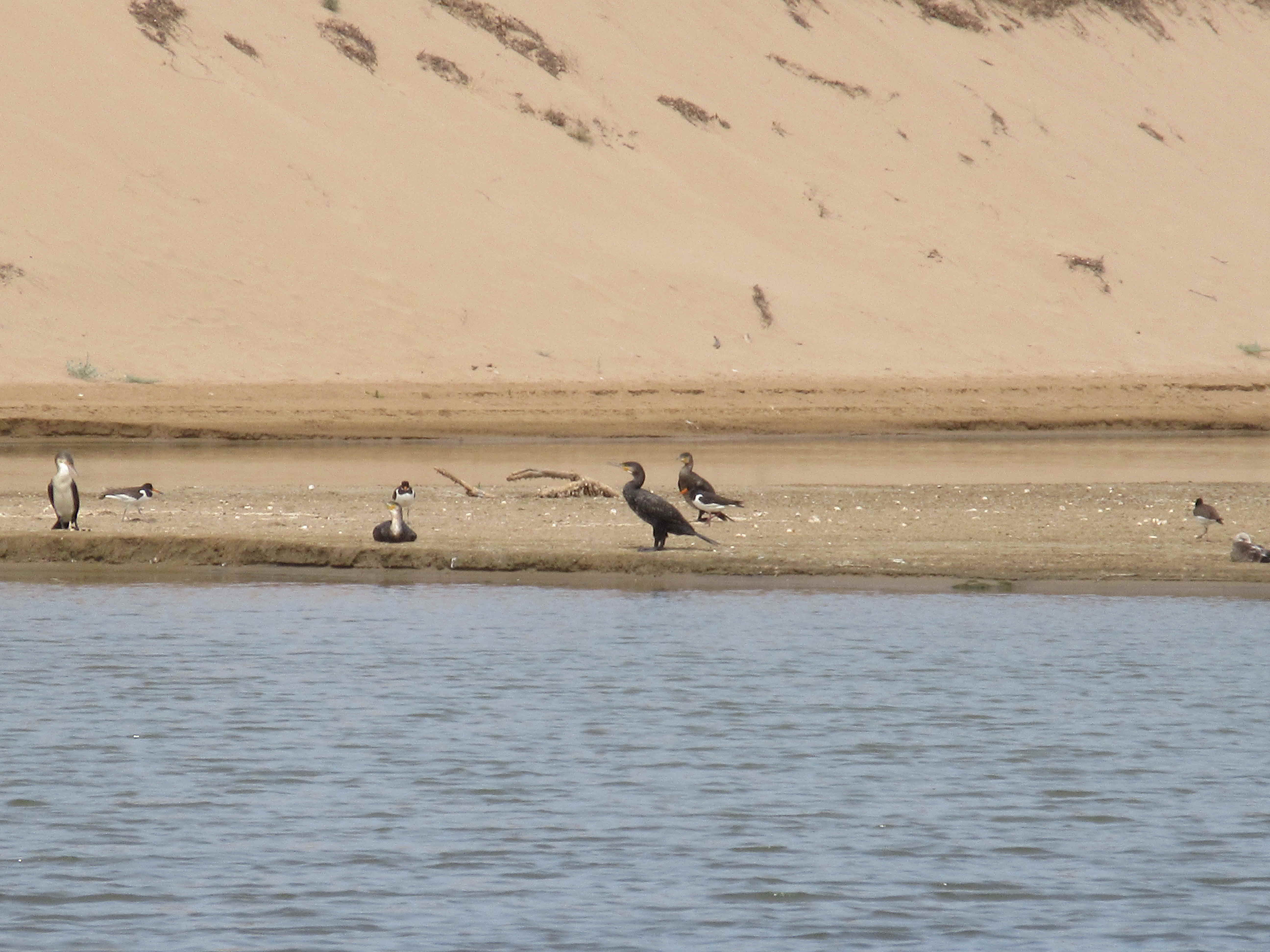
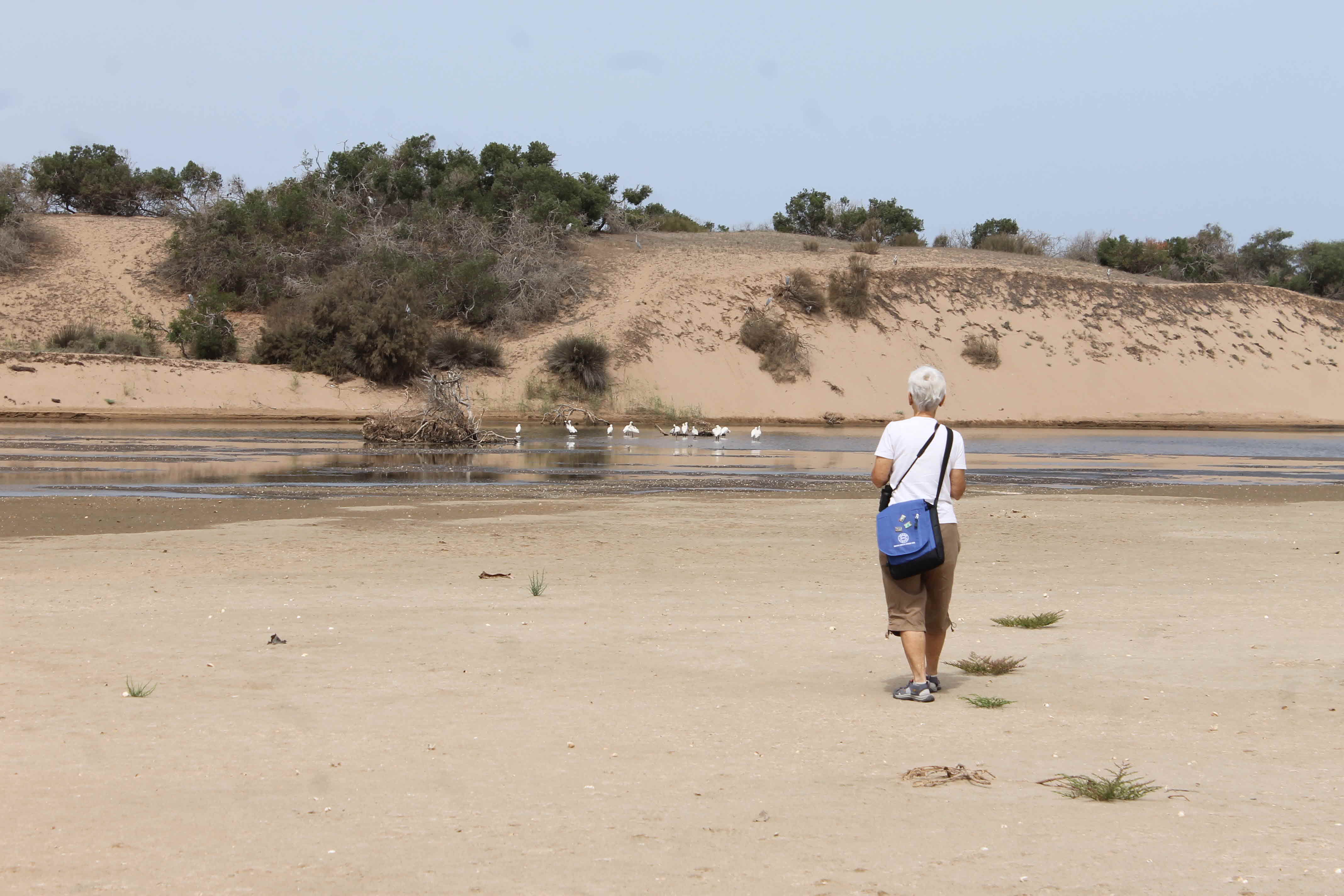
We spent one day visiting Souss-Massa National Park, south of Agadir. It is a large area established in 1991 to preserve the habitat for the bald ibis. Unfortunately, we didn’t see any! As we hiked 4 km along the river and over sand dunes, we did see about 24 species of birds with the help of our guide. We were able to only photo a few of them but we had a good time.
-

- Souss Massa Park
-

- river bank

-

- river
-

- white breasted cormorant
-

- getting closer
-

- spoonbills

-

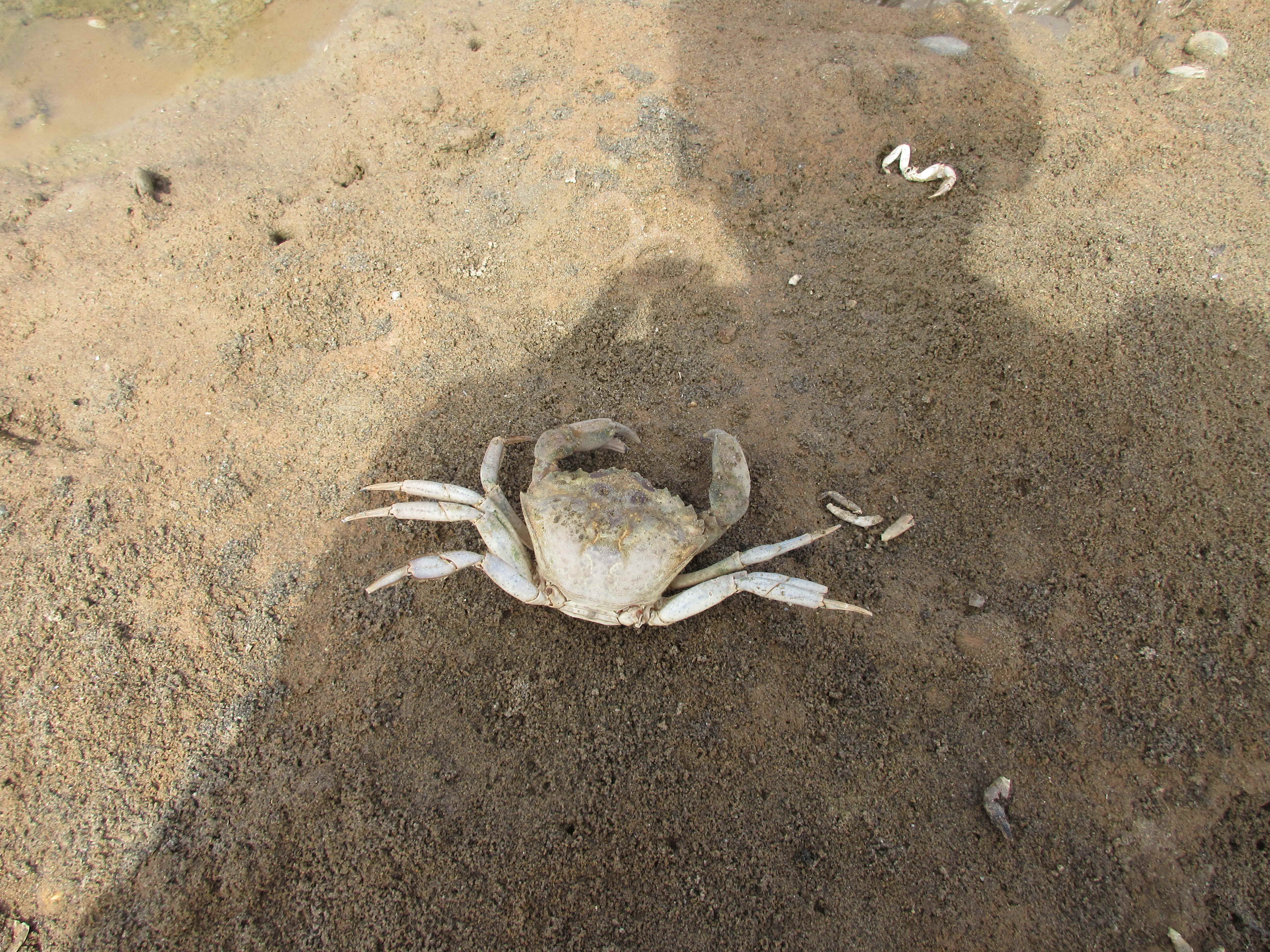
- crab
-

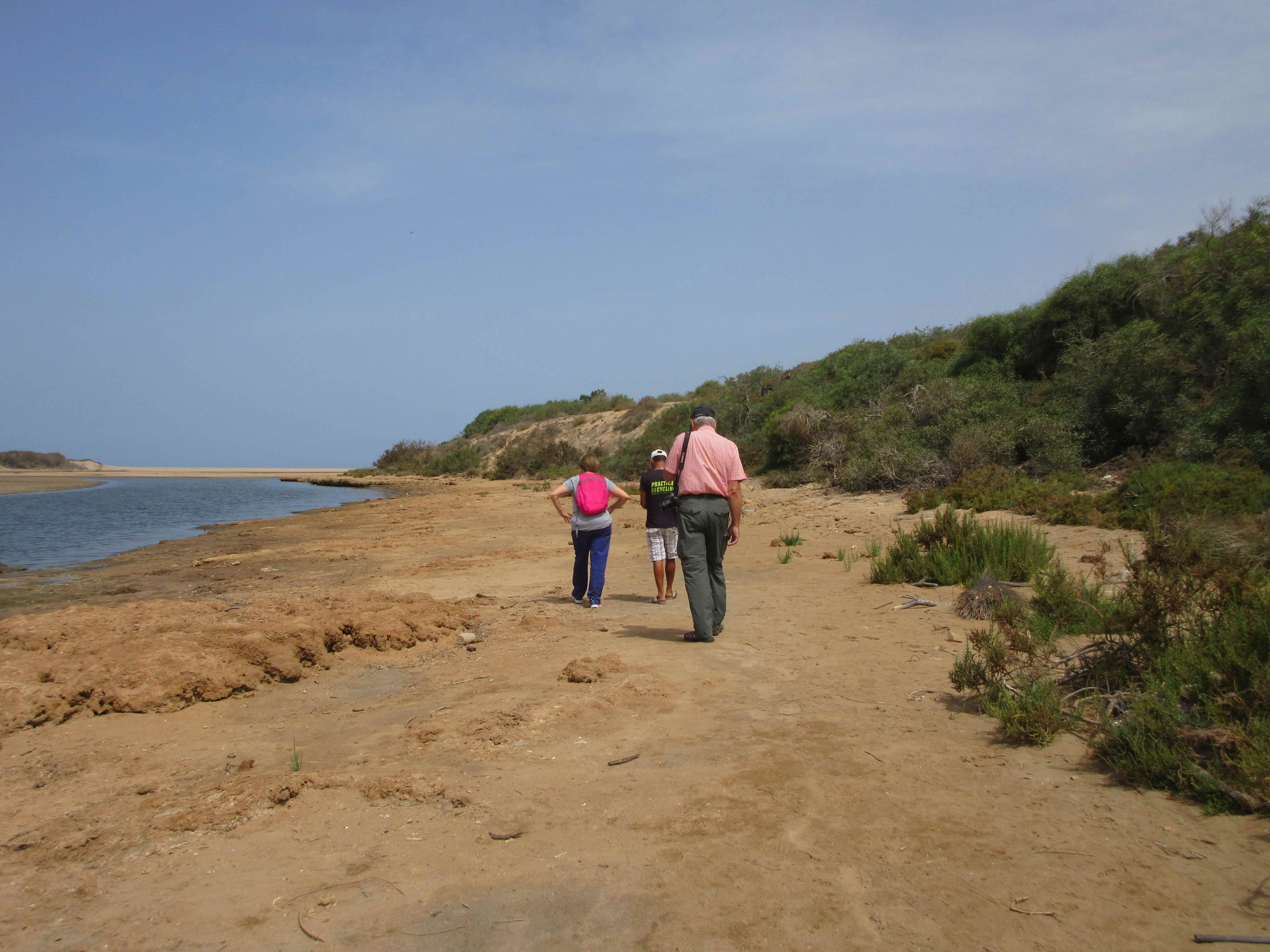
- river bank
-

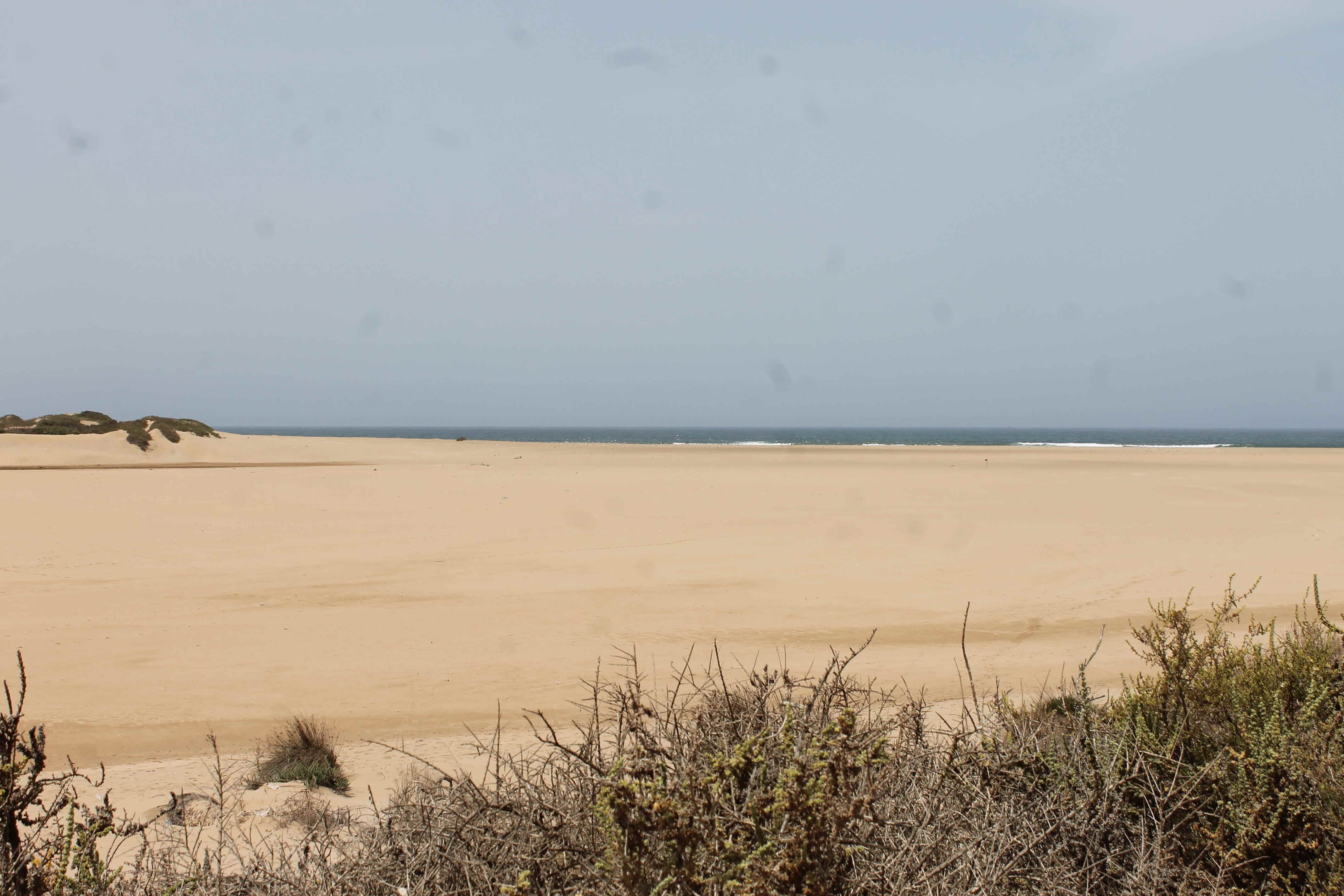
- river mouth
-

- Atlantic Ocean

-

- ocean
-

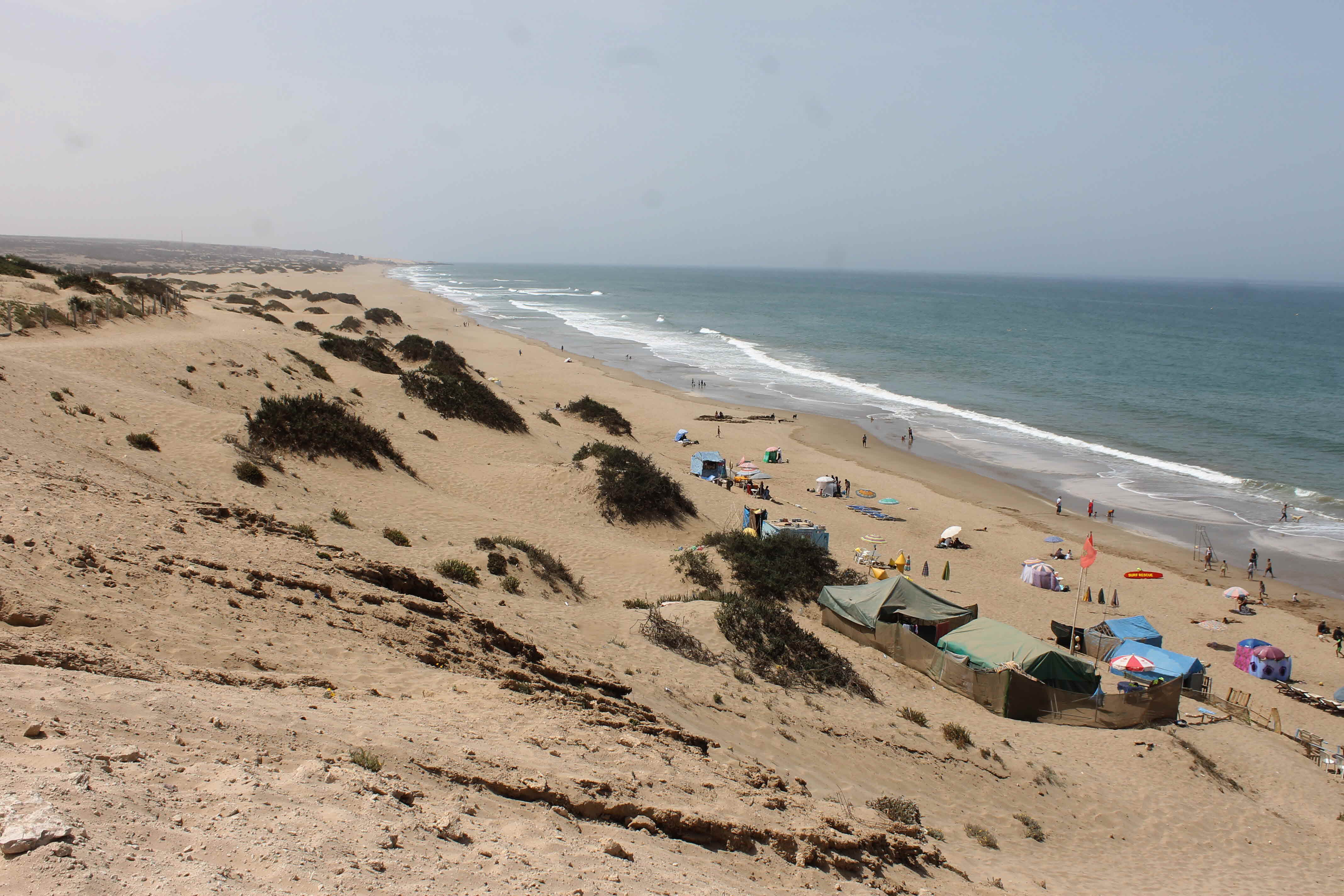
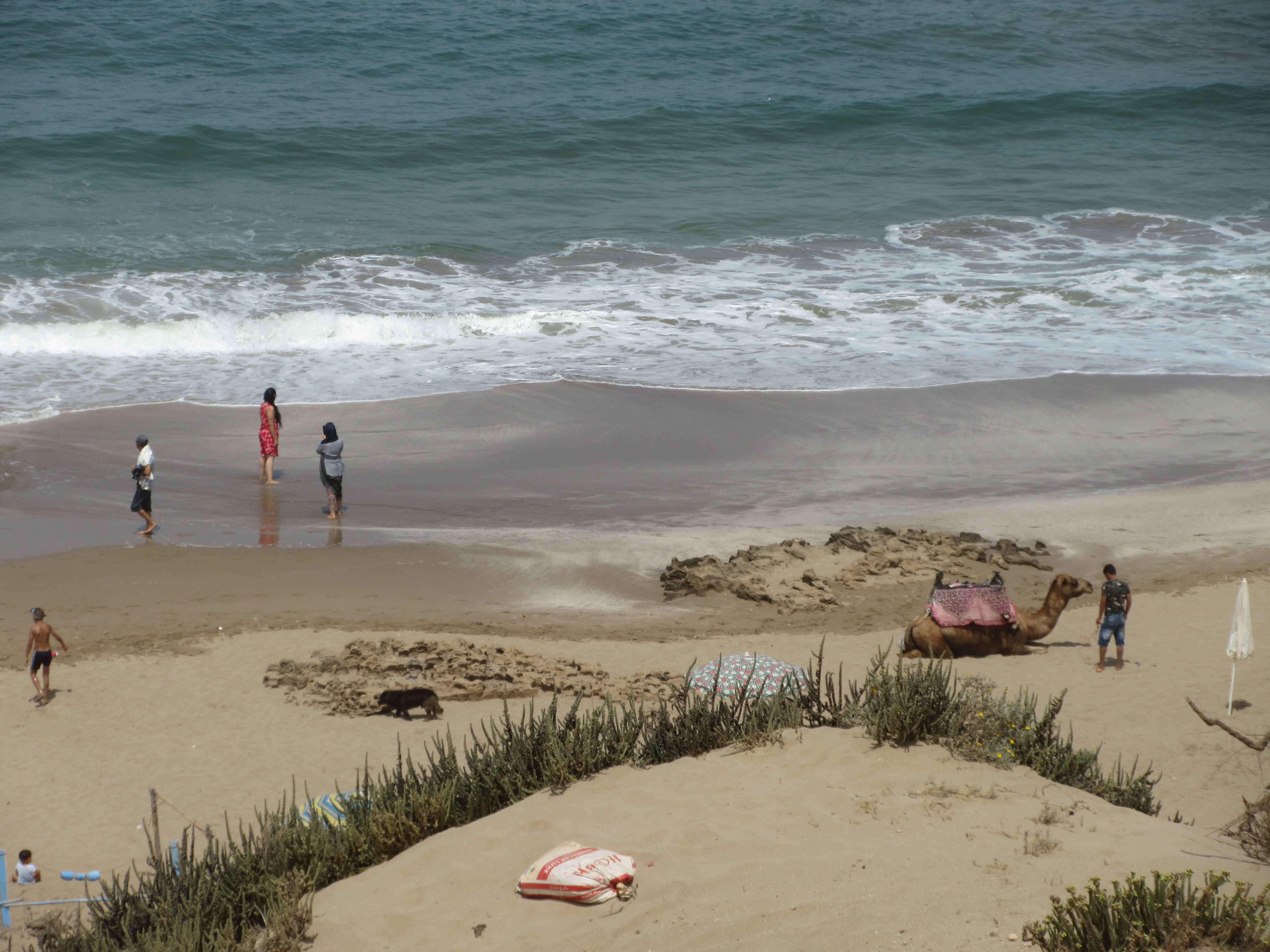
- beach (with camel!)
-

- thorns and flowers

-

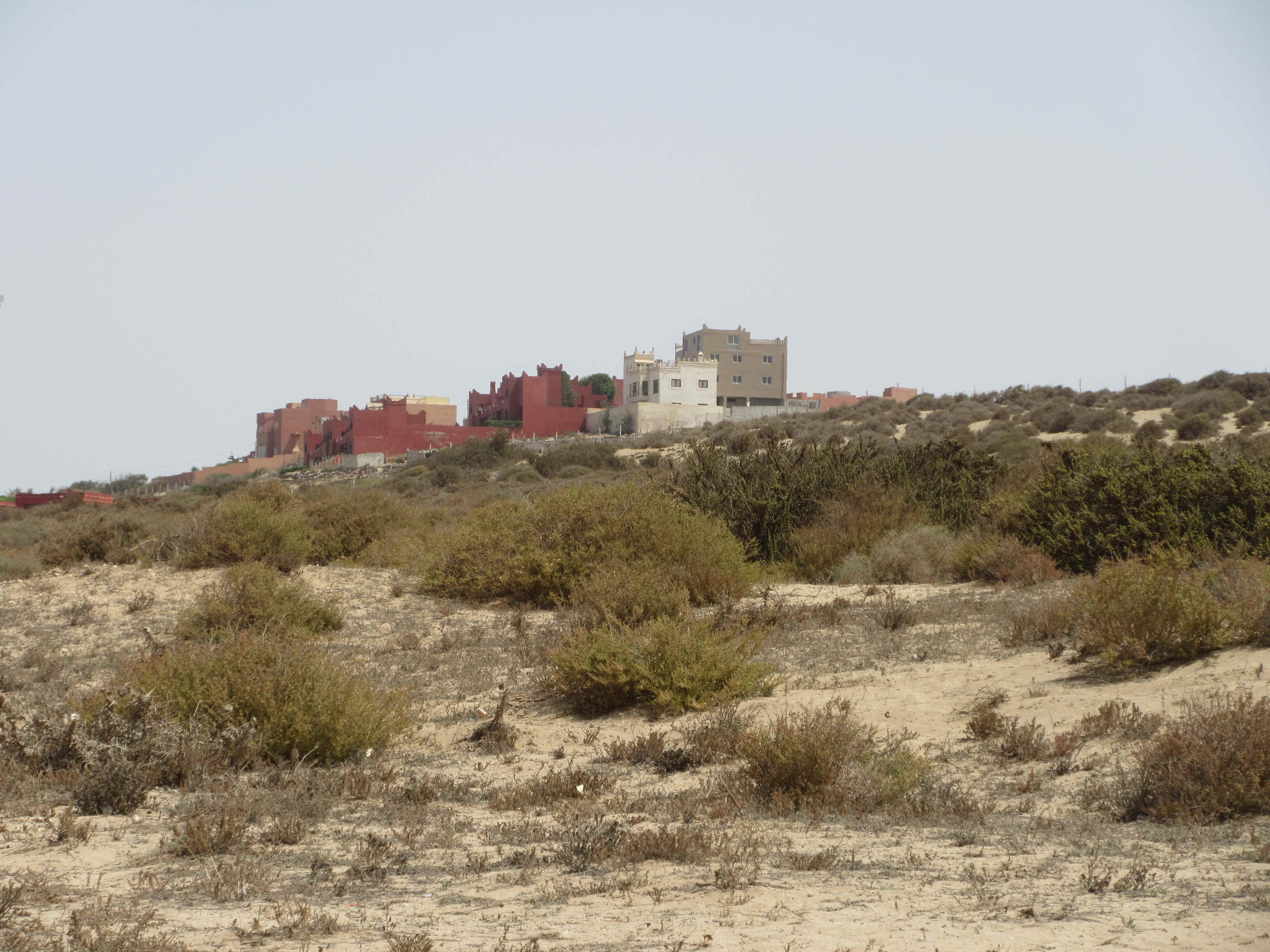
- new hotel on hill
-

- with Mohamed our driver

-

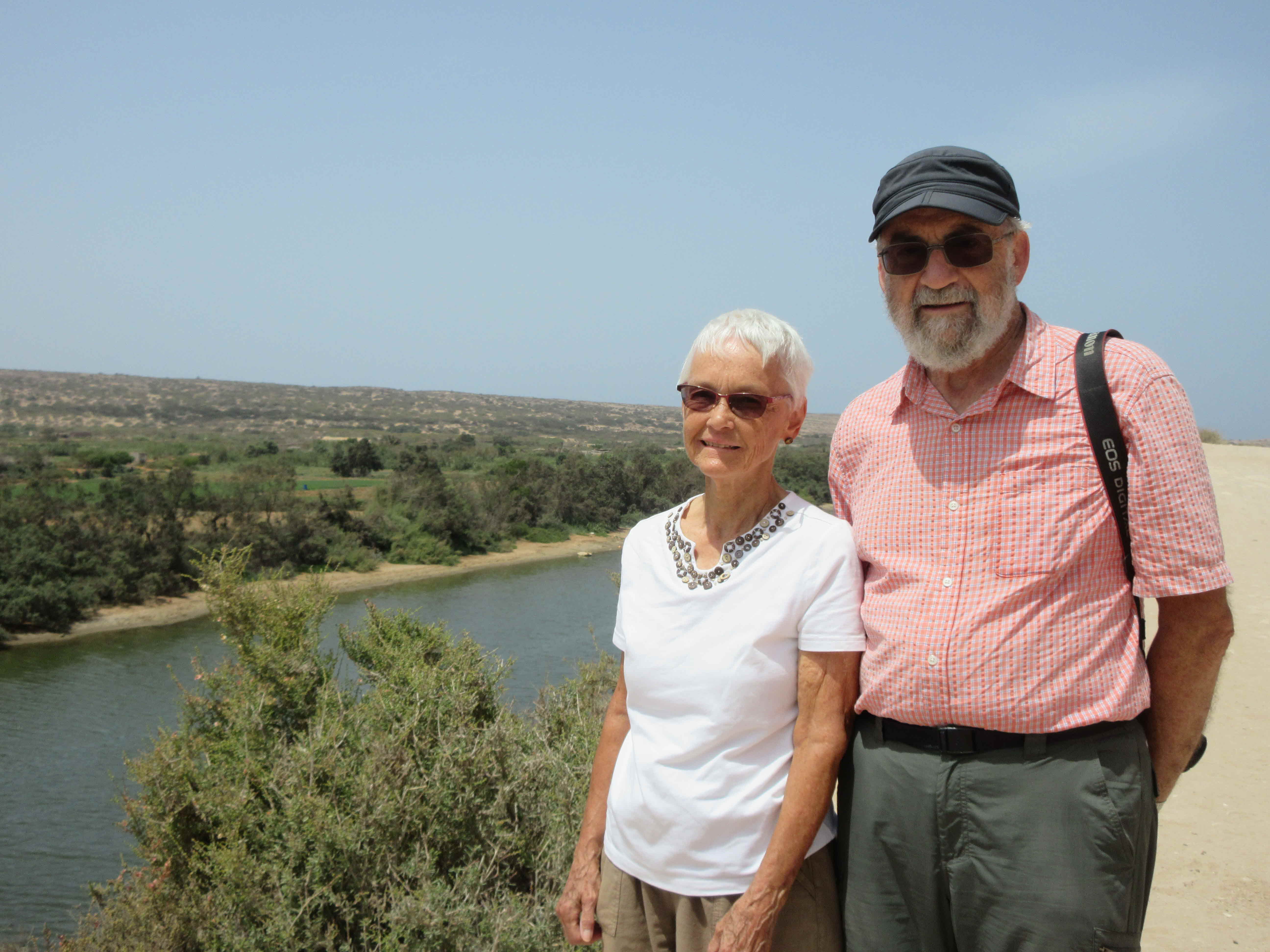
- us!
-

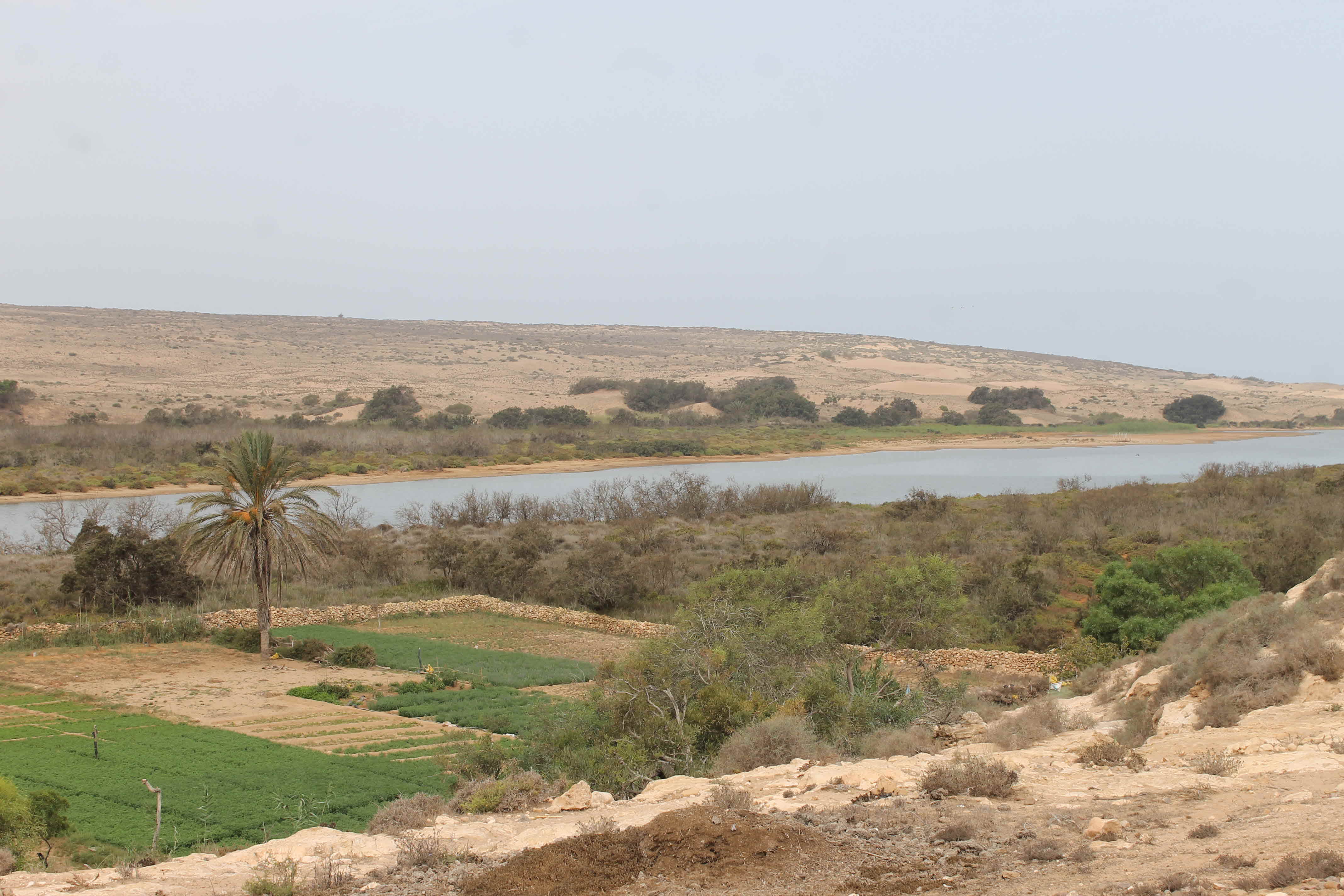
- Oued Massa River
-

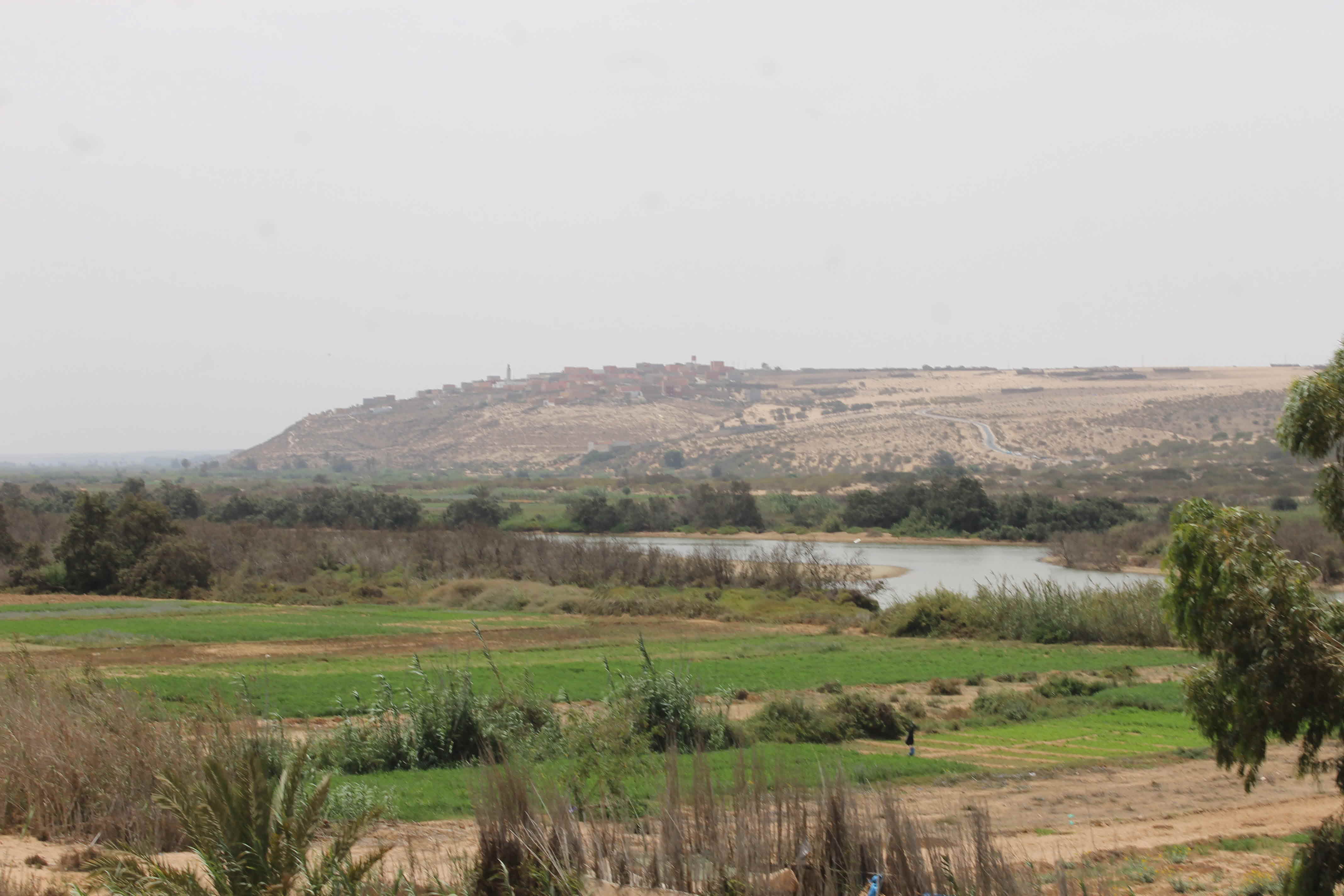
- river with village on far hill
-

- village

-

- donkey

-

- river

-

- restaurant

-

- oven for baking bread

-

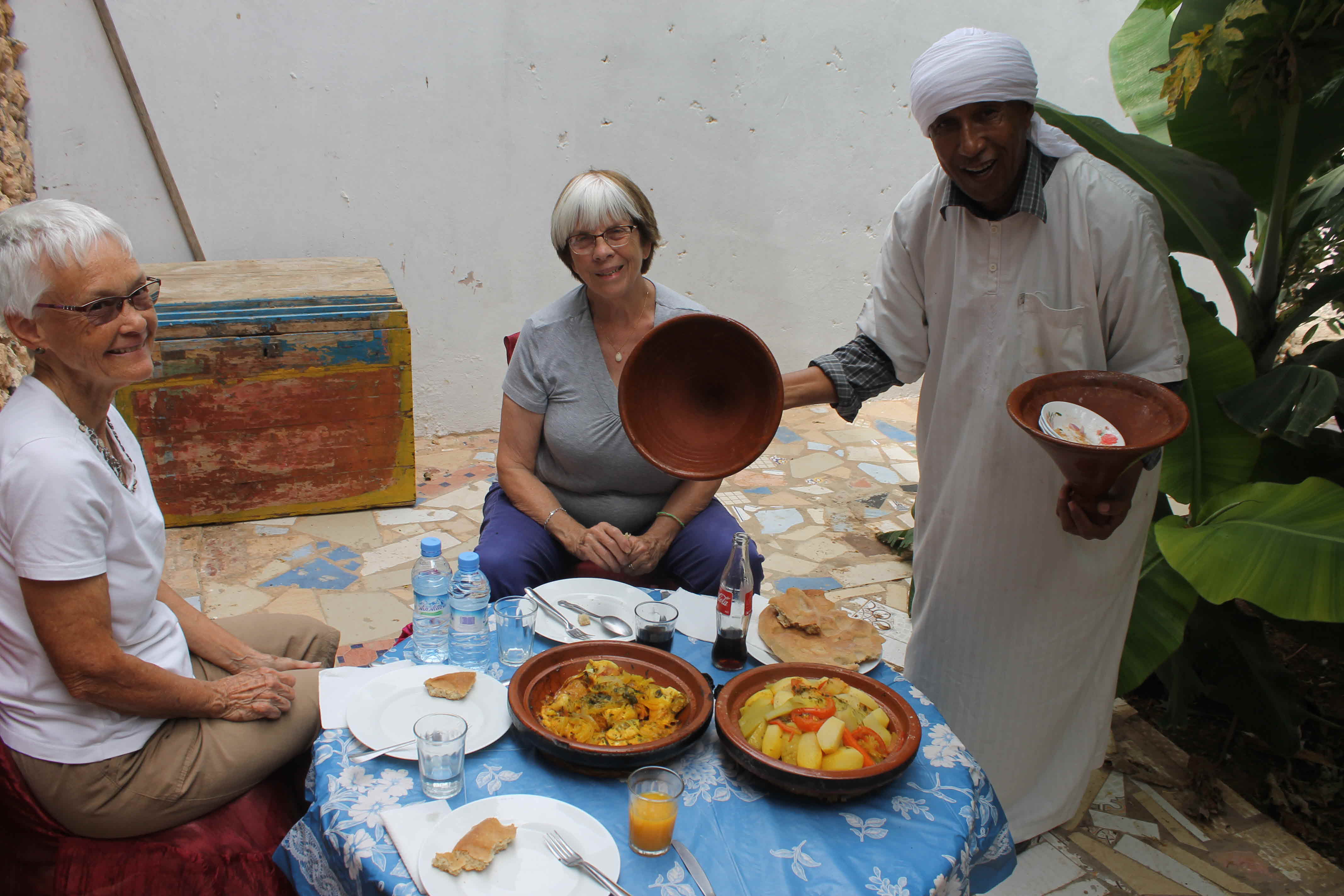
- lunch
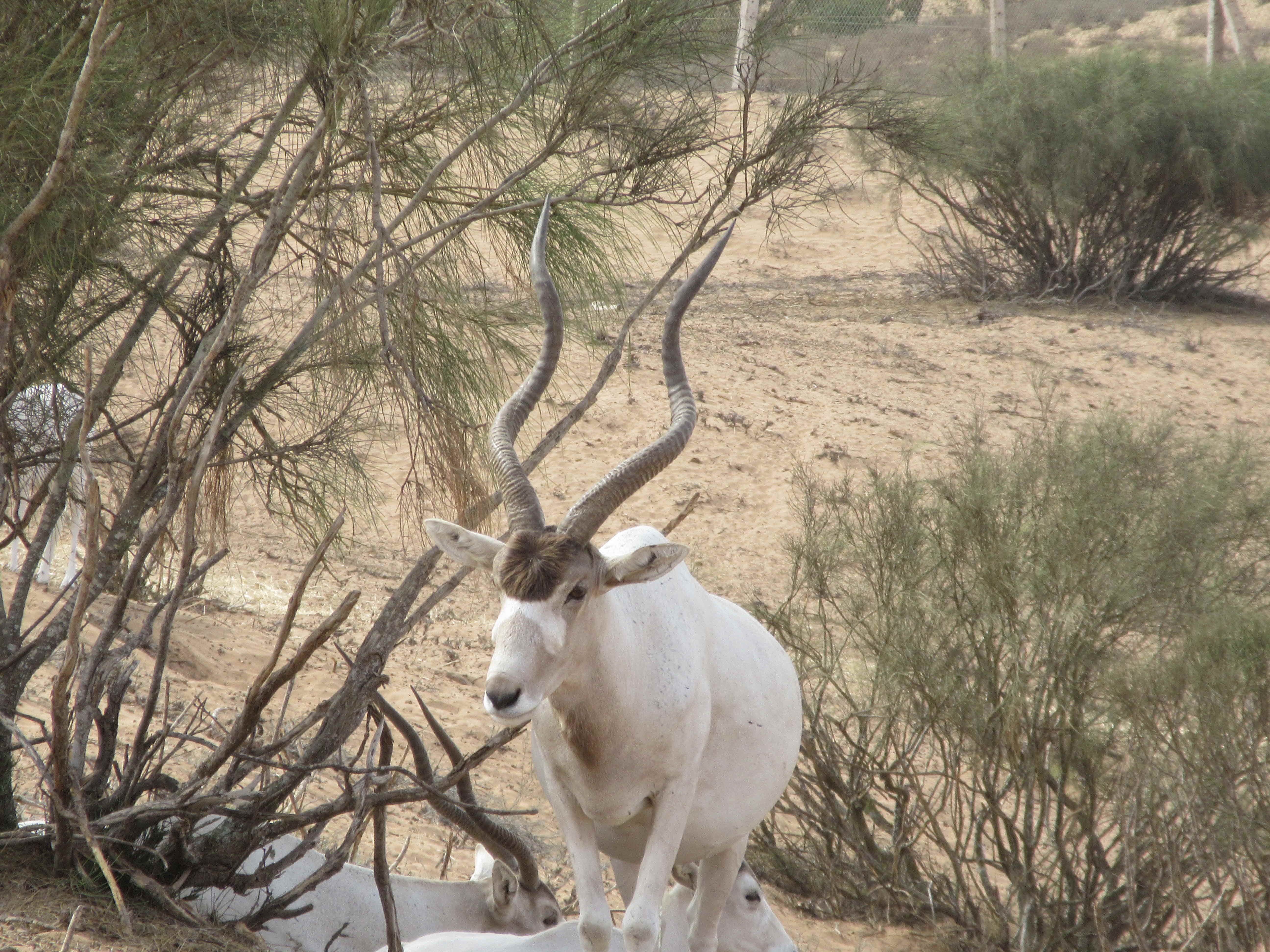
The same day we also visited the northern part of the Souss-Massa National Park where various other animals are being protected. We were able to see oryx, gazelle, addax, and ostrich. These animals are being reintroduced to Morocco after becoming extinct, or nearly so, in the country. We also saw many argan trees. We will explain more about argan later.
-

- argan

-

- oryx

-

- addax
-

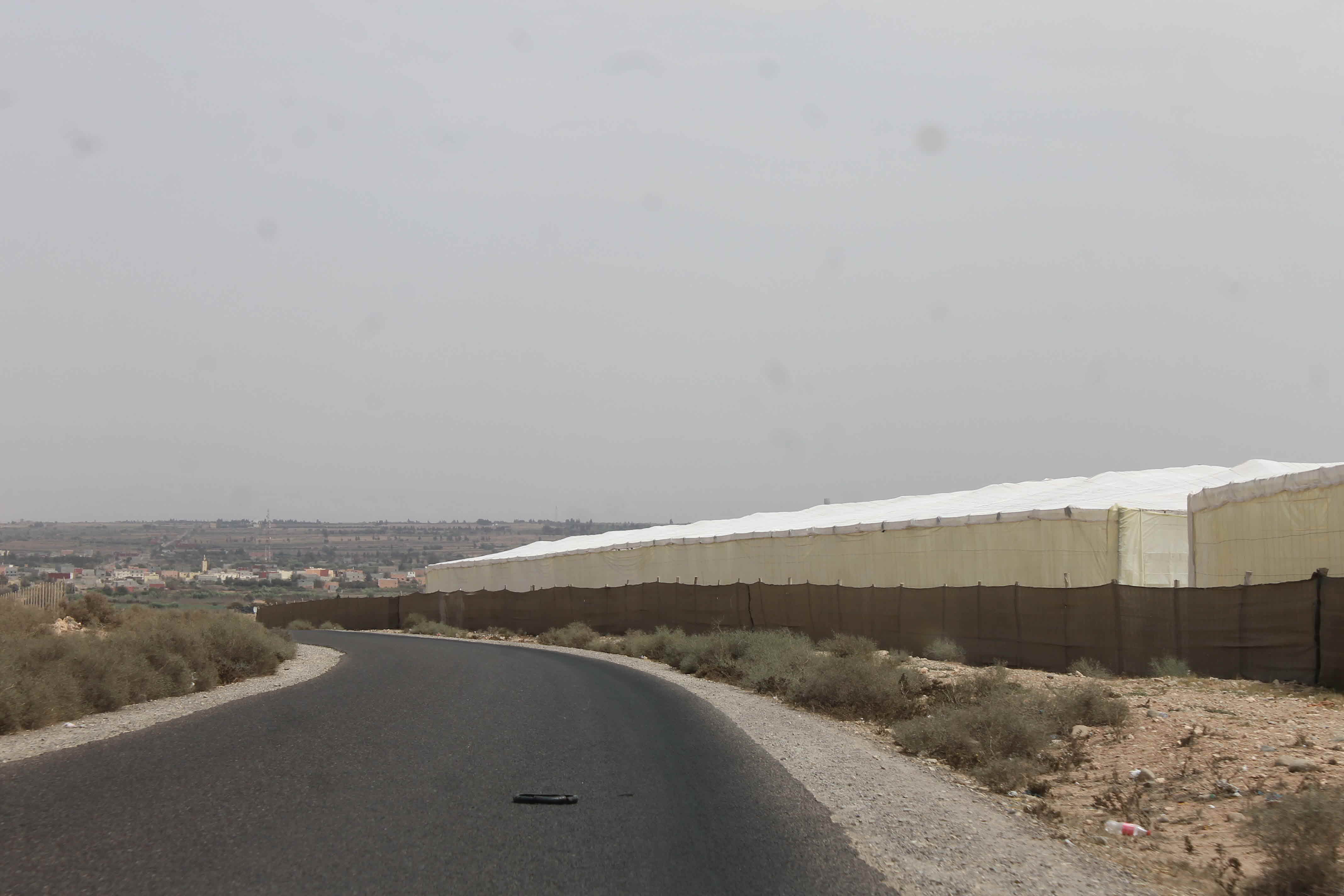
- nethouses for vegetables
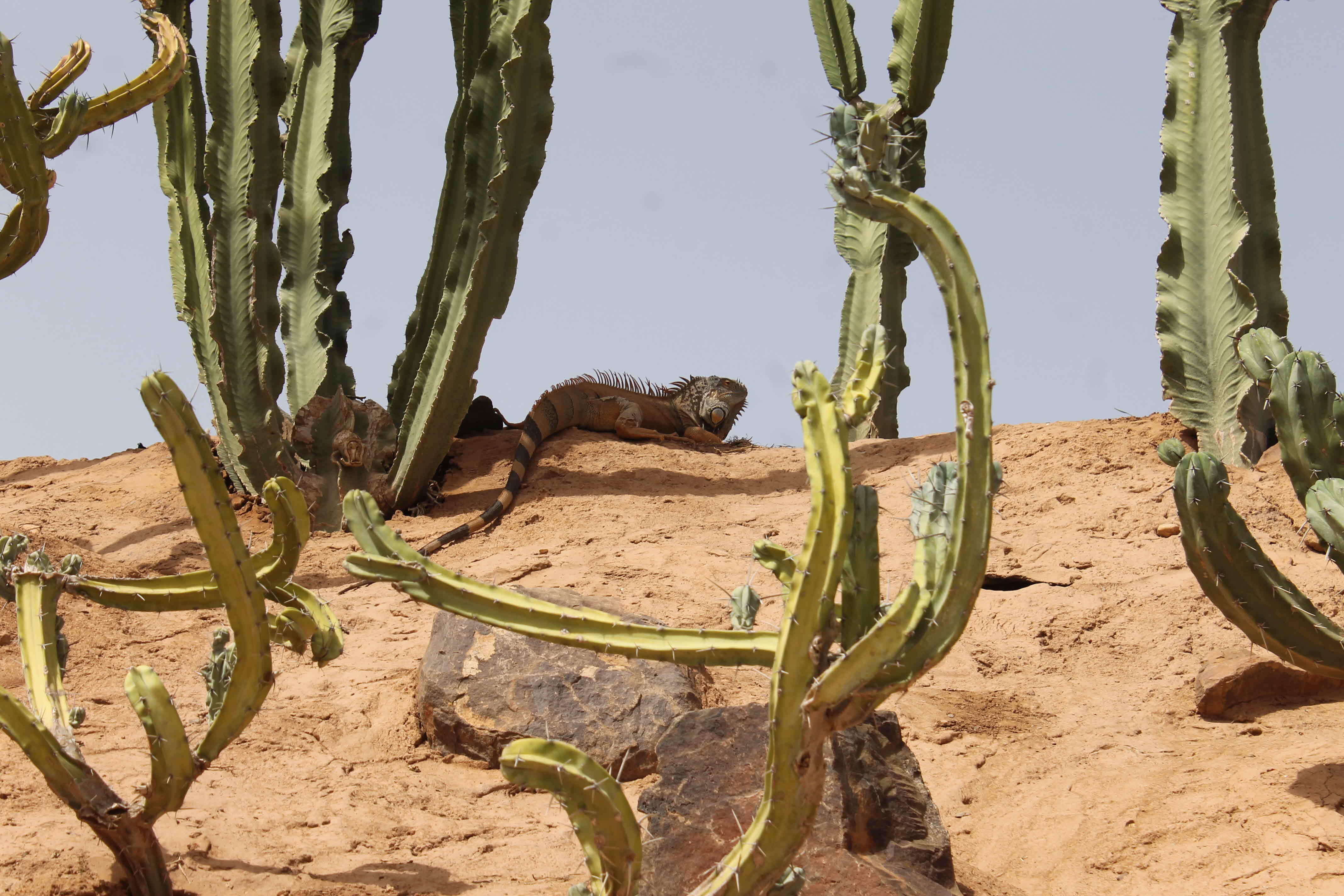
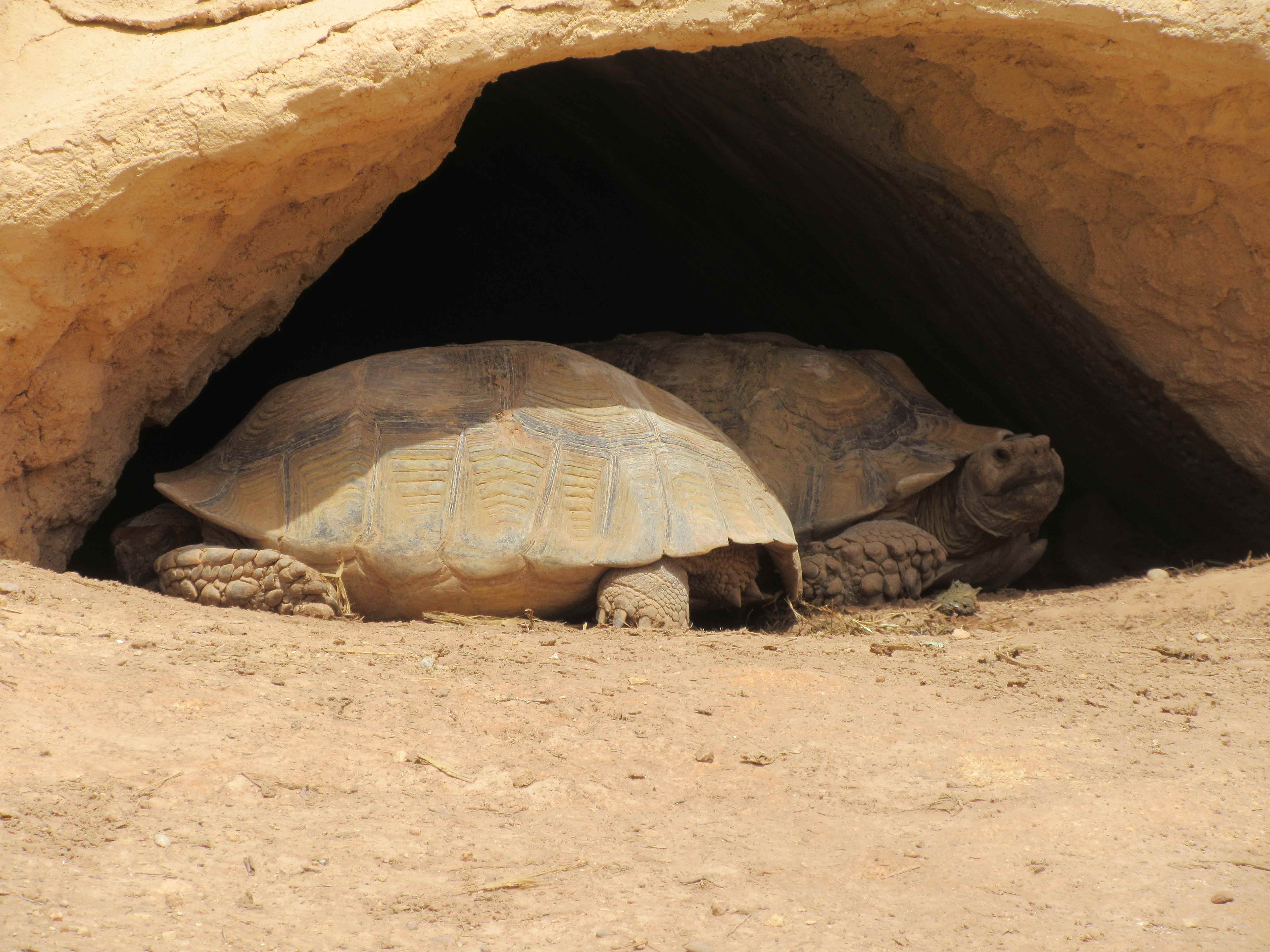
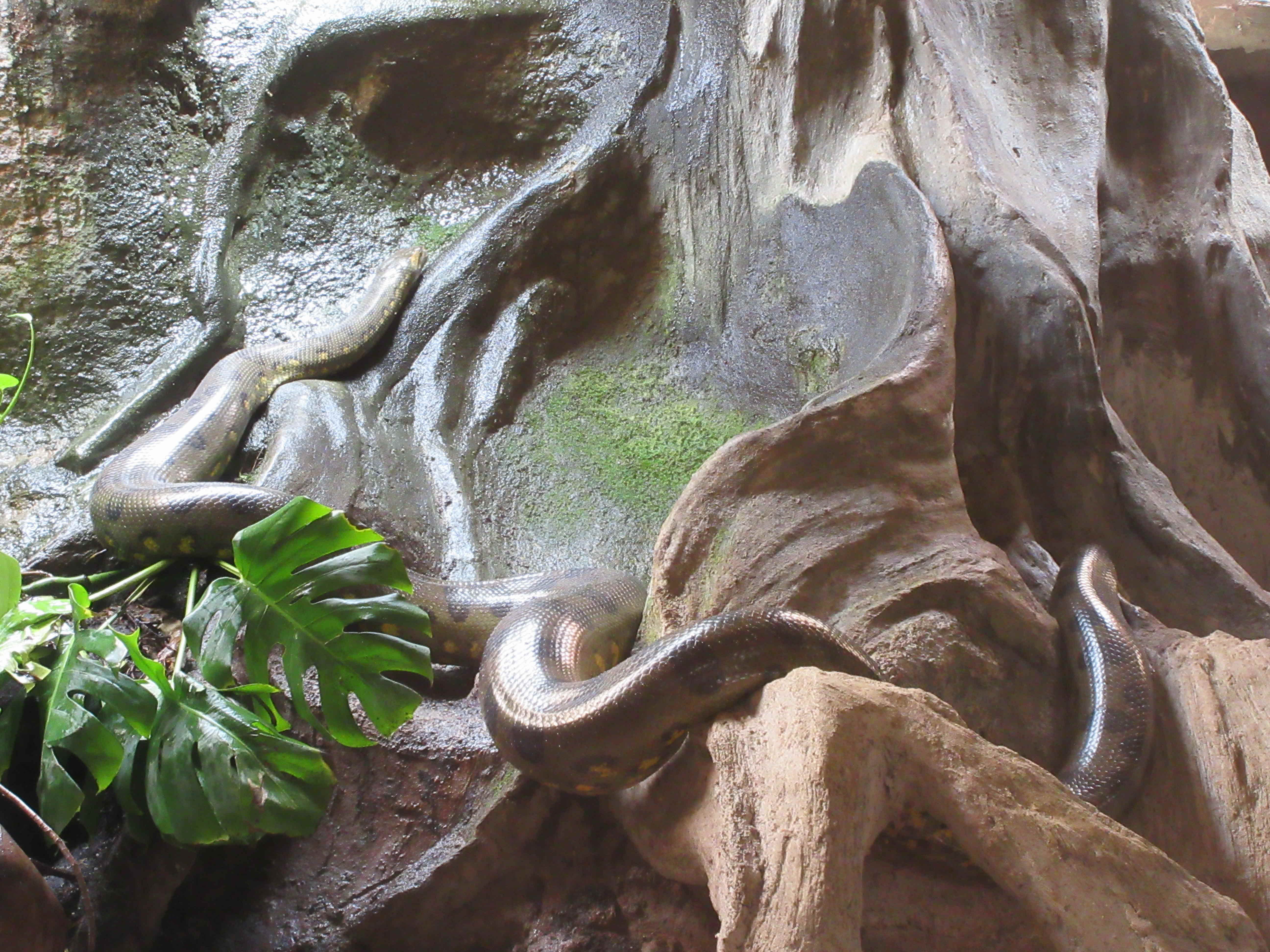
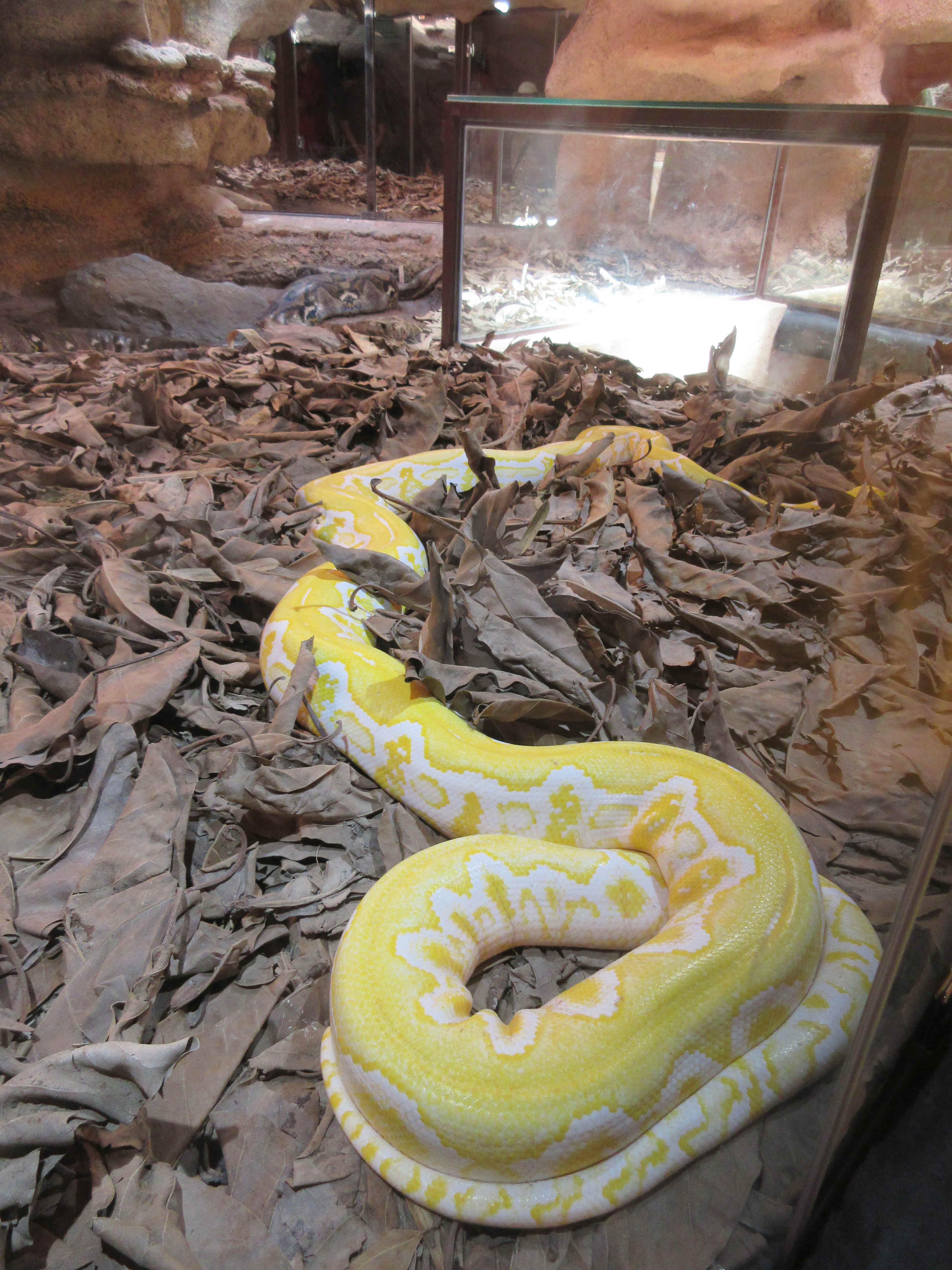
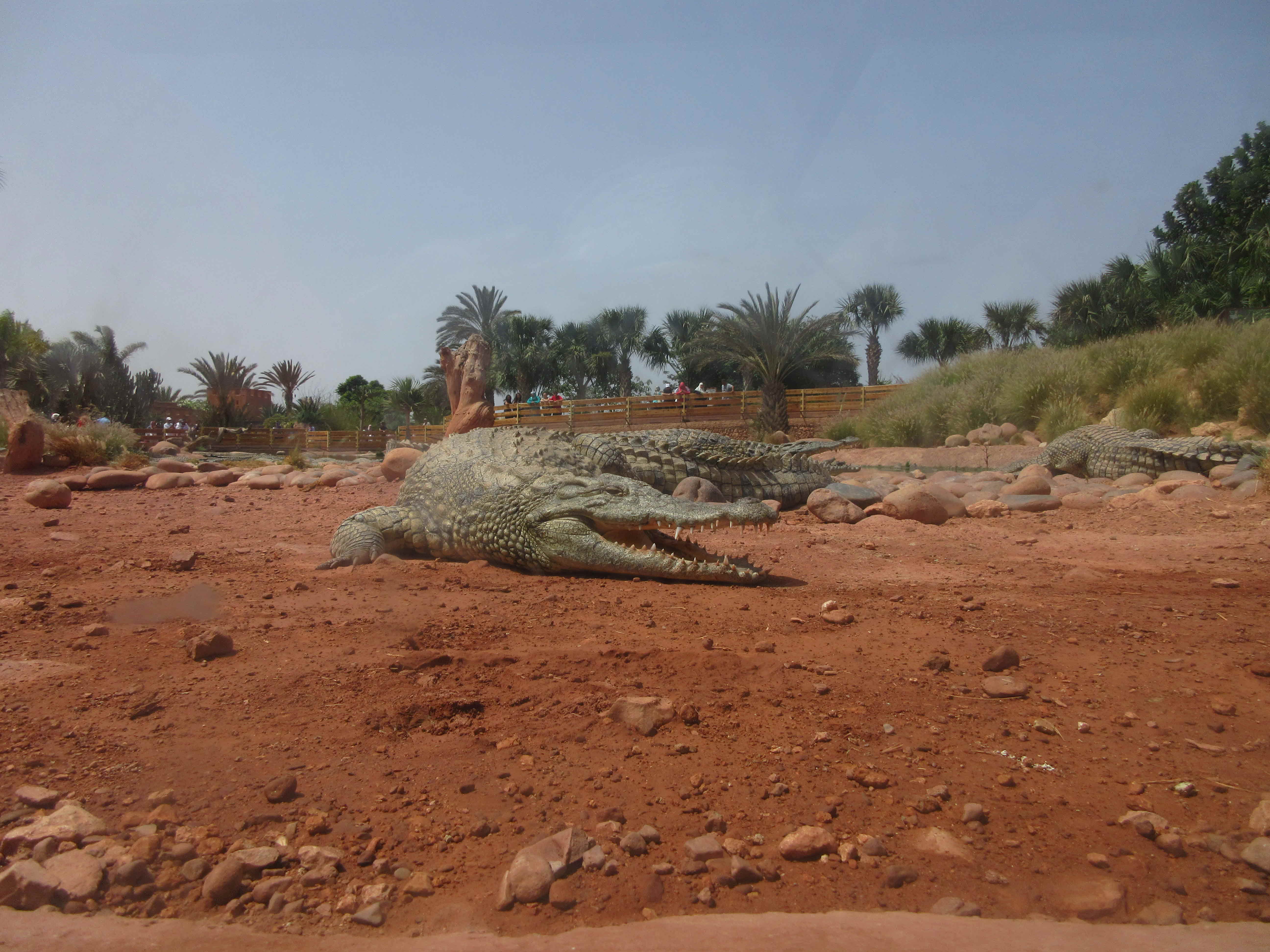
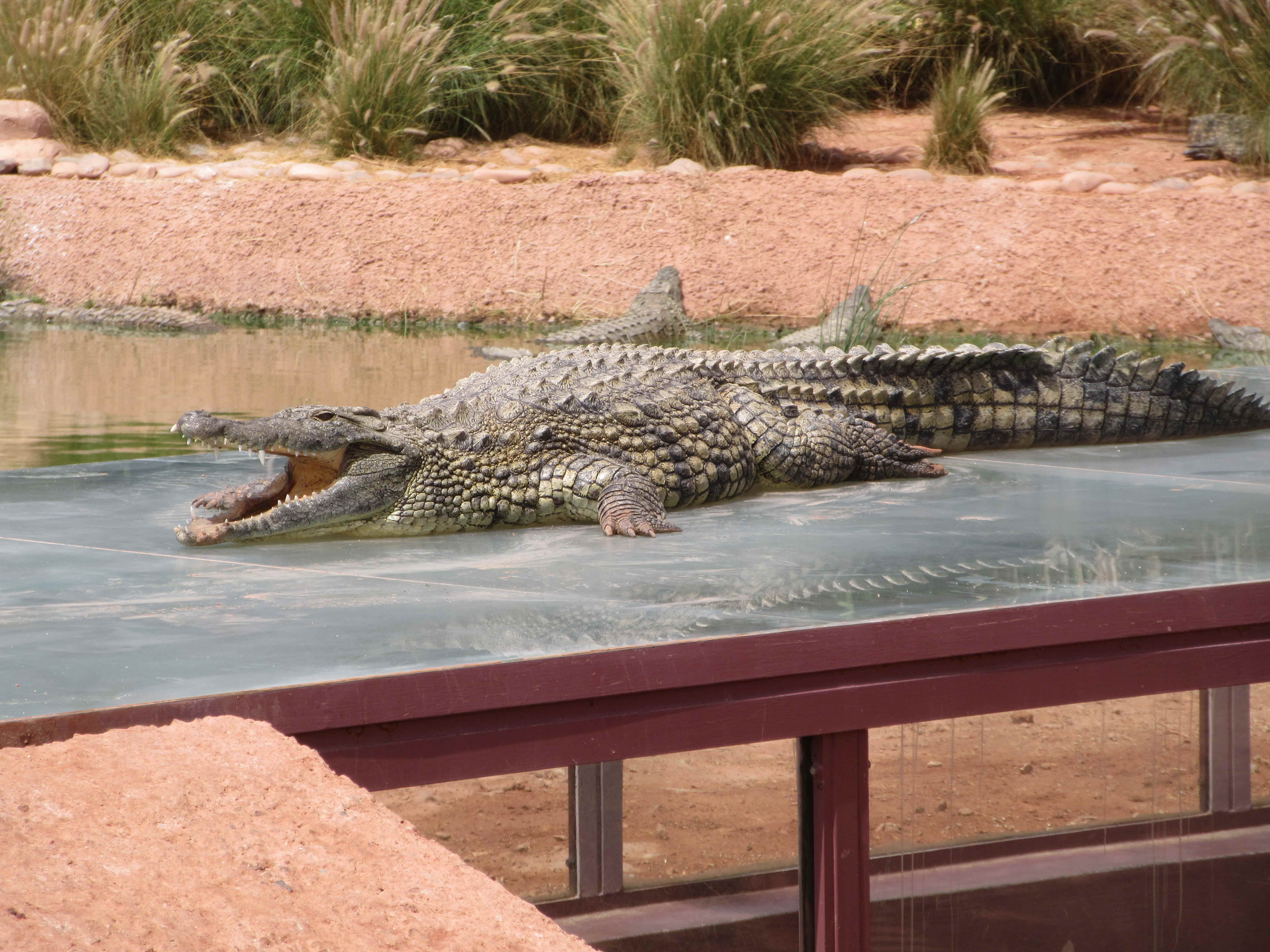
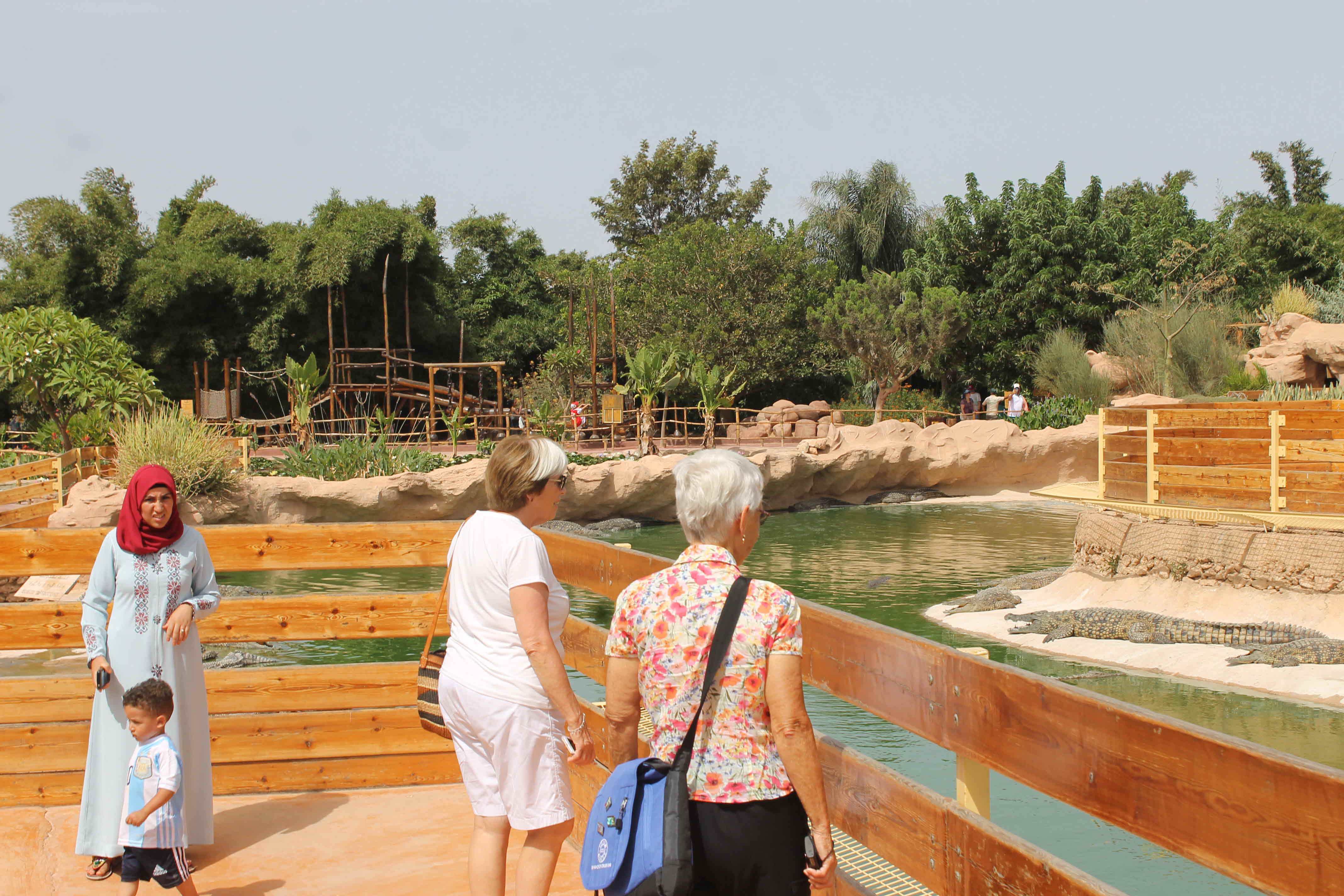
Another morning we visited the Croc Park, another animal being reintroduced to the country. This park has been open only about 4 years and is well planned. It is nicely designed with many activities to keep children engaged.
-

- entrance to Croc Park

-

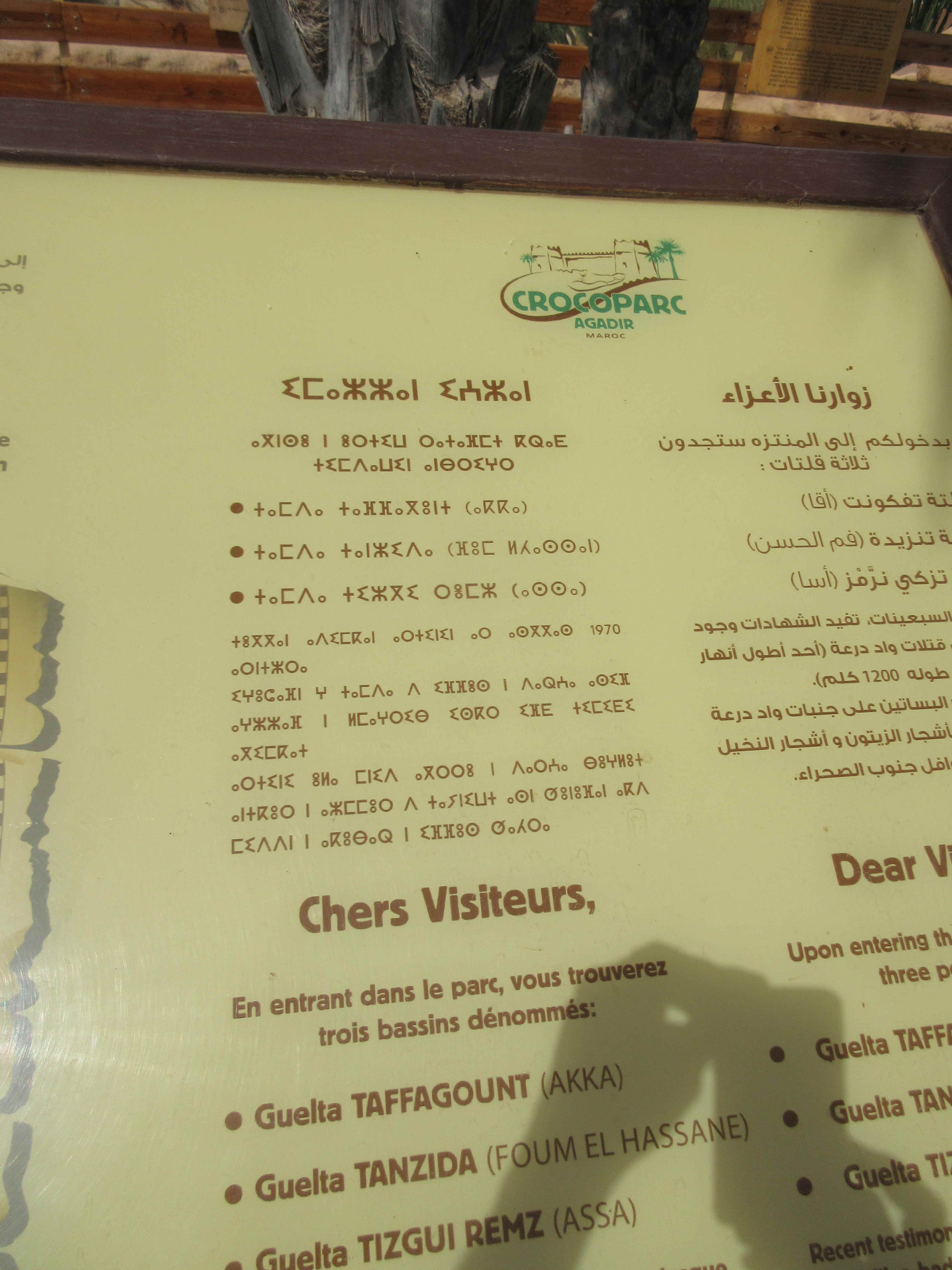
- Berber language
-

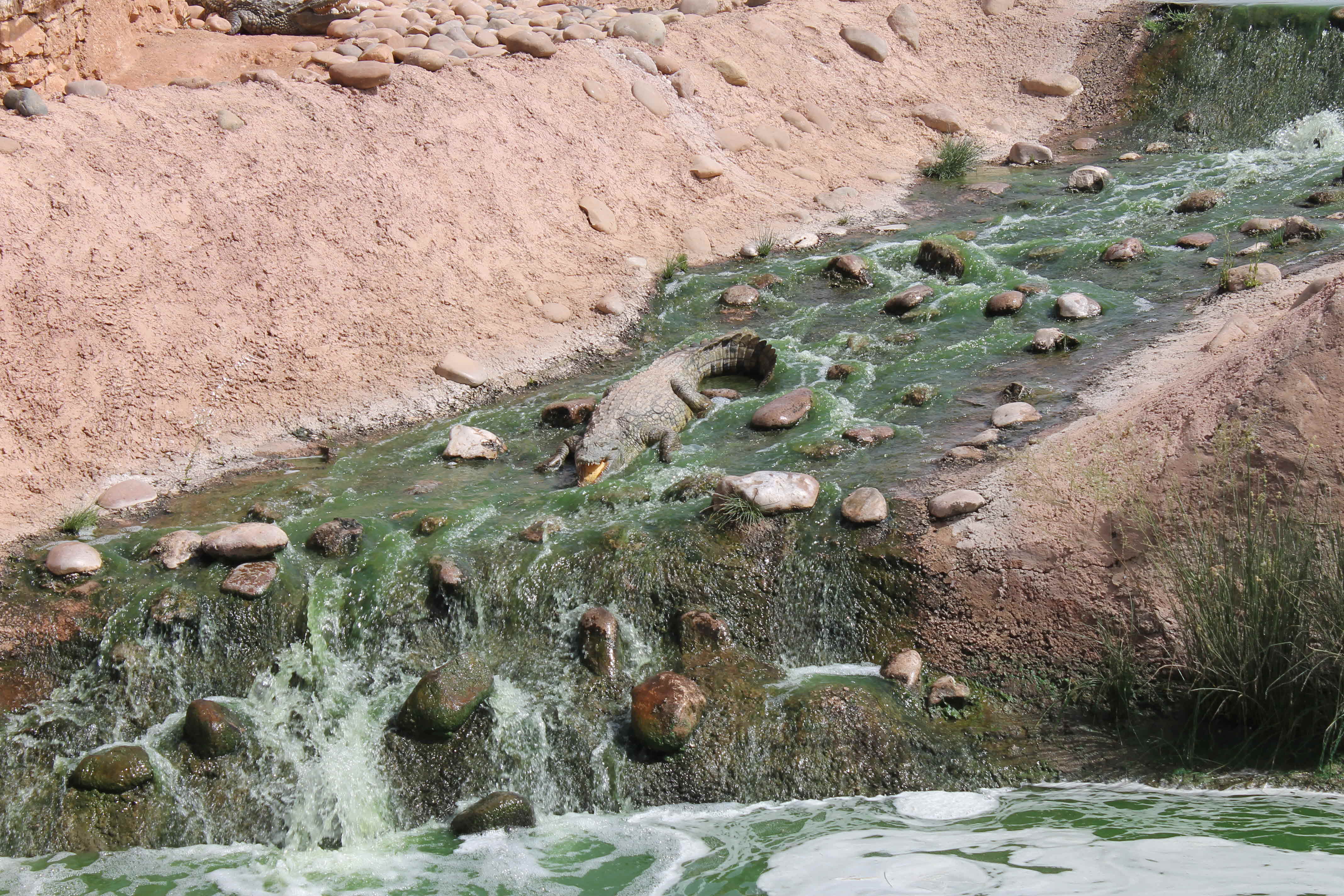
- croc cooling in stream
-

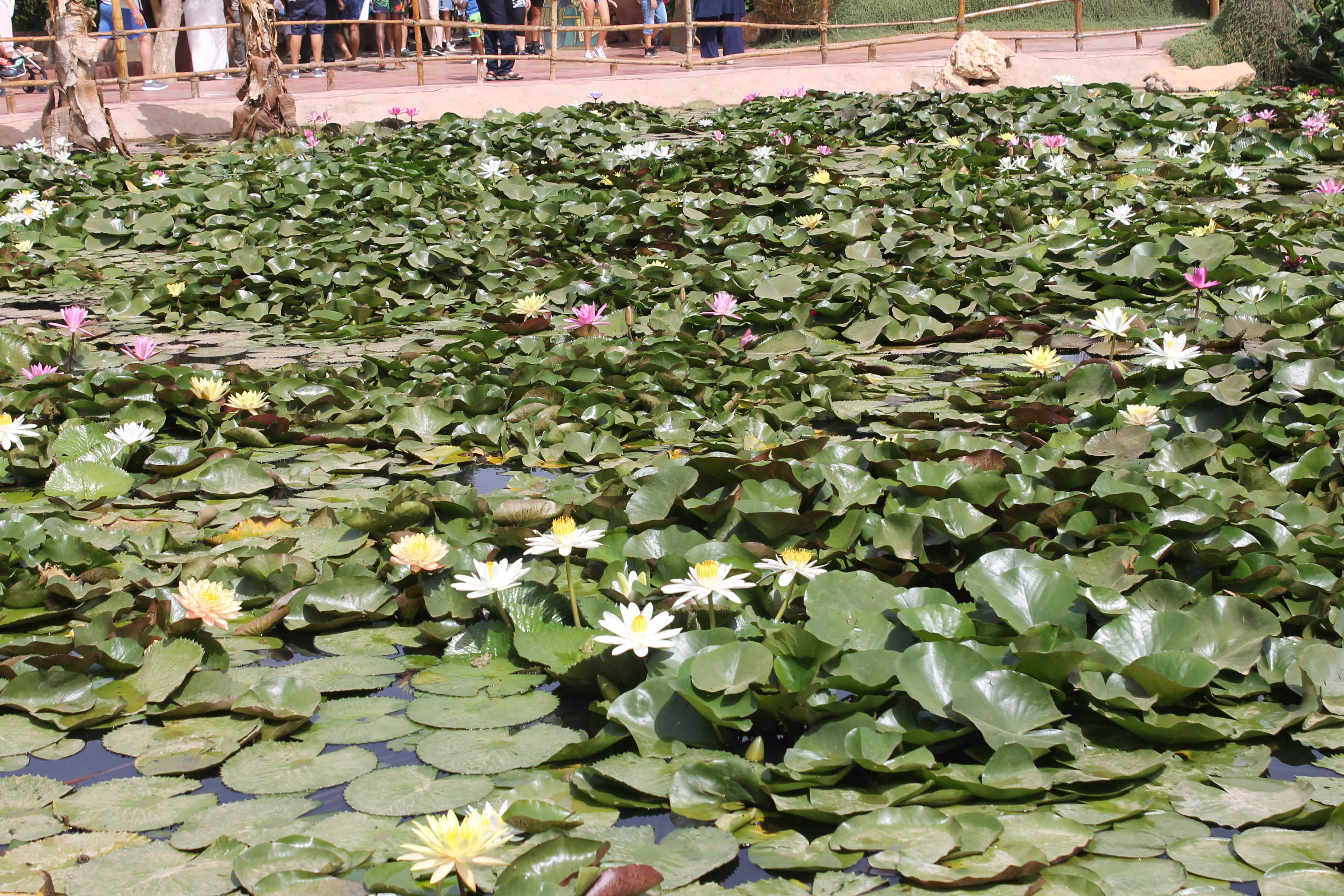
- lily pads
-

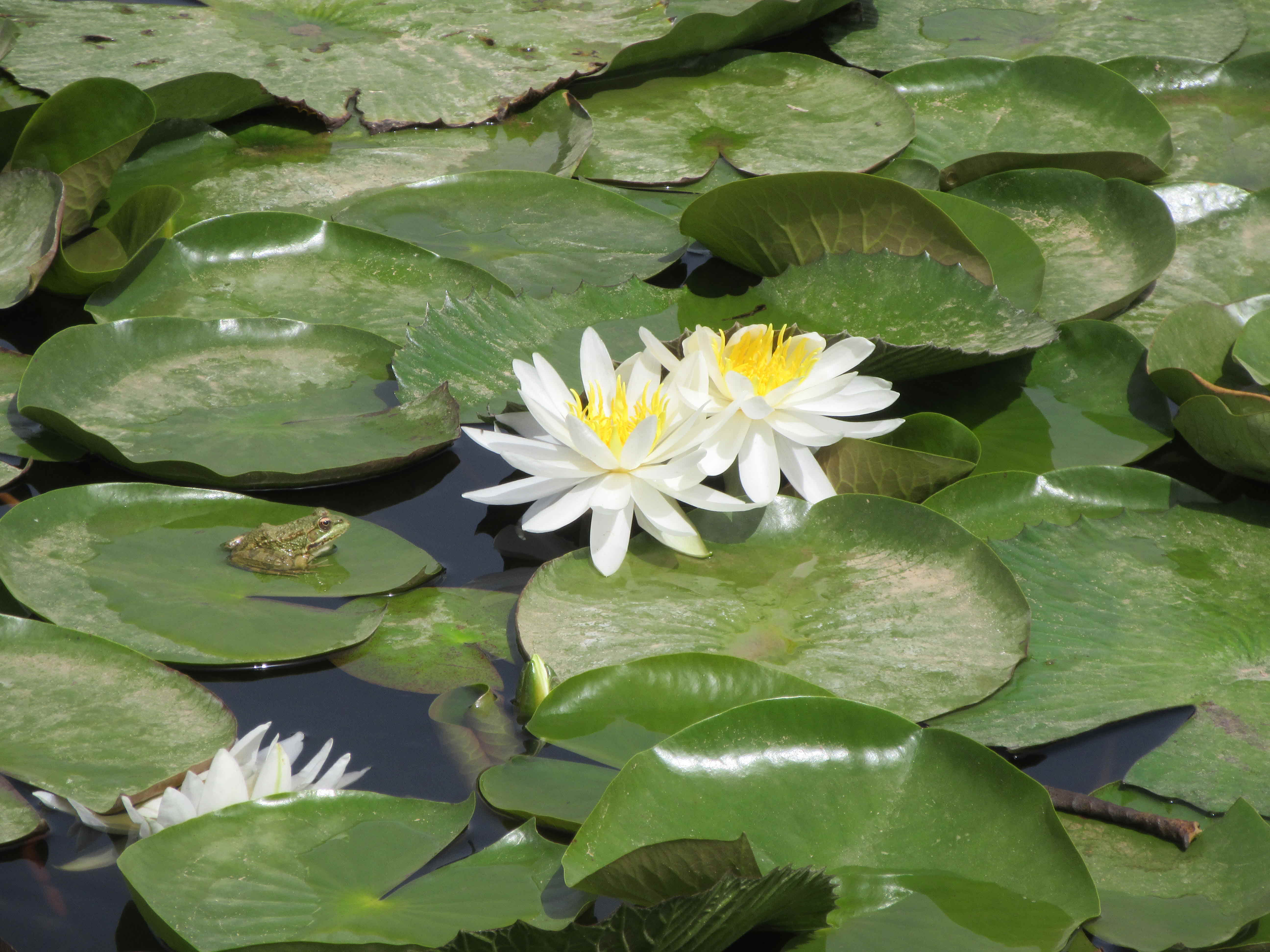
- toad with lily
-

- waterfalls
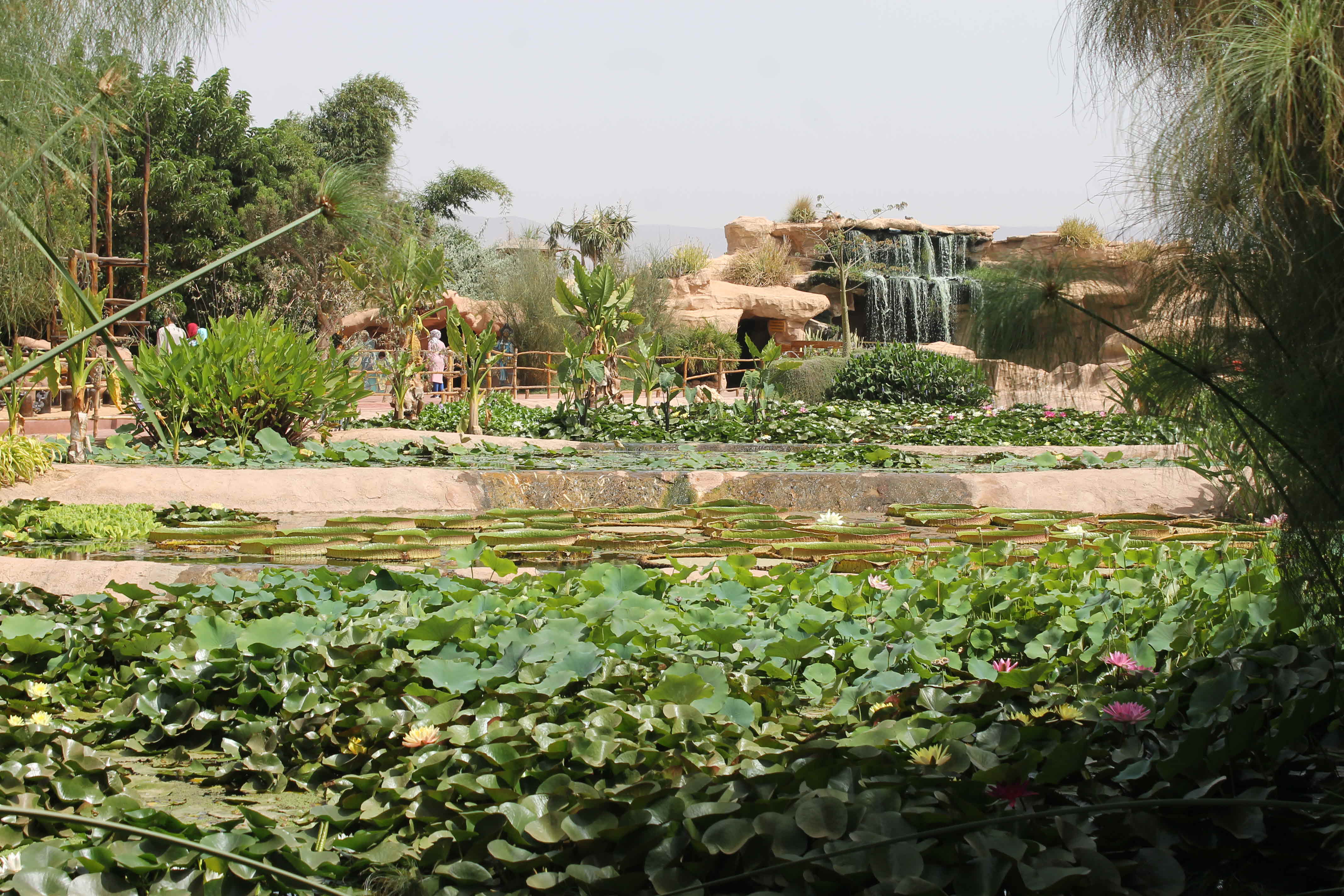
-

- papyrus lane
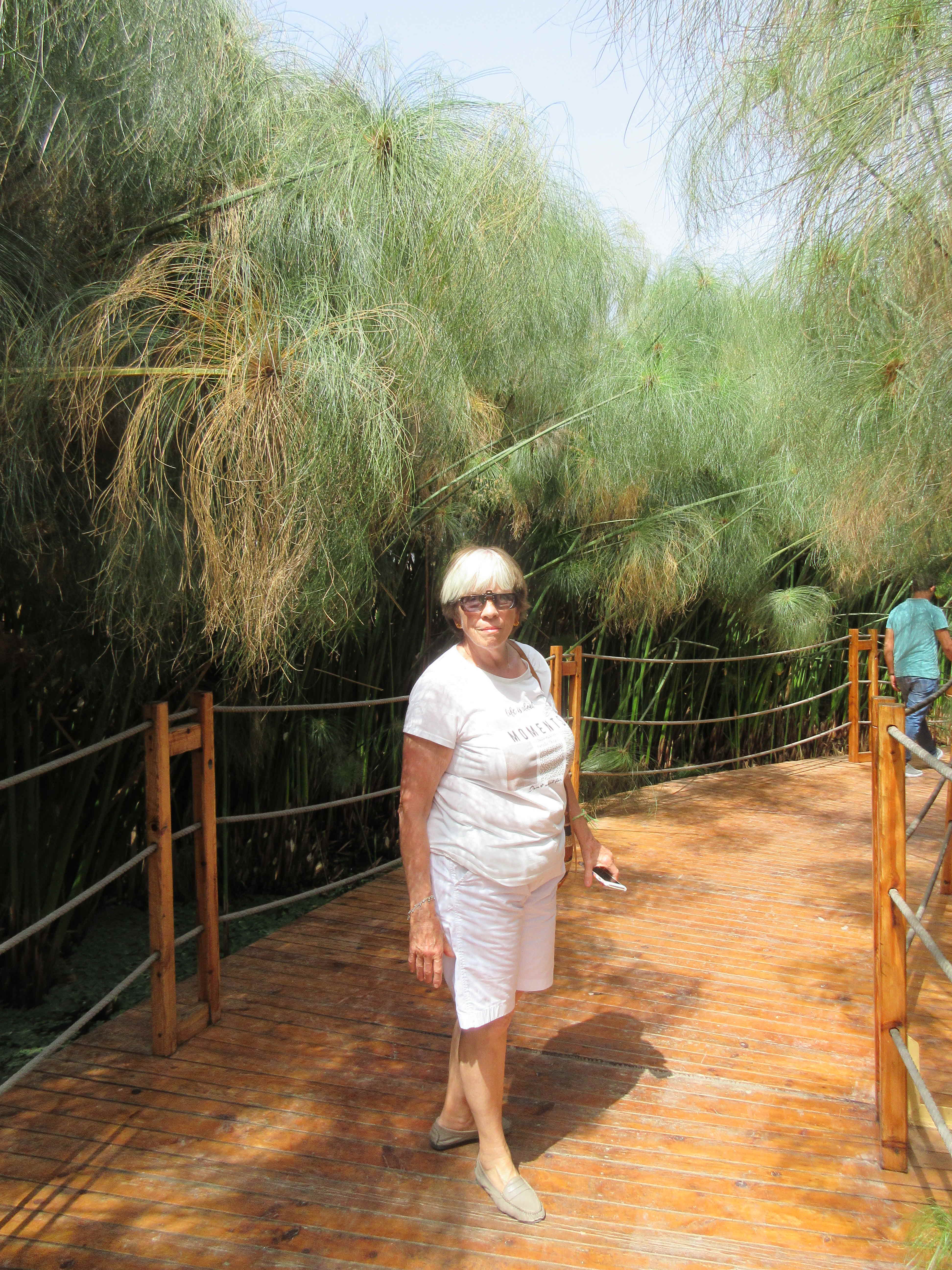
-

- iguana
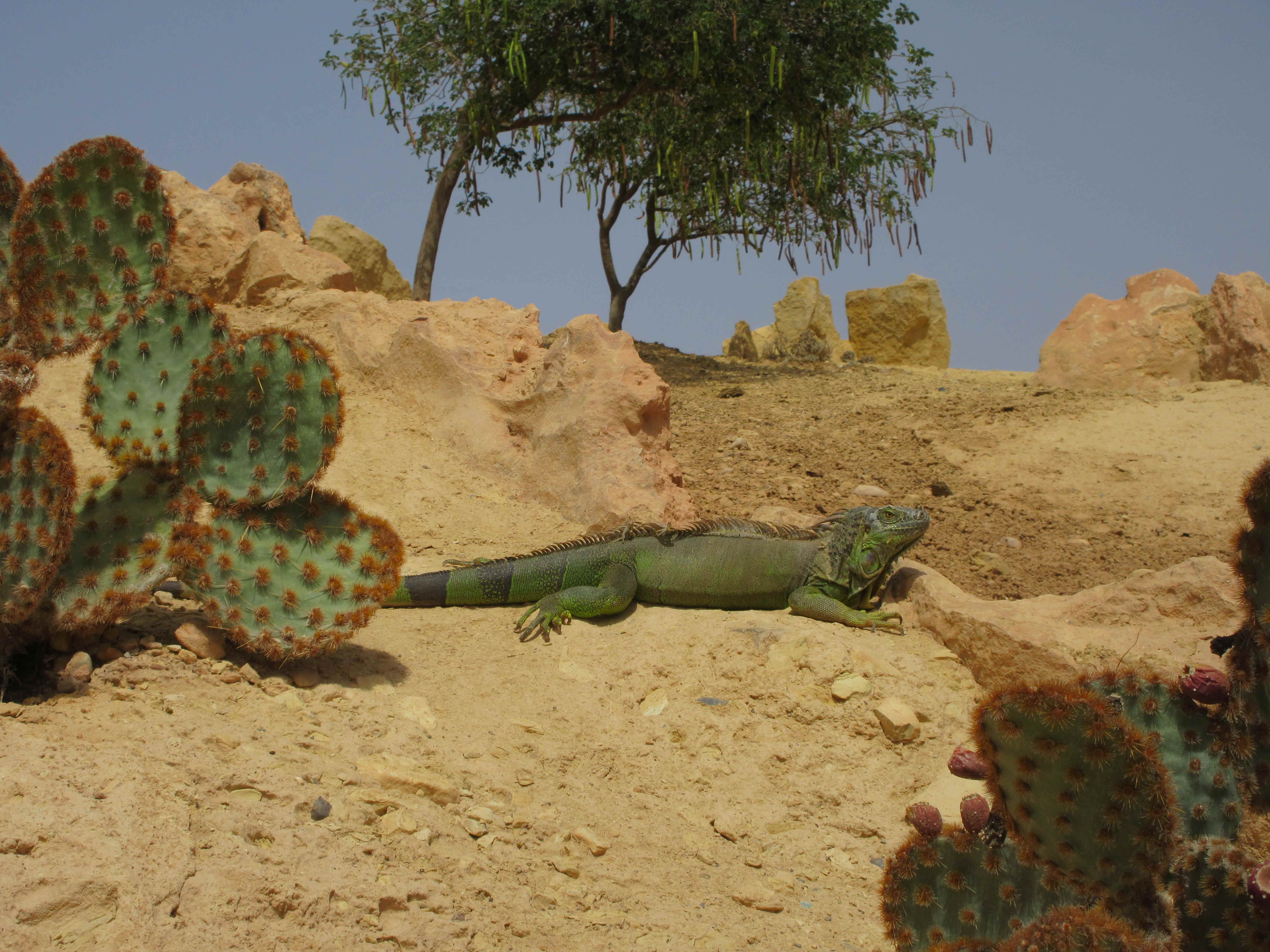
-

- iguana
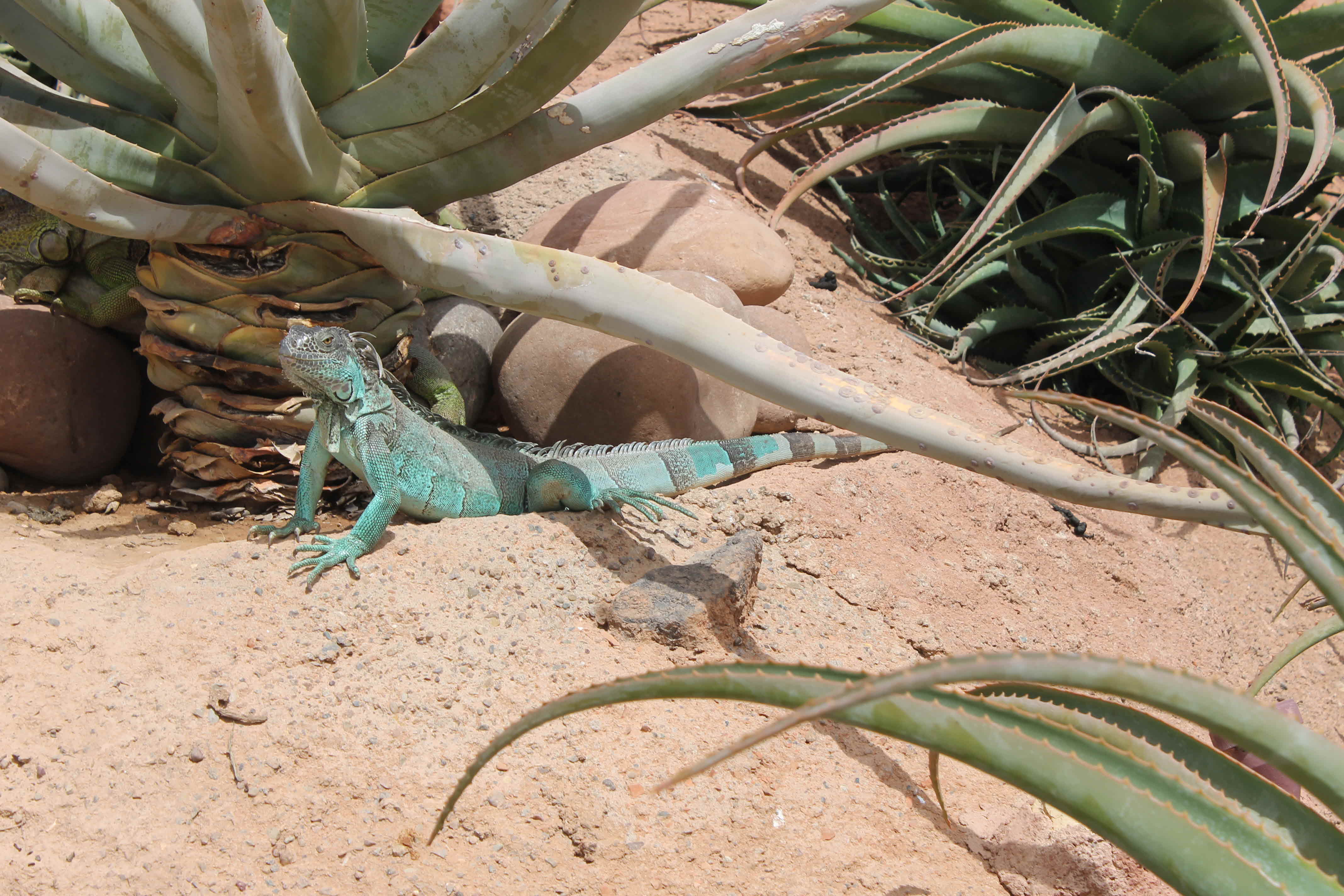
-

- iguana
-

- tortoise
-

- boa constrictor
-

- python
-

- croc
-

- croc resting on roof of underground viewing station
-

- we are below croc!

-

- croc

-

- viewing crocs
-

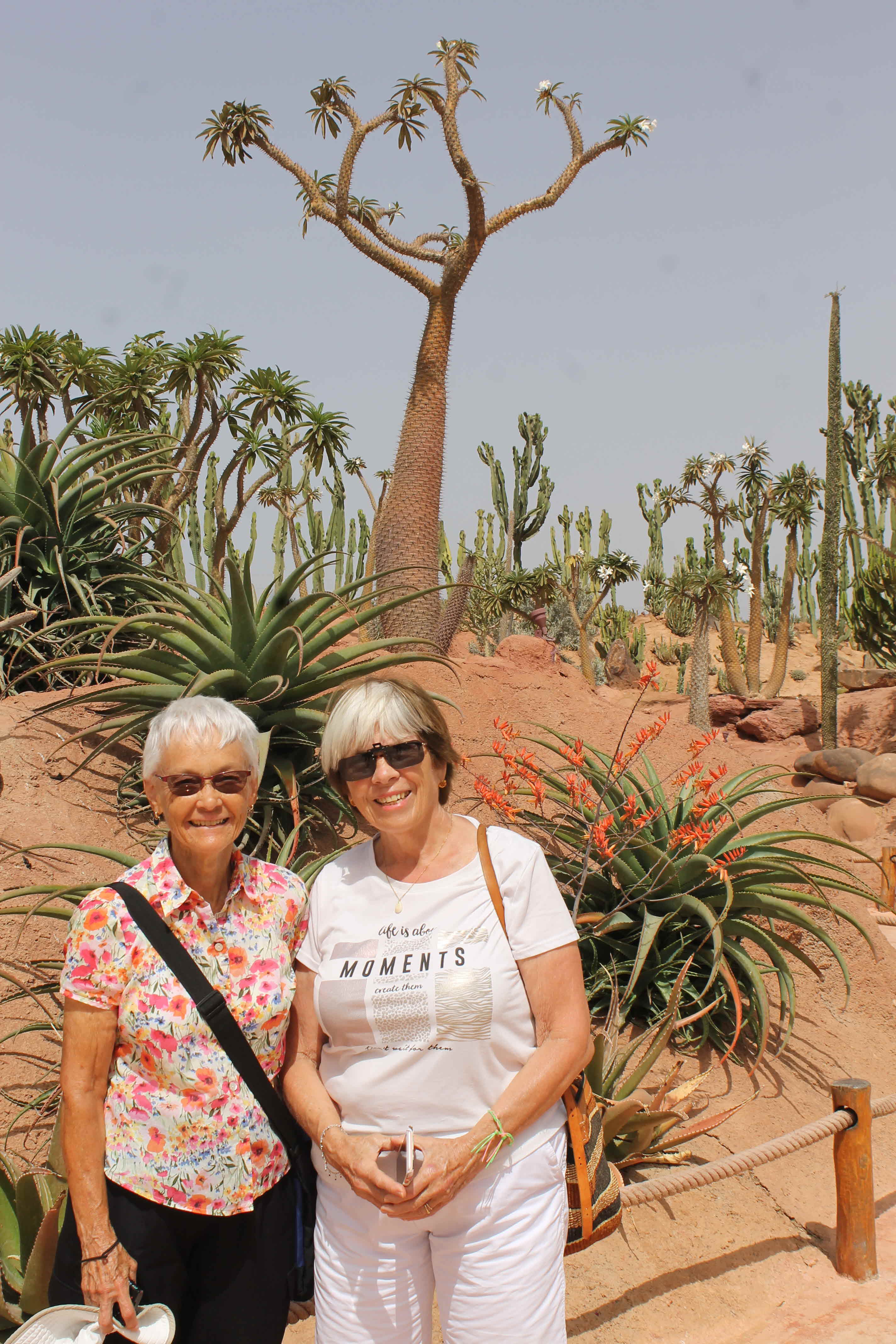
- friends
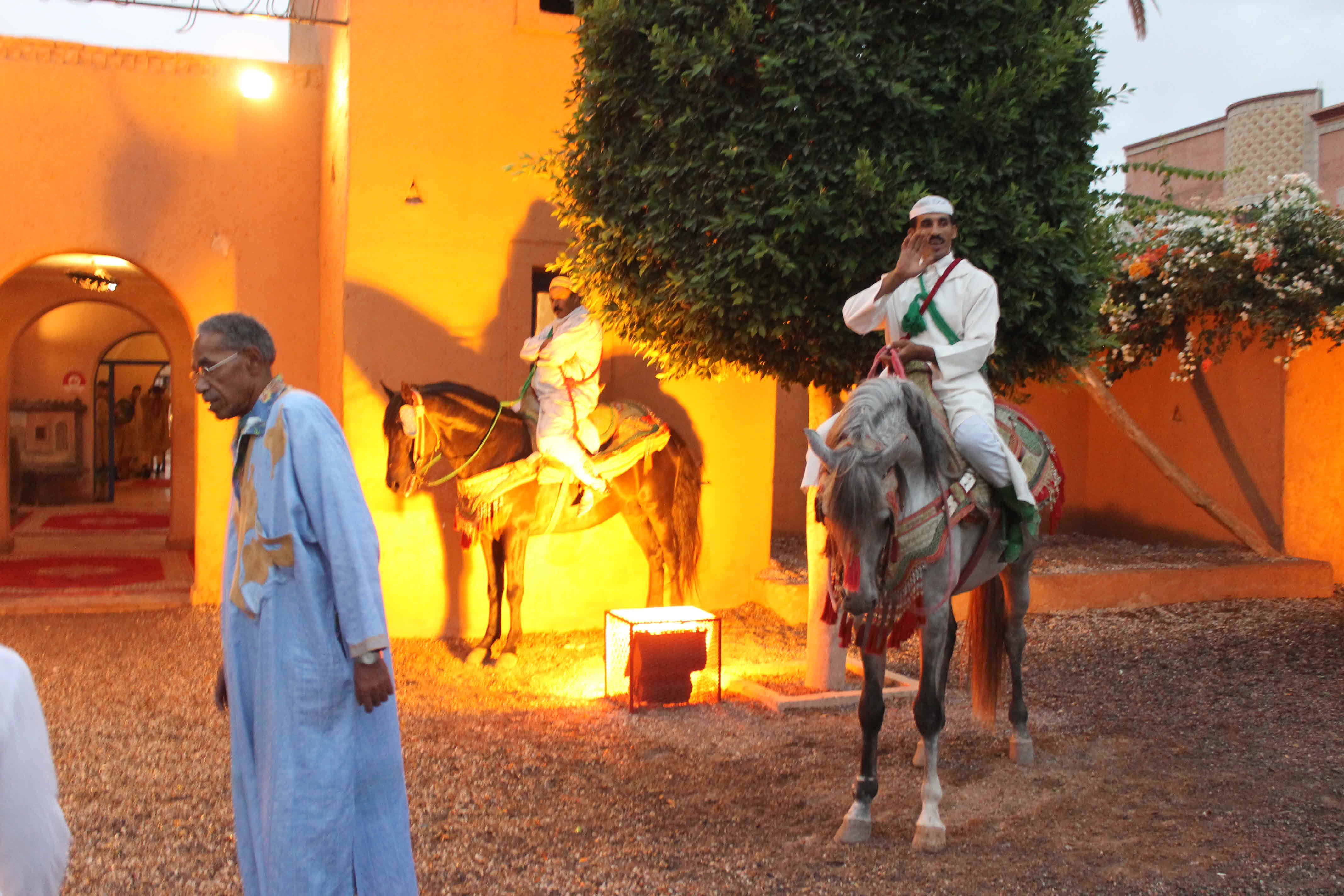
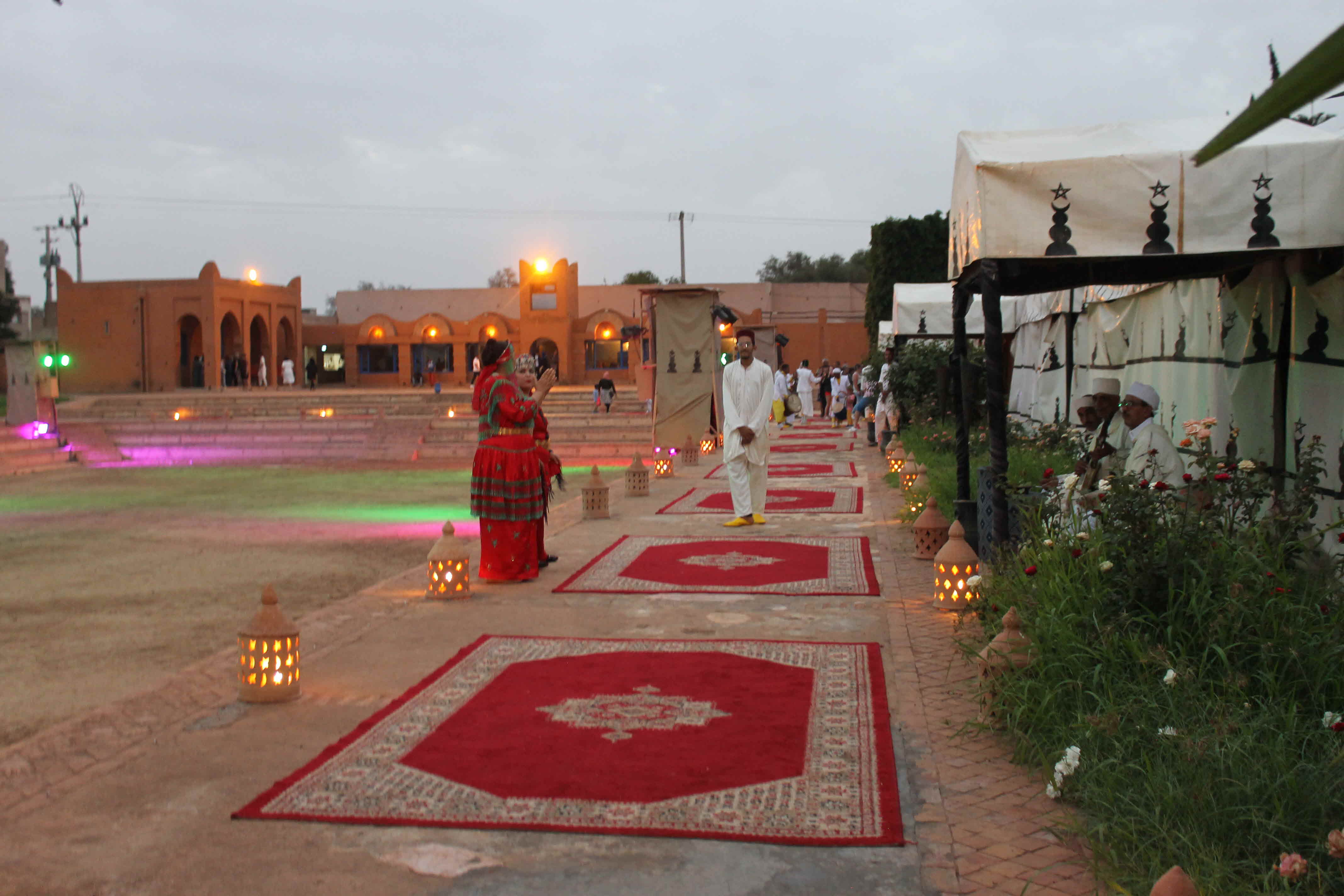
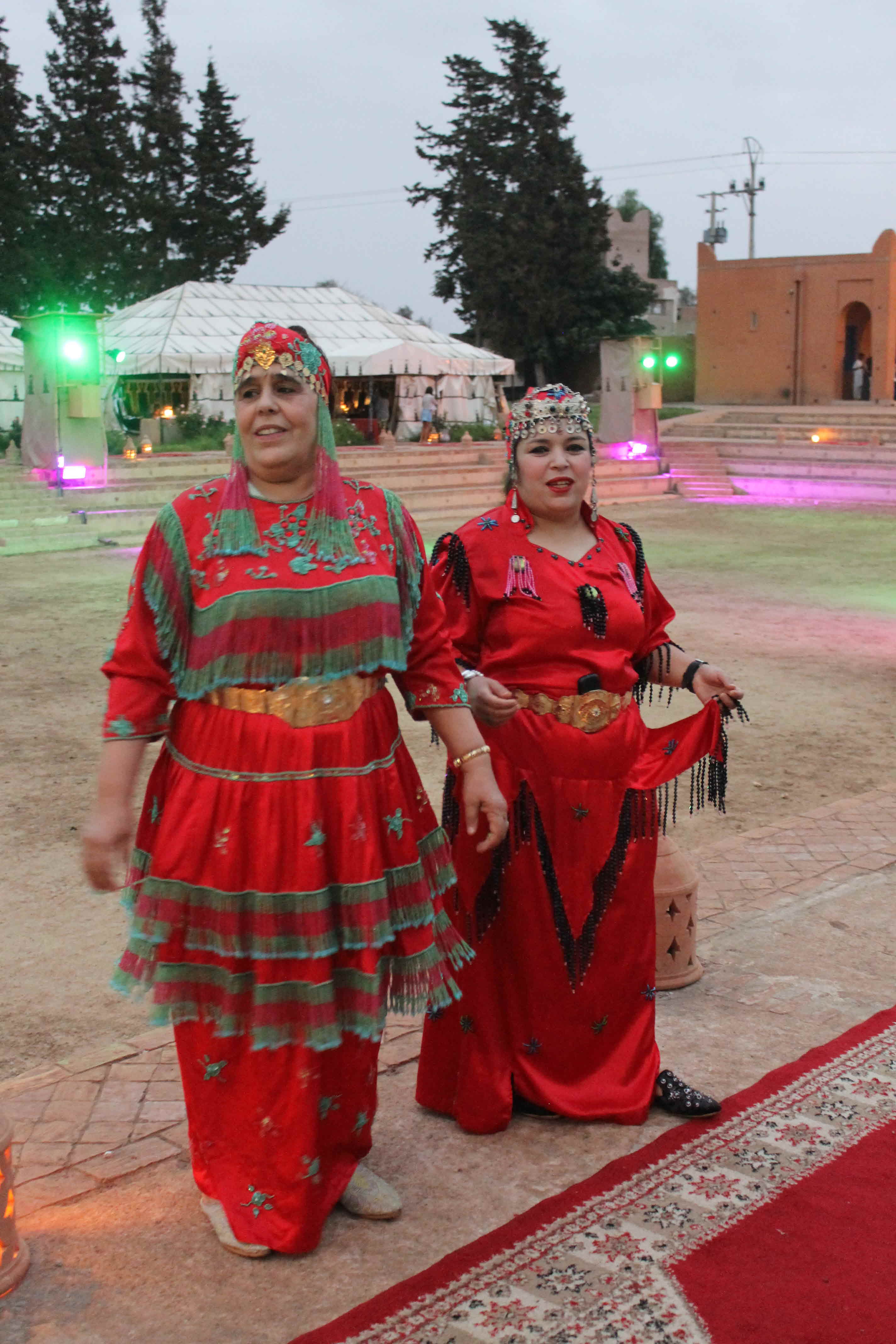
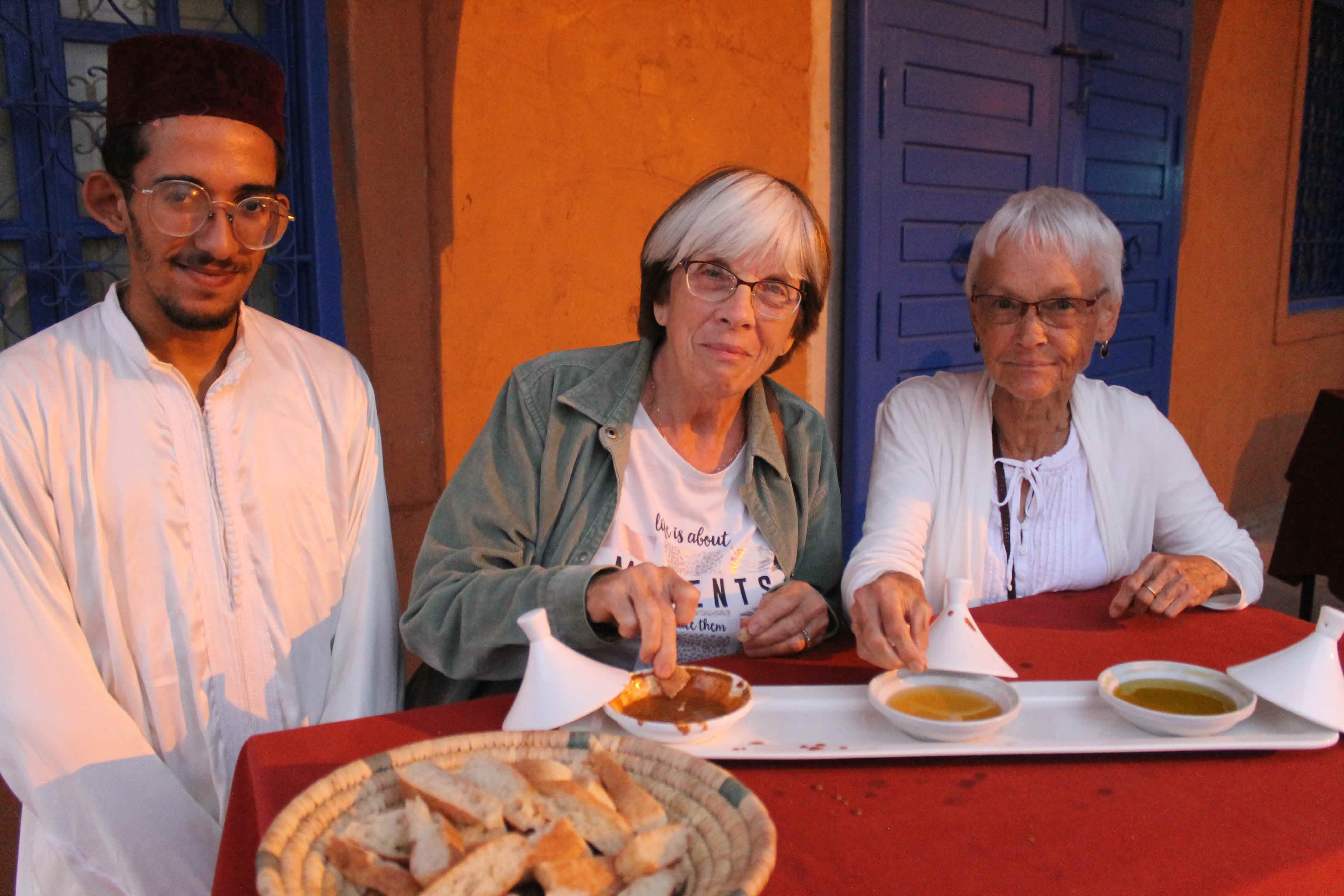
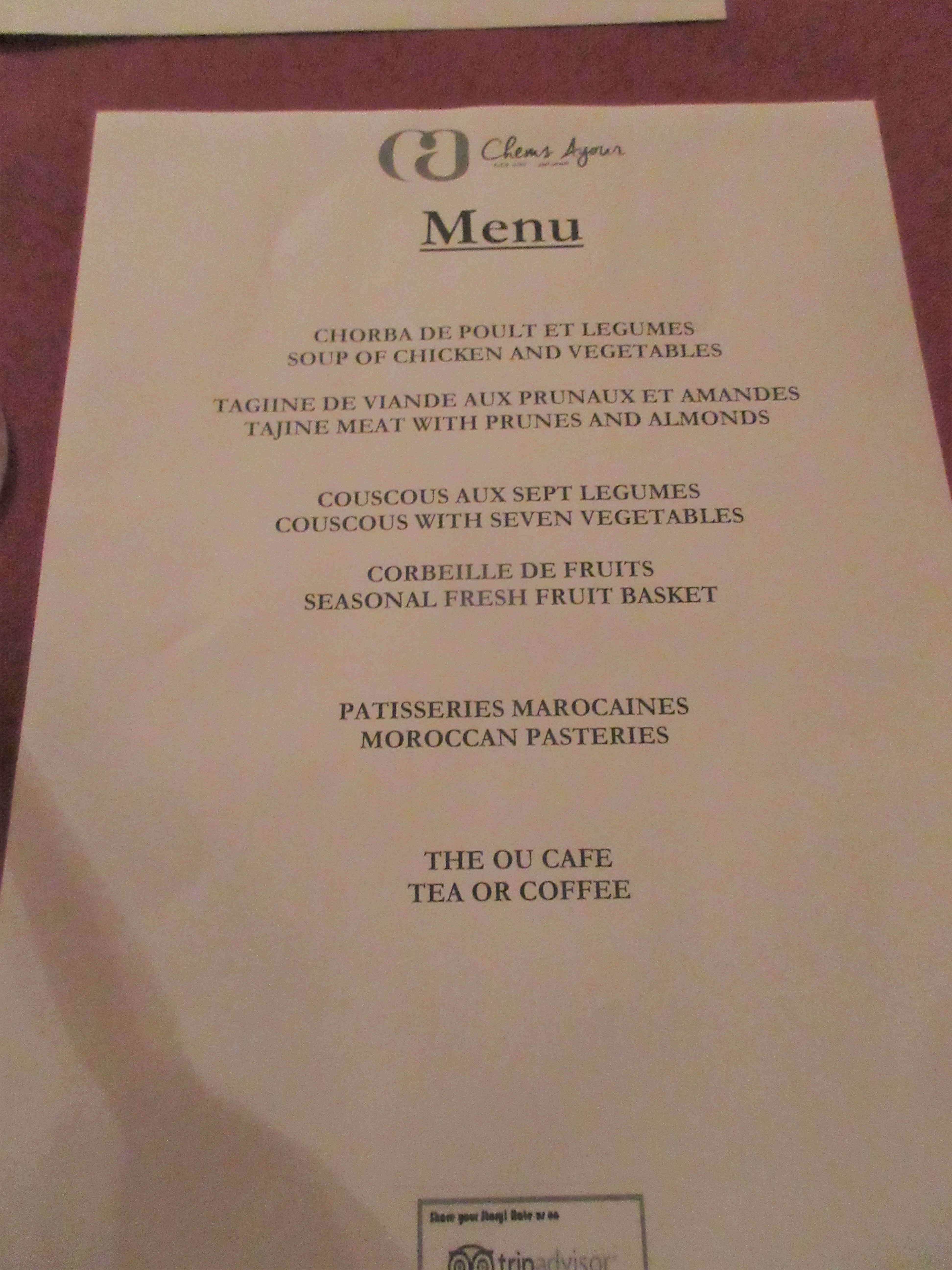
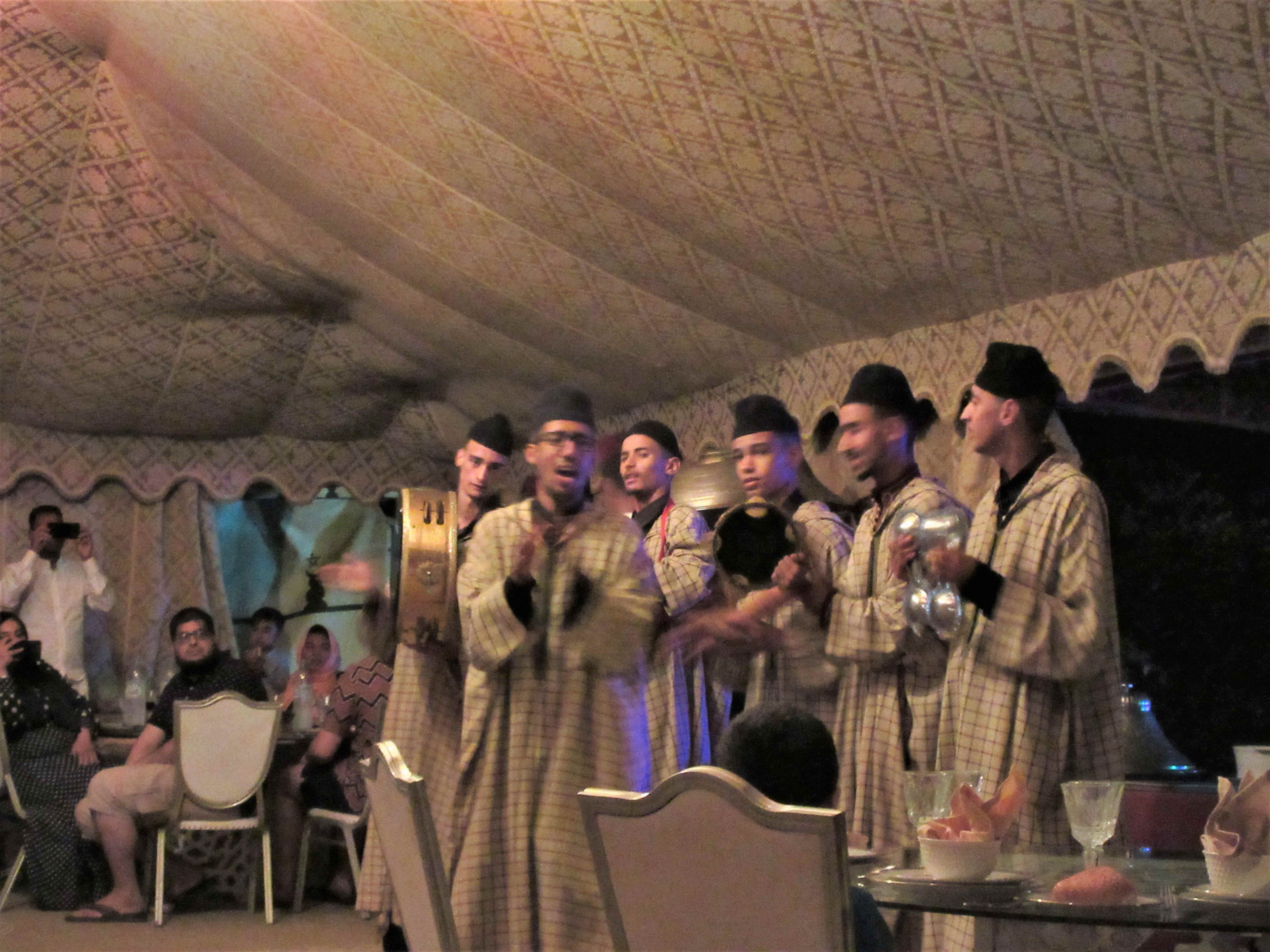
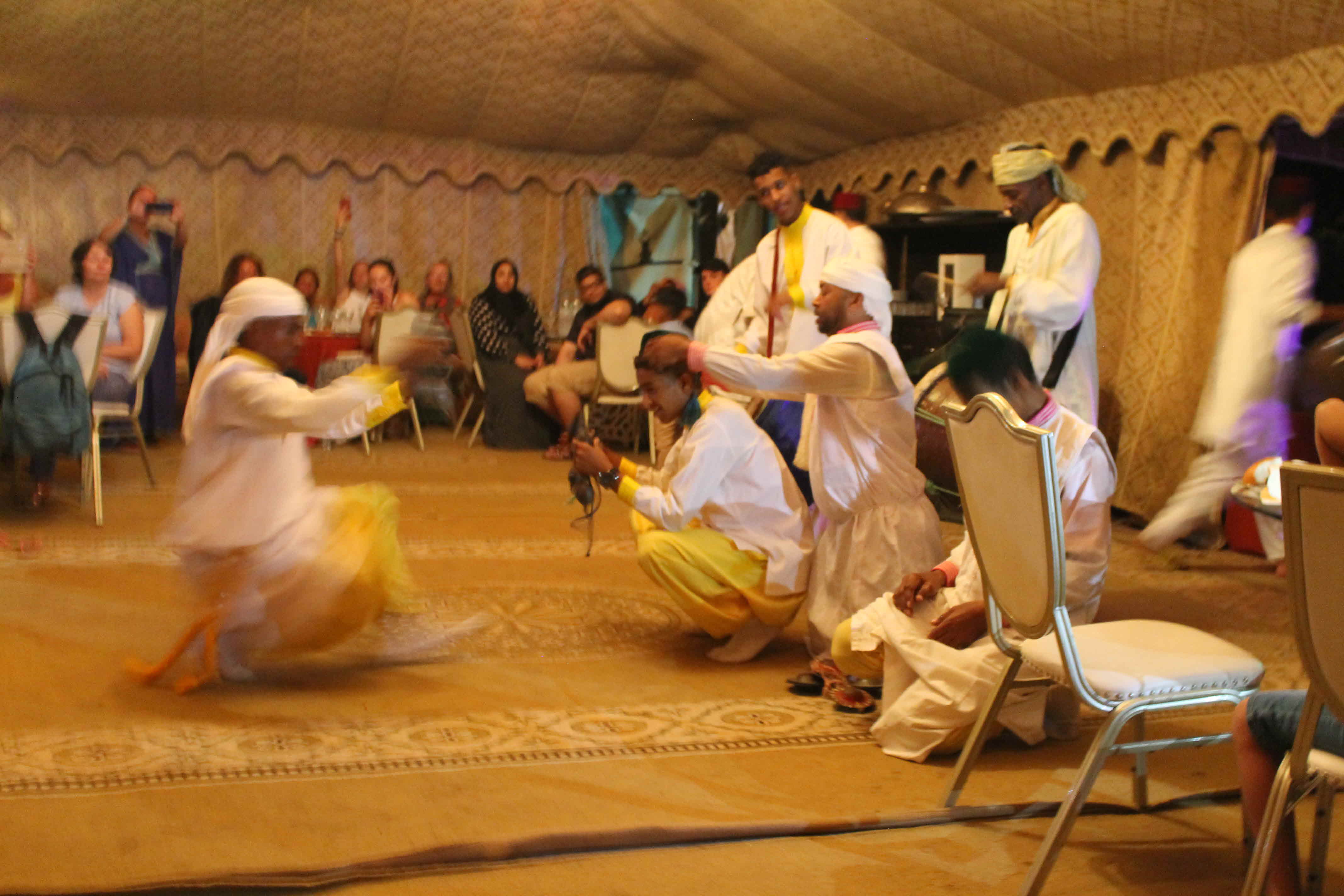
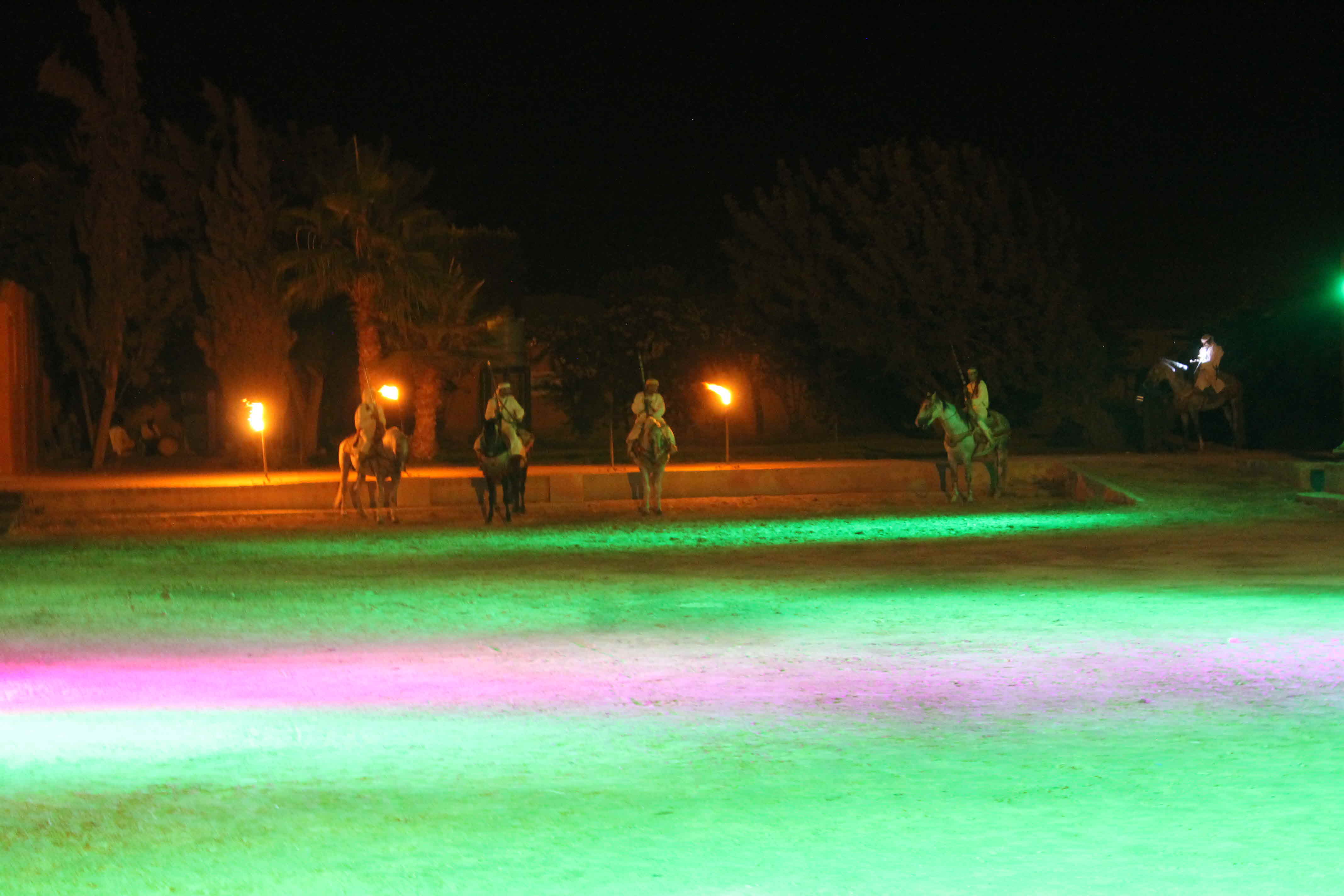
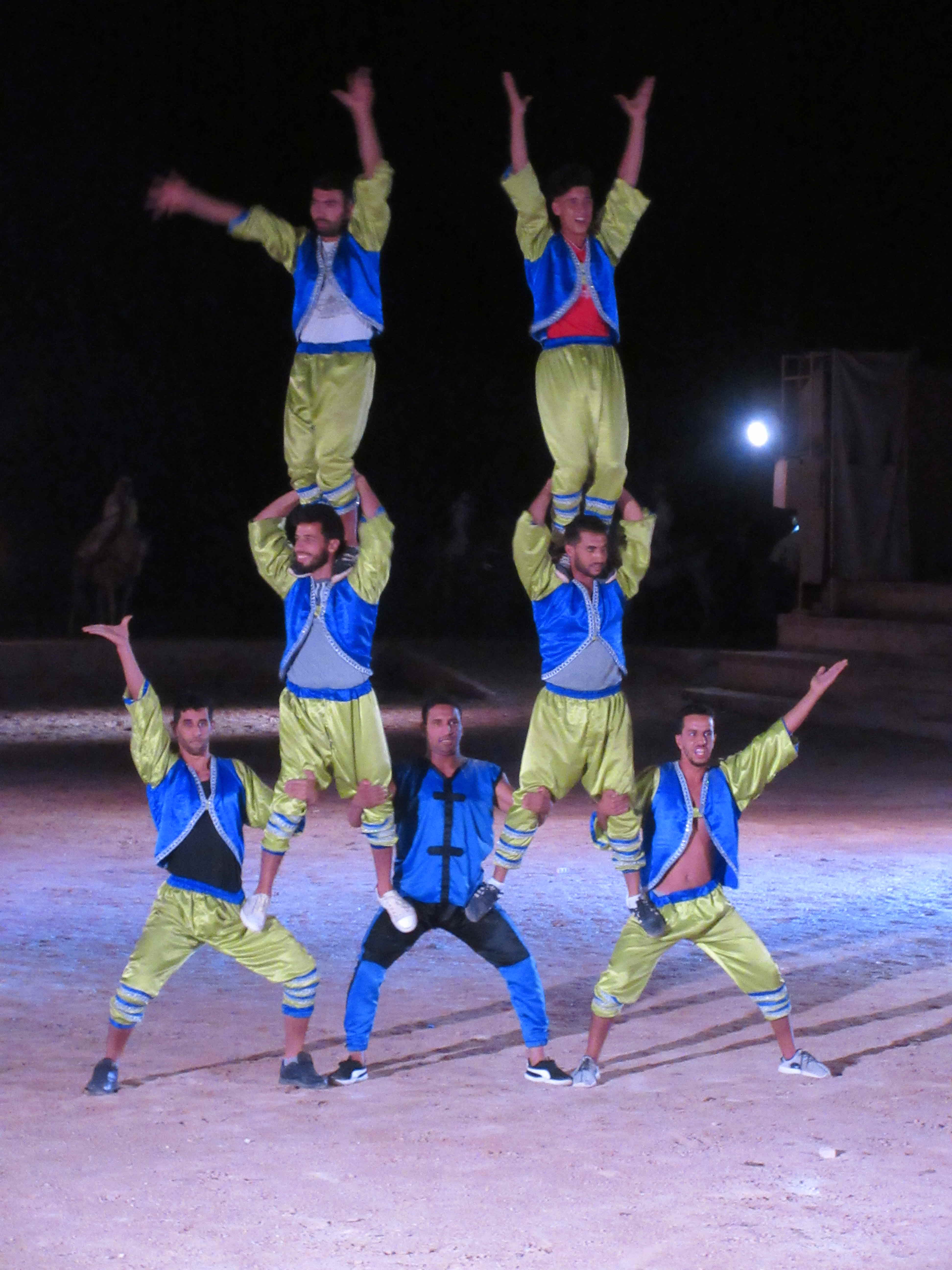
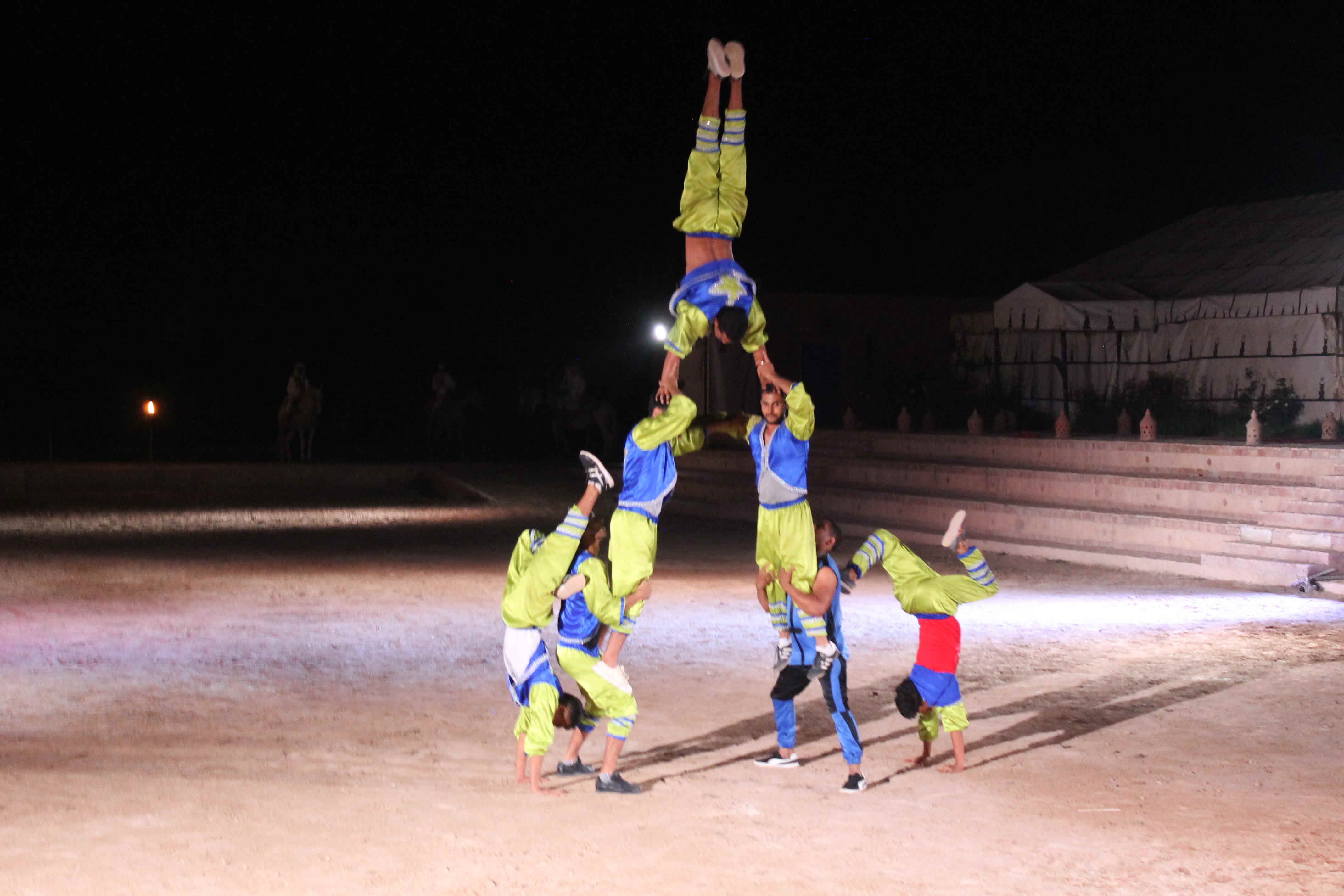
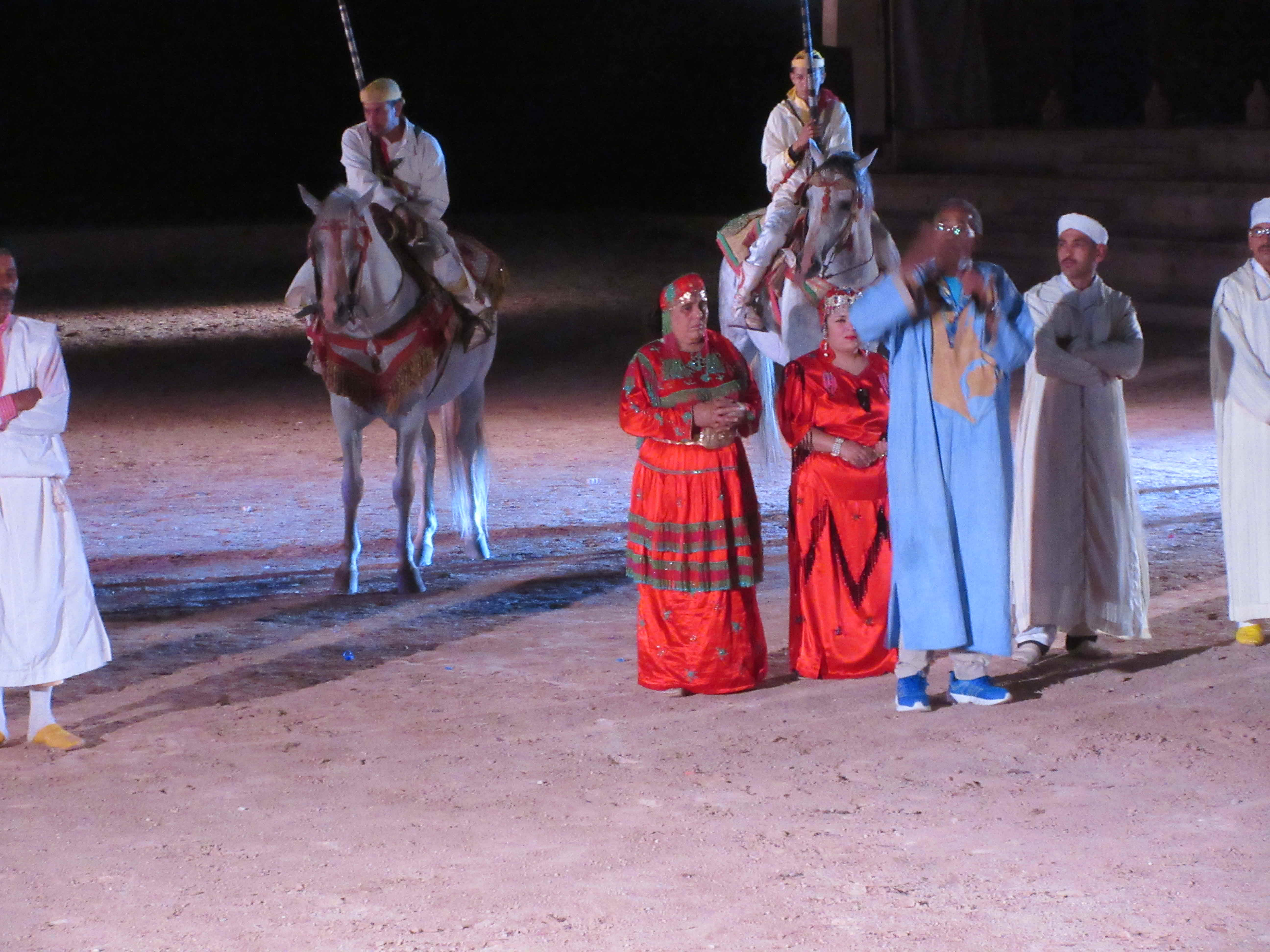
One evening we enjoyed a Fantasia (Berber evening). We were met by Berber horses and escorted to our dining tent by Moroccan dancers. We were greeted with milk and dates and then a taste of bread with choice of olive oil, argan oil, and Amlou (almond butter, honey, argan oil.) A photo shows our evening menu. During the meal we were entertained by various musicians. After the meal we sat around the arena and watched acrobats, fire eaters, belly dancer, and the Fantasia. Fantasia is a traditional exhibition of horsemanship – a type of martial art. “The performance consists of a group of horse riders, all wearing traditional clothes, who charge along a straight path at the same speed so as to form a line, and then at the end of the charge (about two hundred meters) fire into the sky using old muskets or muzzle-loading rifles. The difficulty of the performance is in synchronizing the movement of the horses during acceleration of the charge, and especially in firing the guns simultaneously so that one single shot is heard.” (Wikipedia)
-

- horses greeting us
-

- entrance
-

- welcoming dancers
-

- bread and dips
-

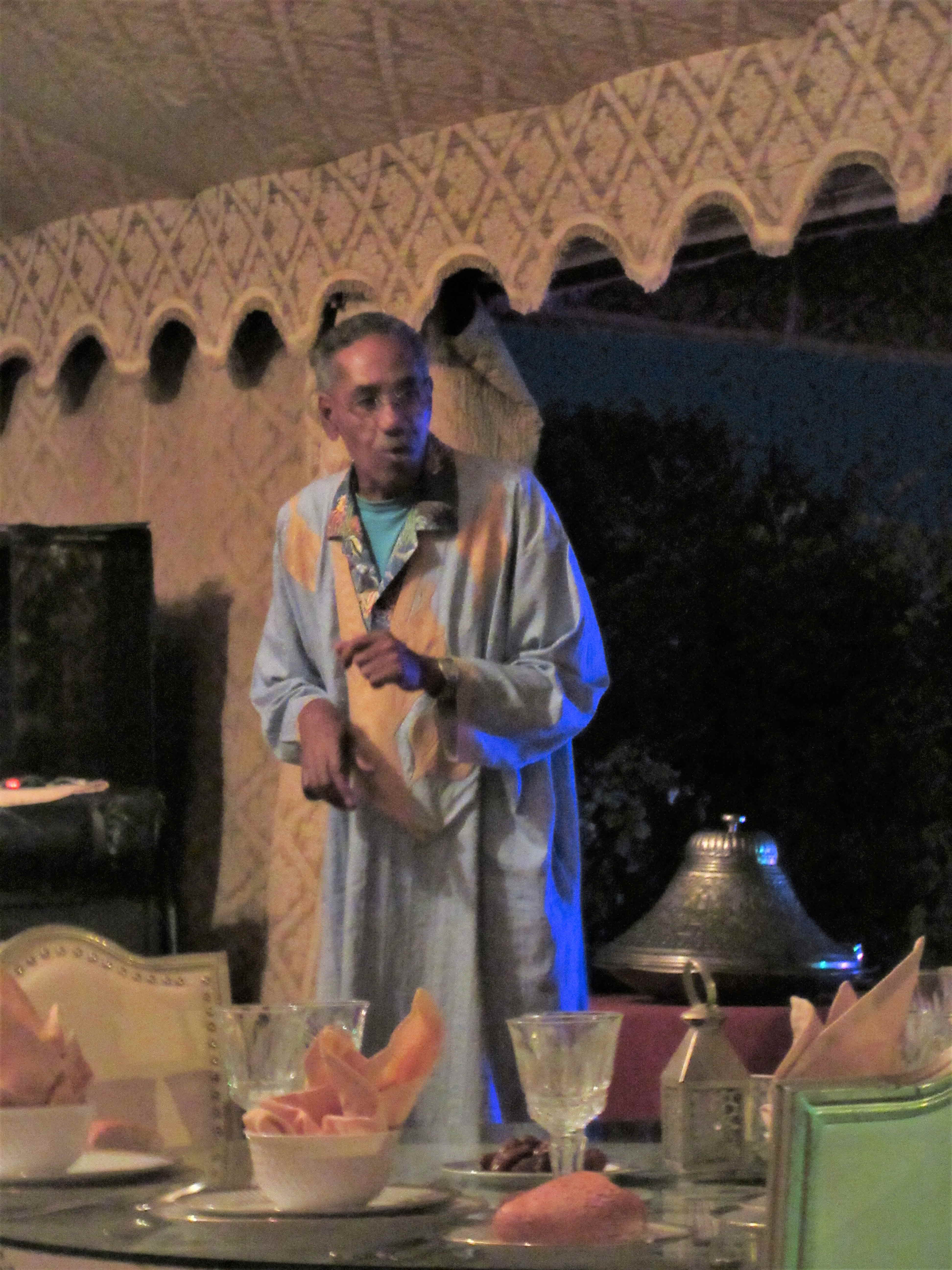
- the emcee
-

- menu
-

- musicians
-

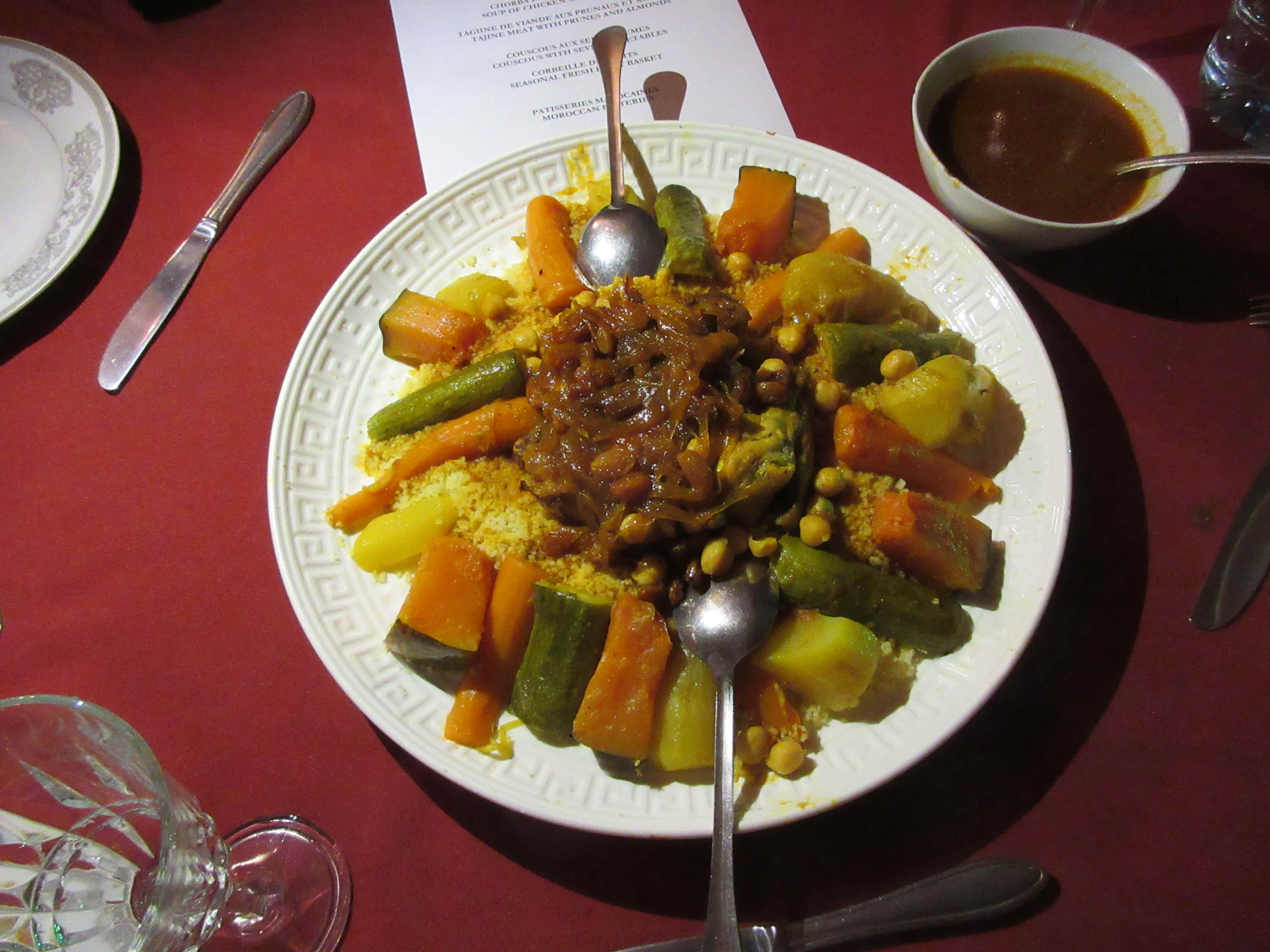
- couscous with vegetables
-

- musician

-

- performers
-

- horses
-

- acrobats
-

- acrobats
-

- fire eaters

-

- some of performers
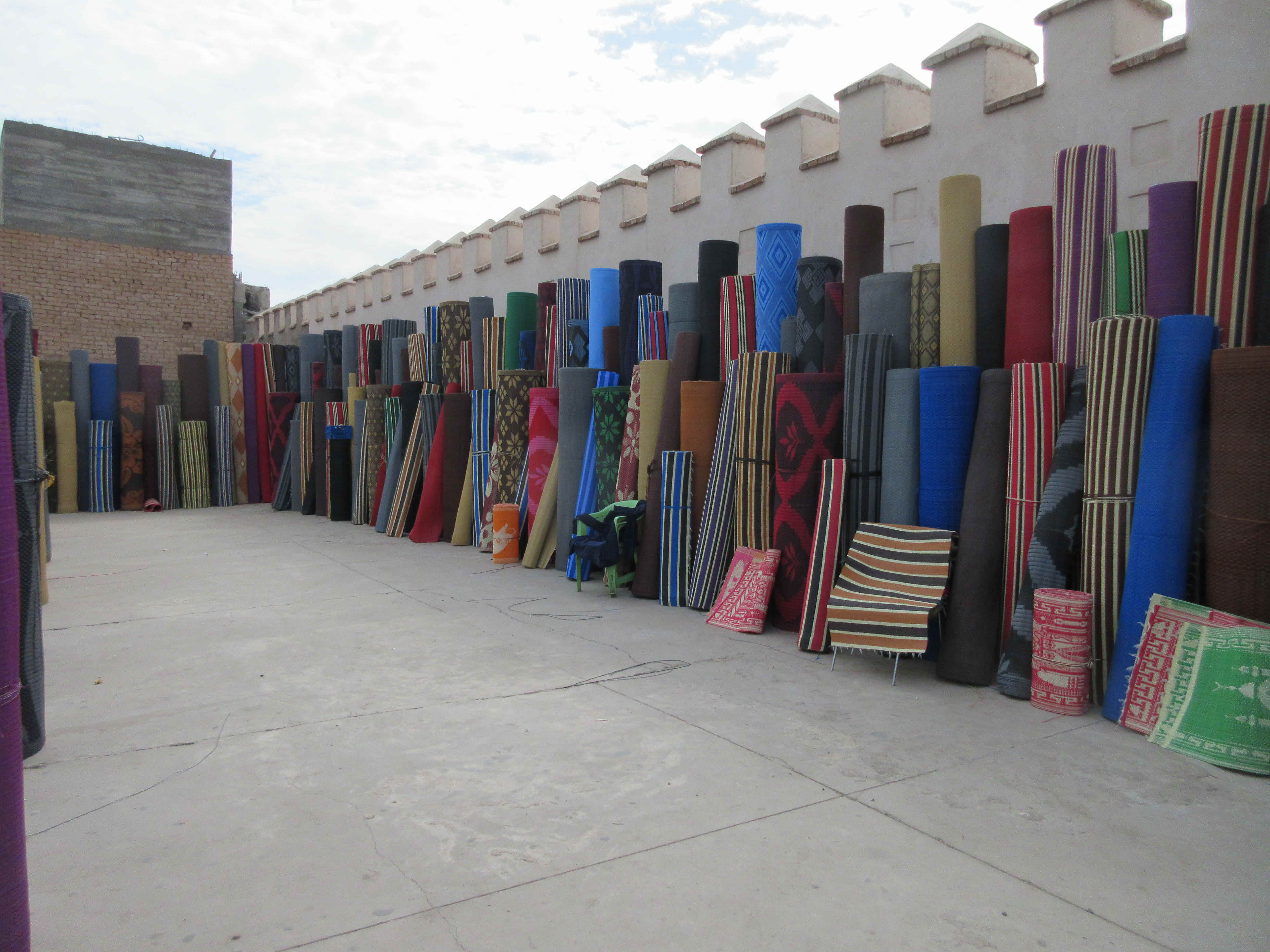
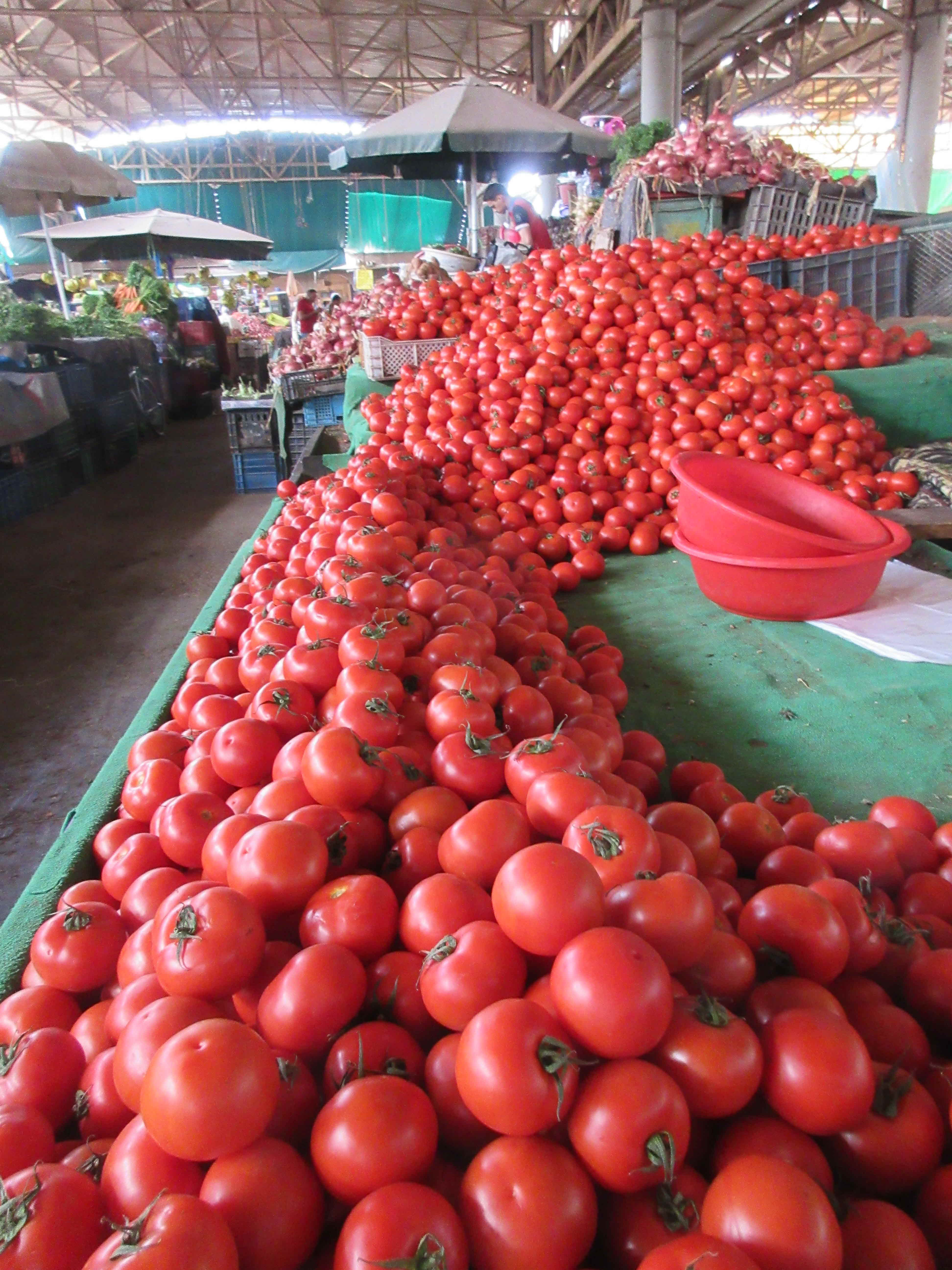
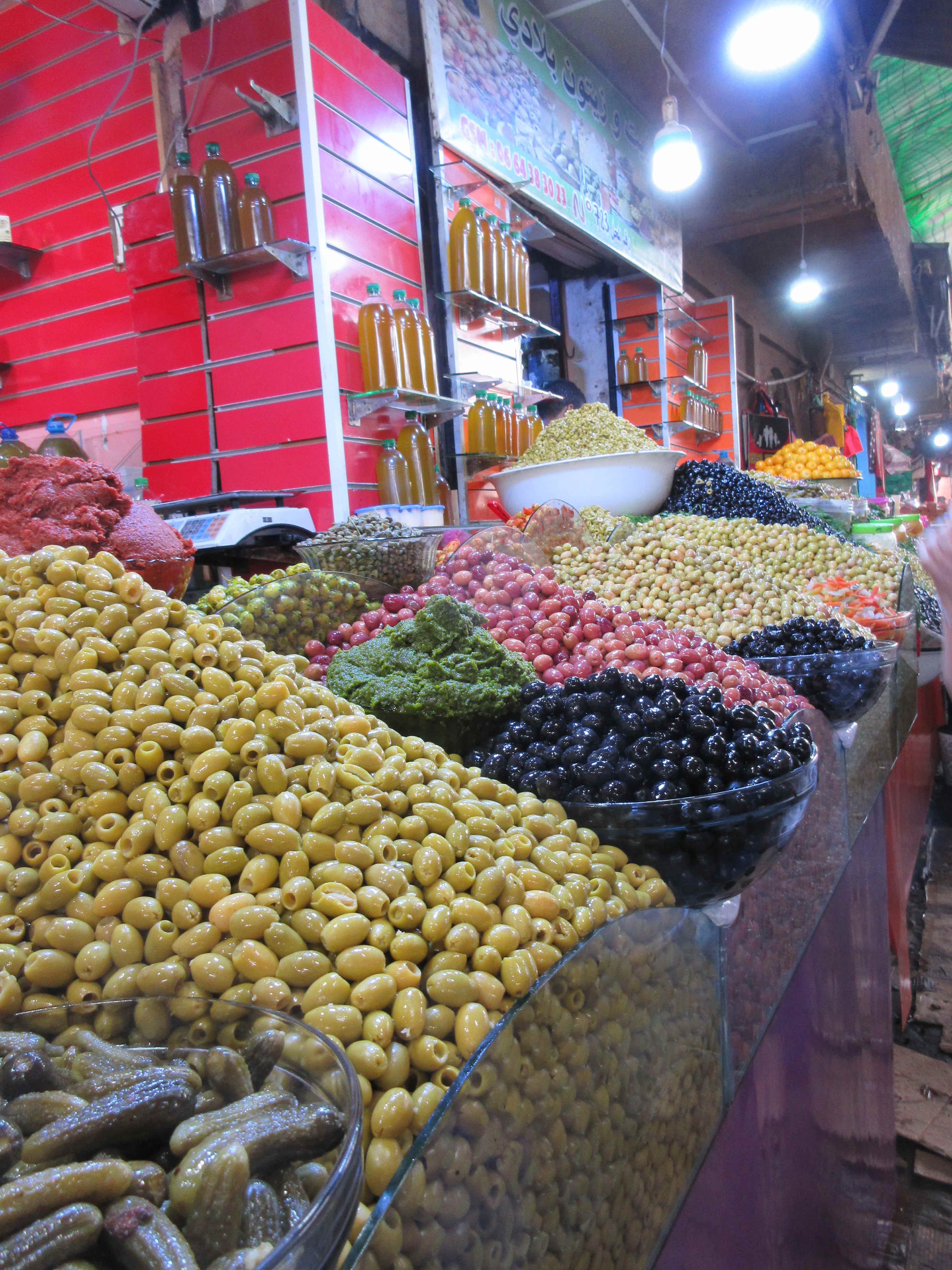
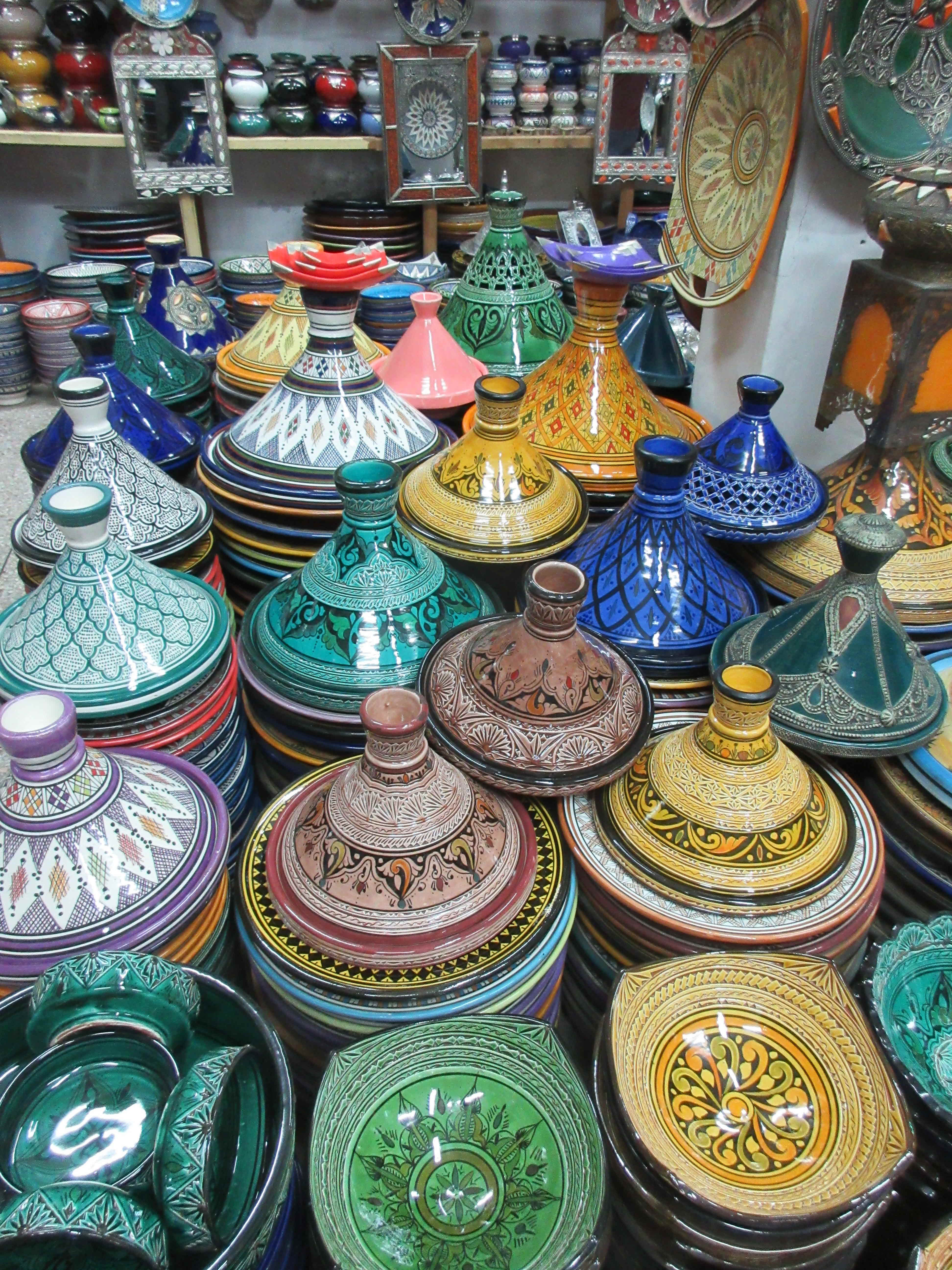
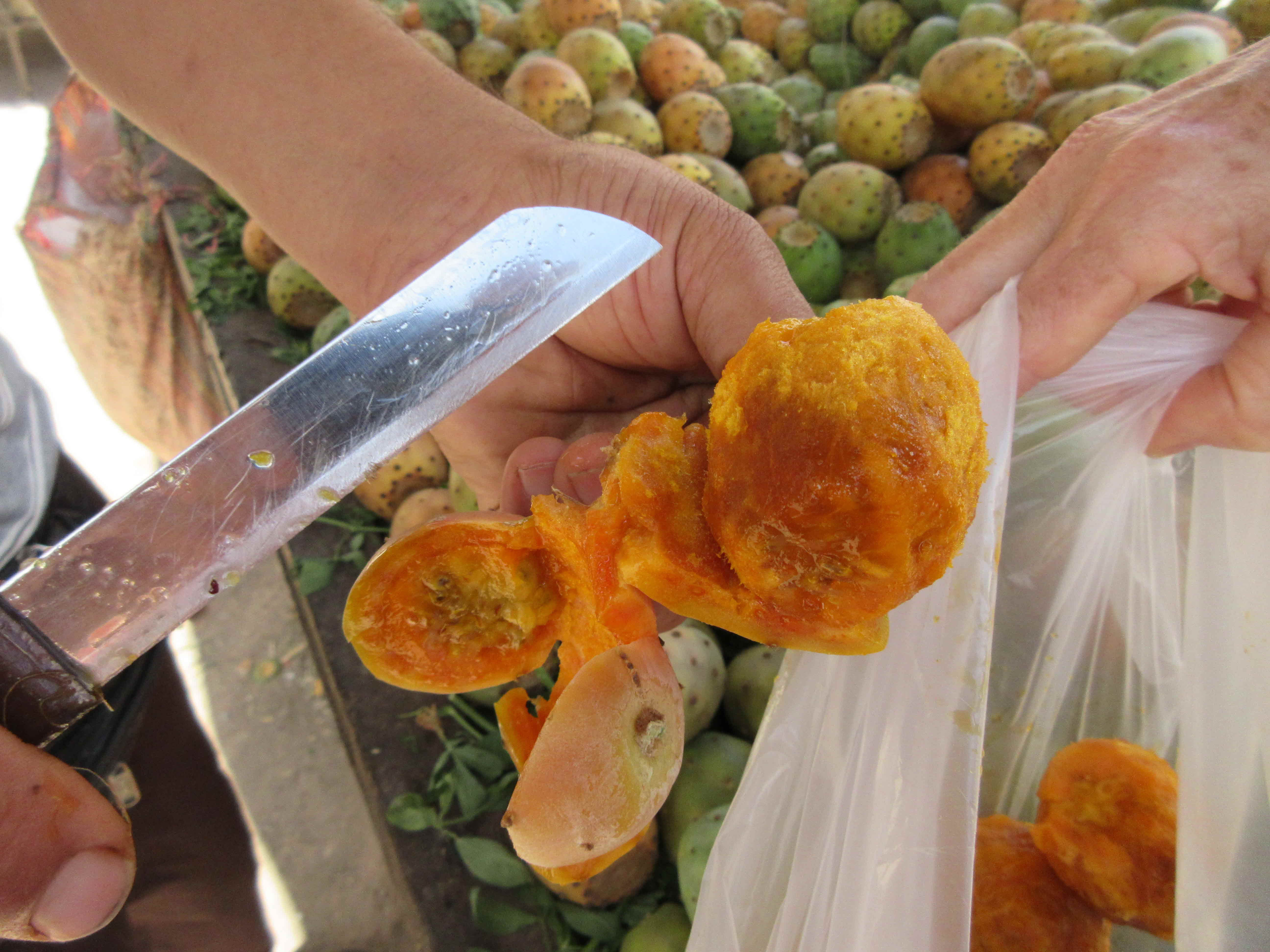
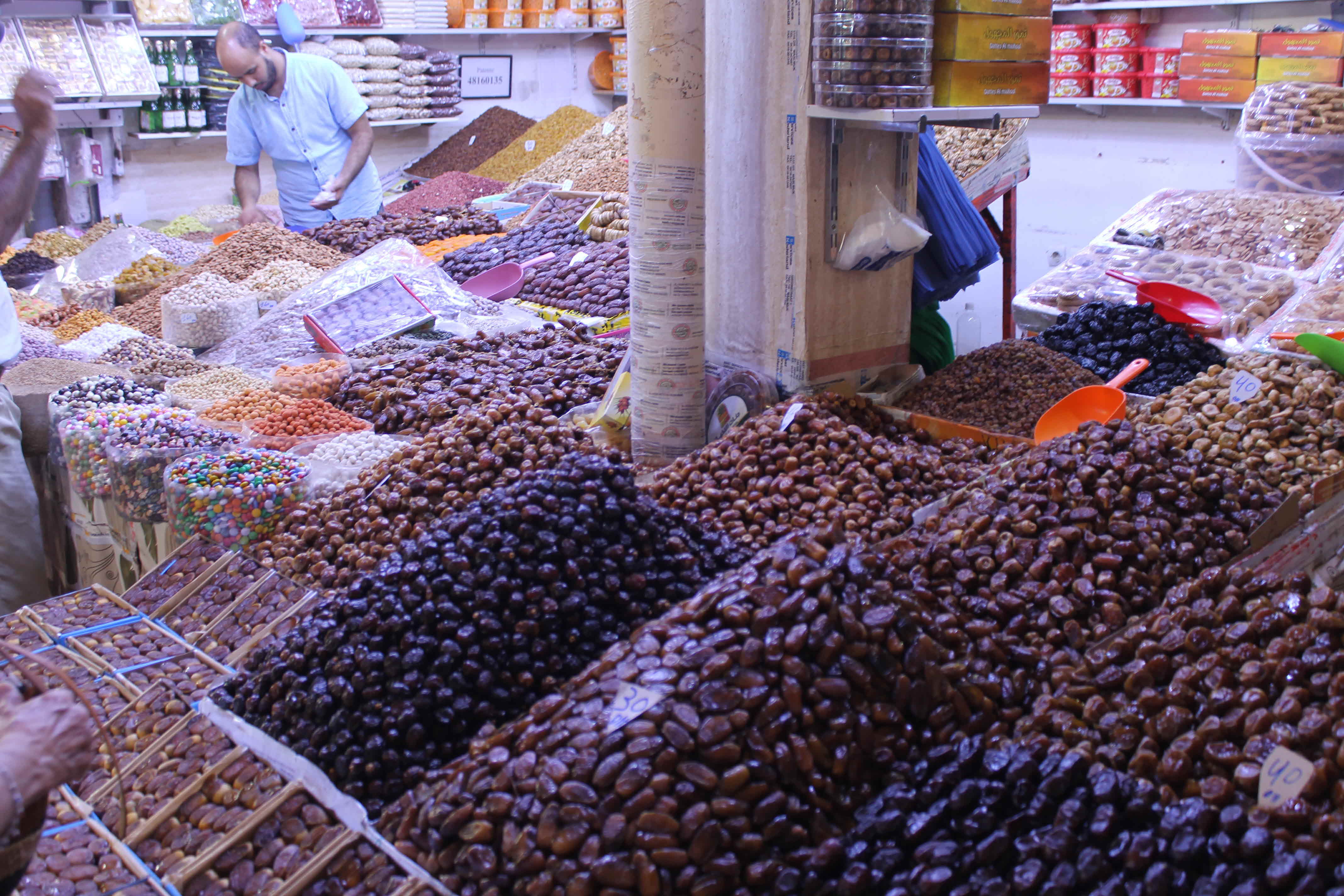
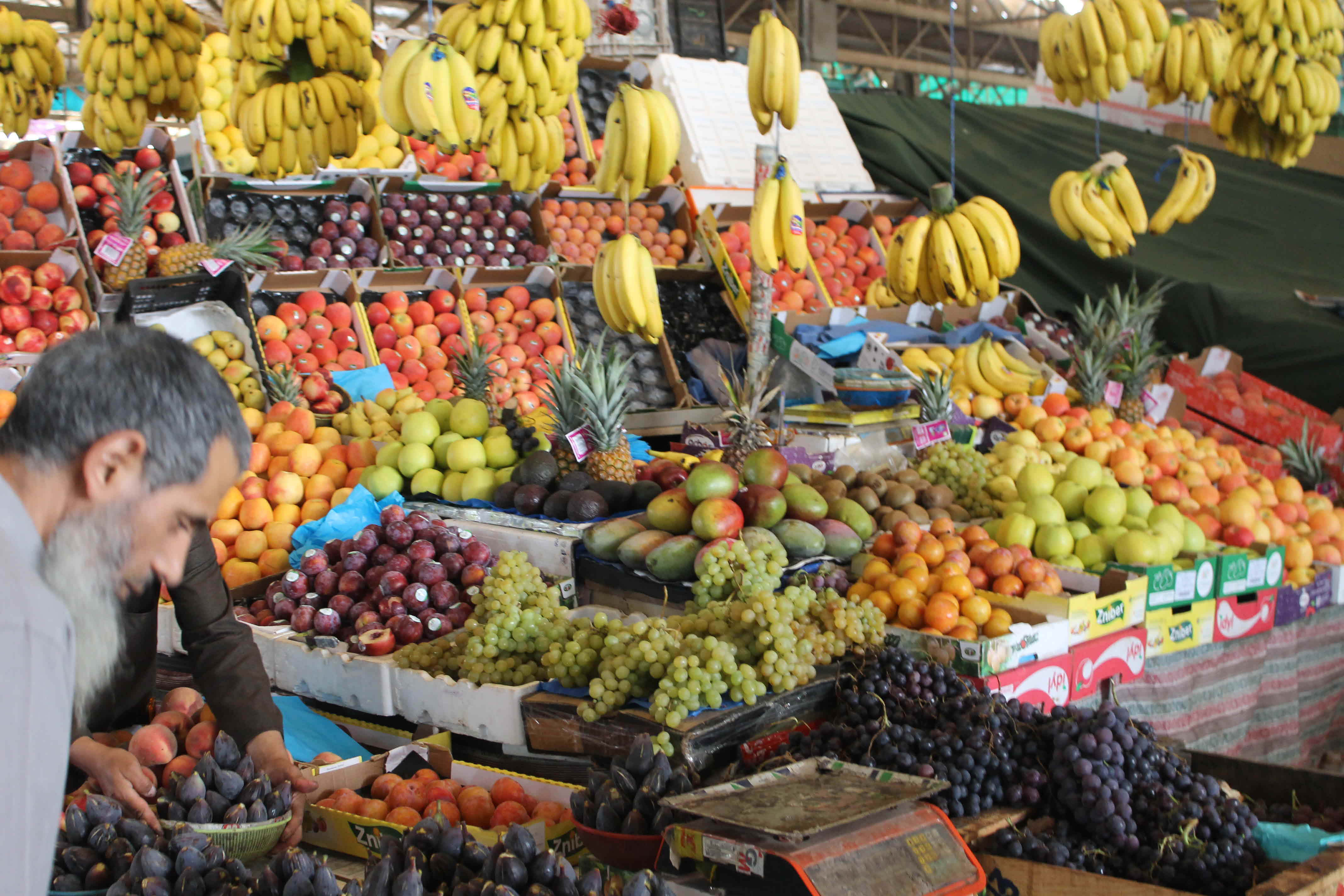
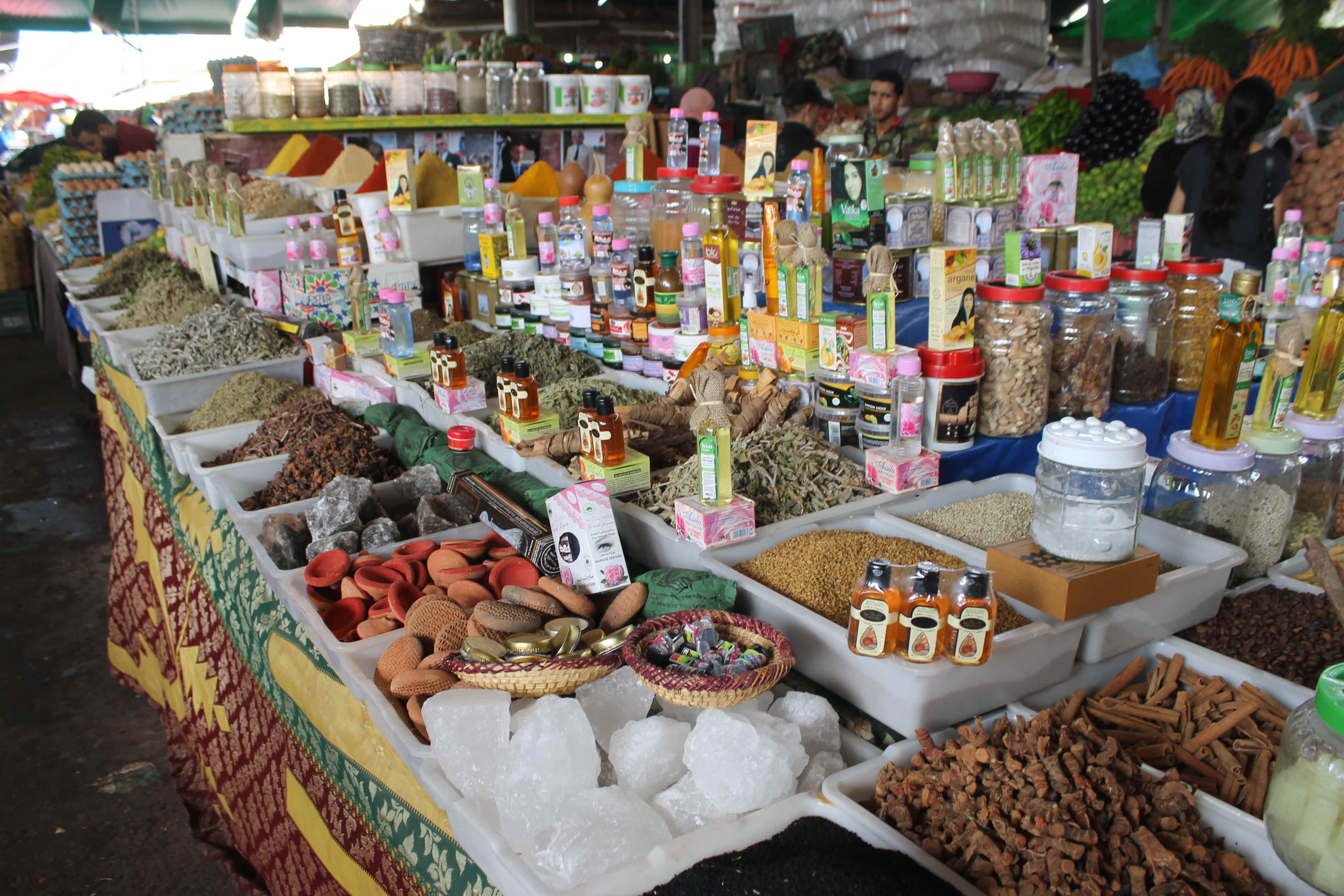
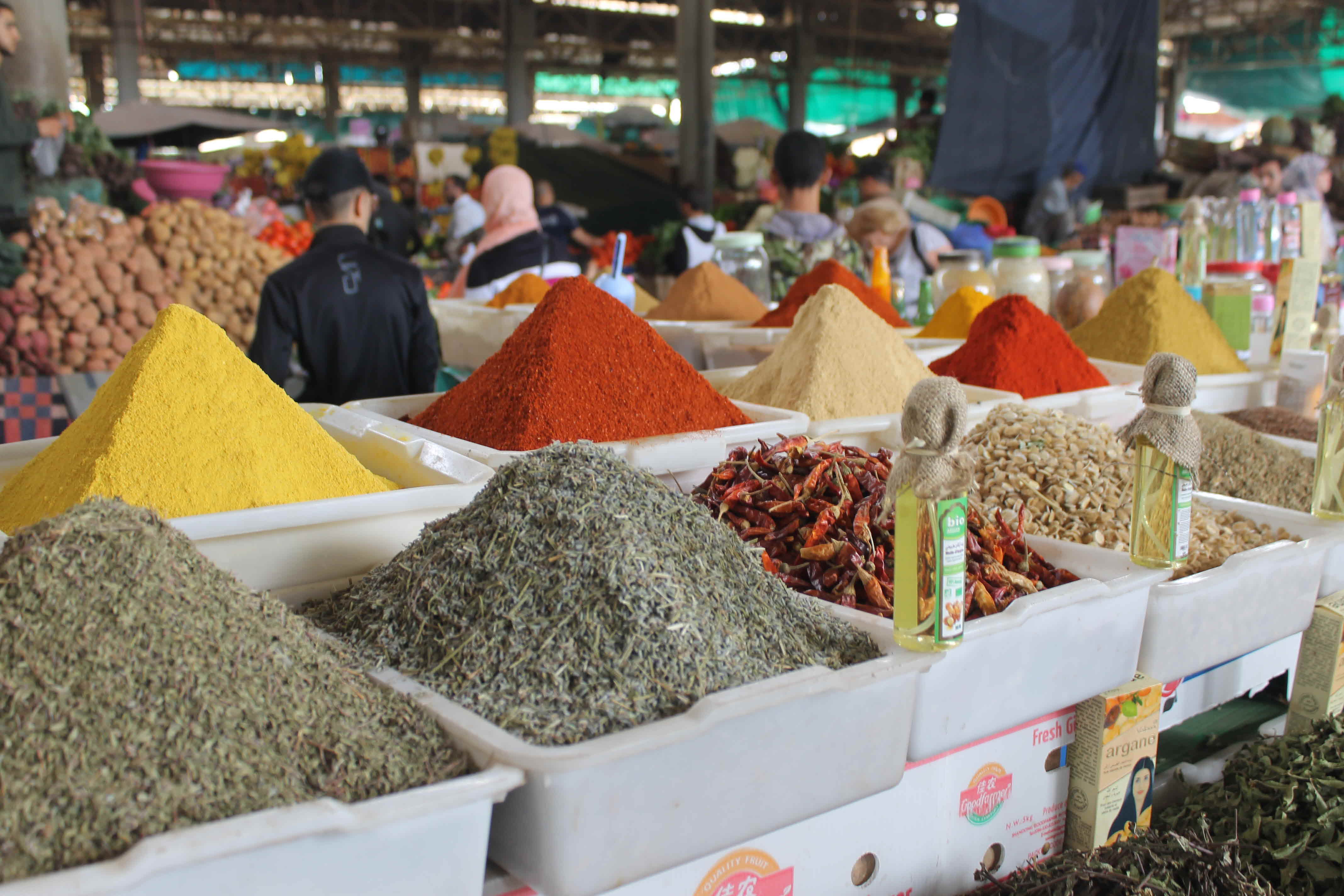
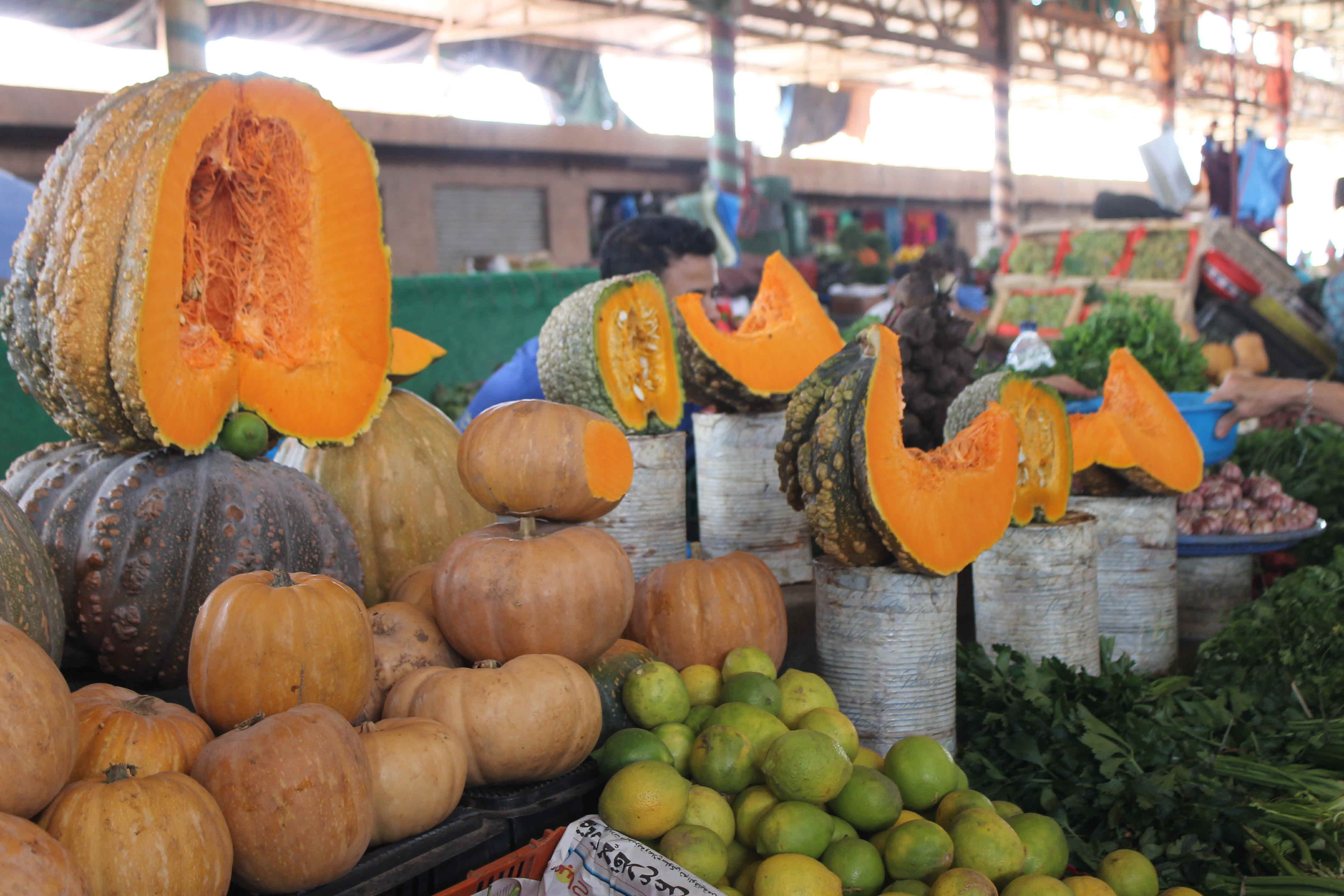
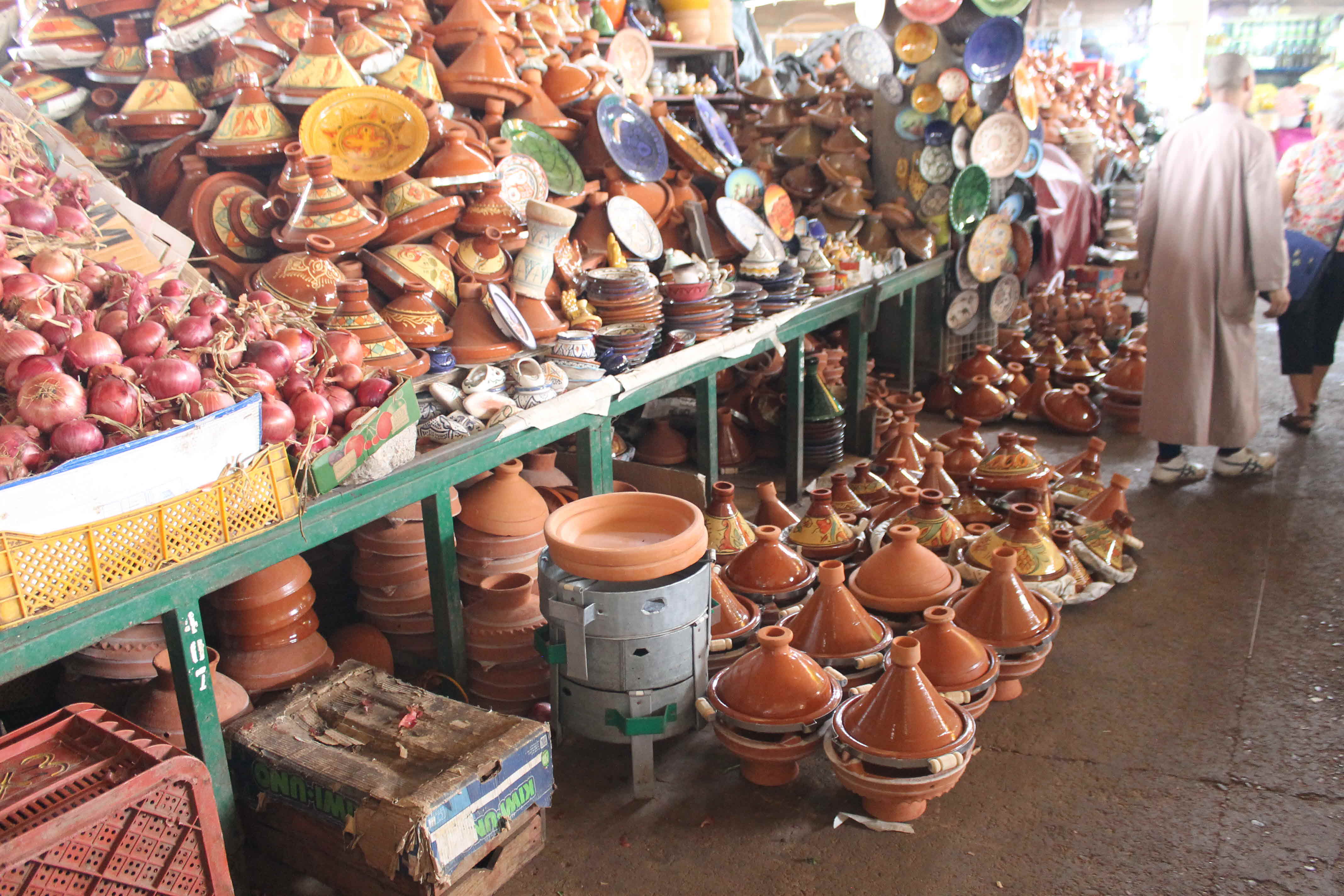
We visited the large Agadir souk (market). It is under roof and very large. As with many markets we have seen in numerous countries, it has EVERYTHING! It is an especially good place to discover the local fruits and vegetables and spices. These markets are always so colorful that it is hard to stop photographing!
-

- carpets at entrance to souk
-

- vegetables

-

- produce

-

- tomatoes!
-

- olives
-

- fish

-

- pottery
-

- prickly pear fruit
-

- dates
-

- fruit
-

- medicinal and cosmetic
-

- herbs and spices
-

- pumpkins
-

- pottery
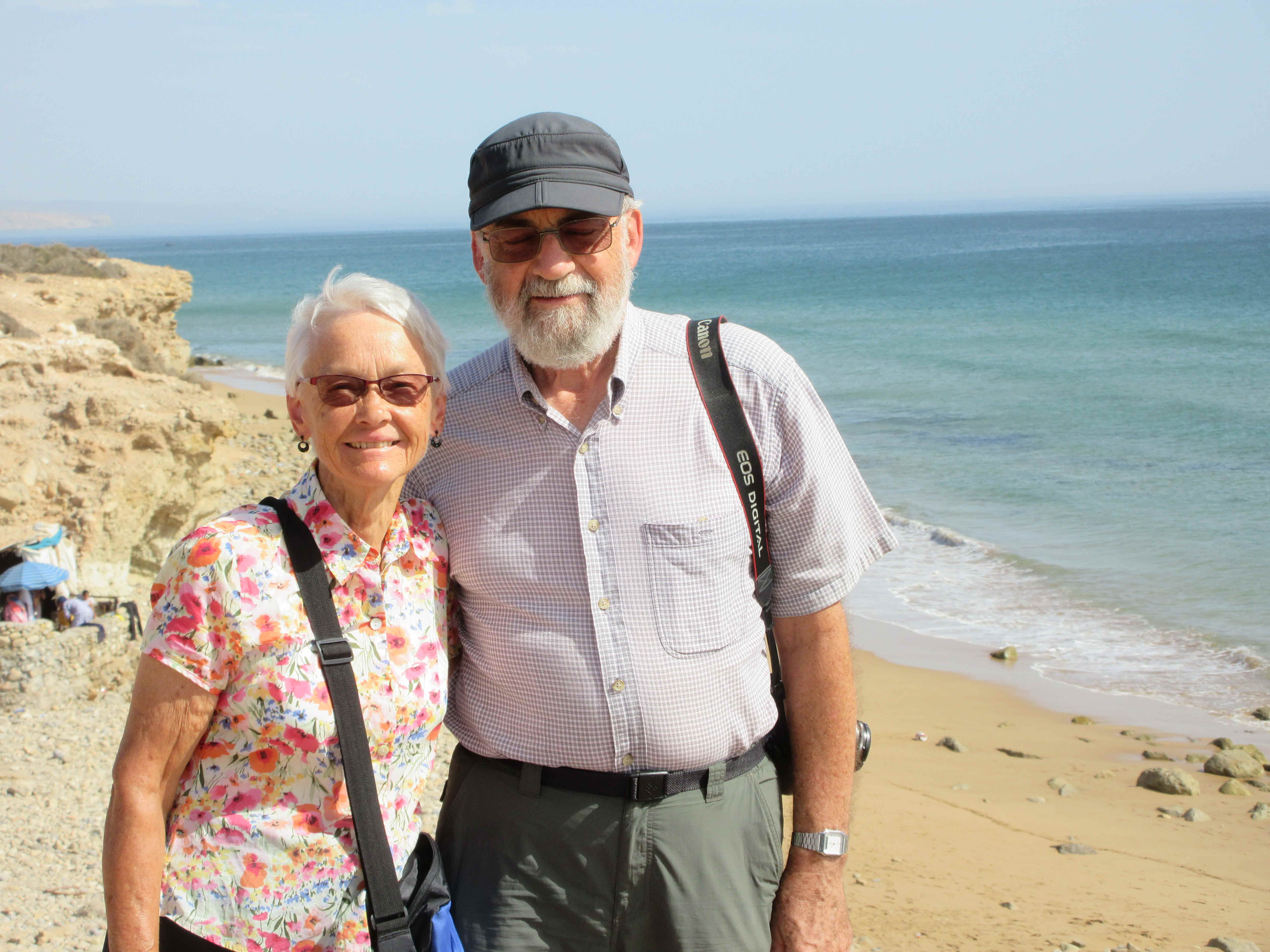
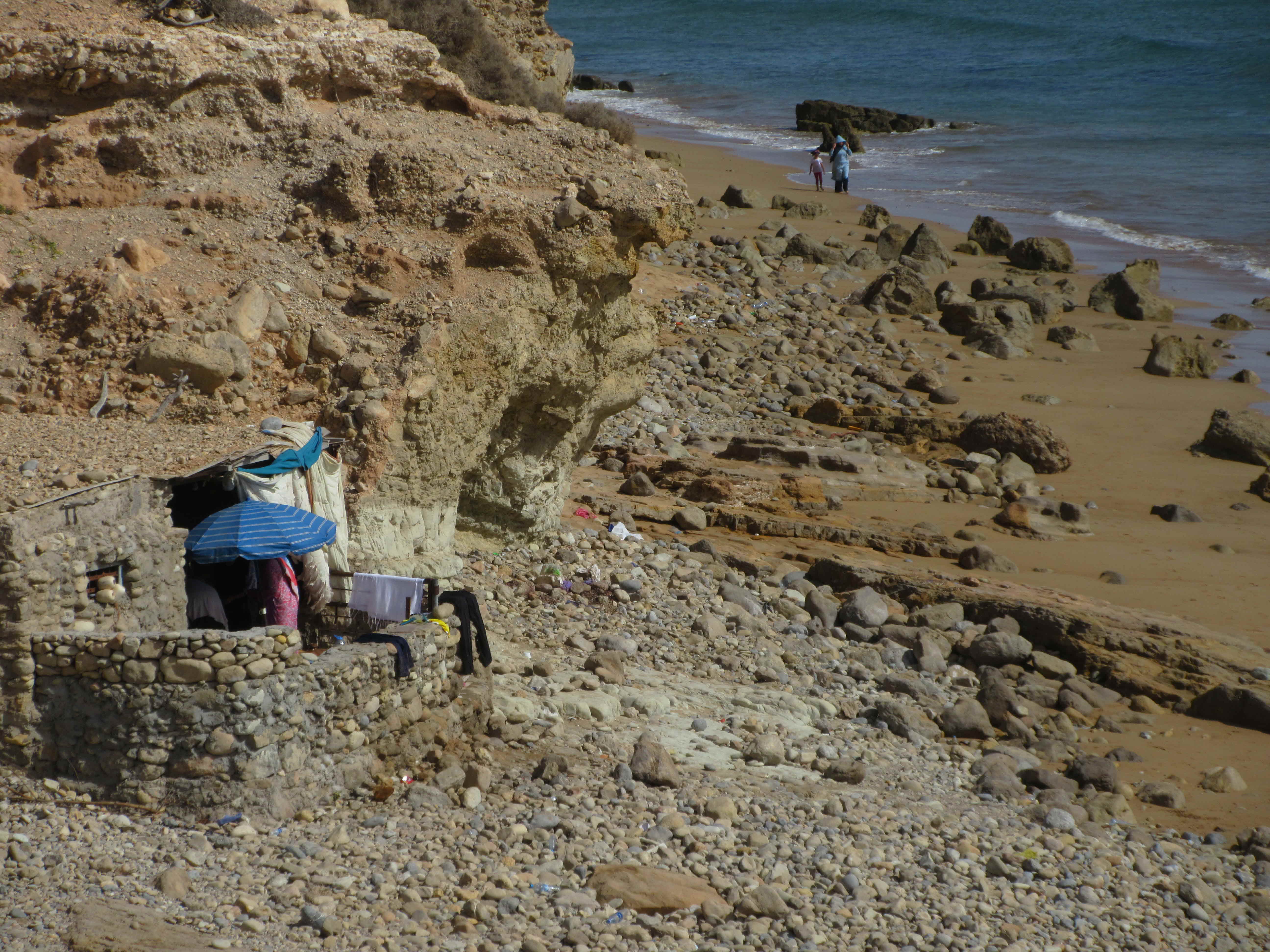
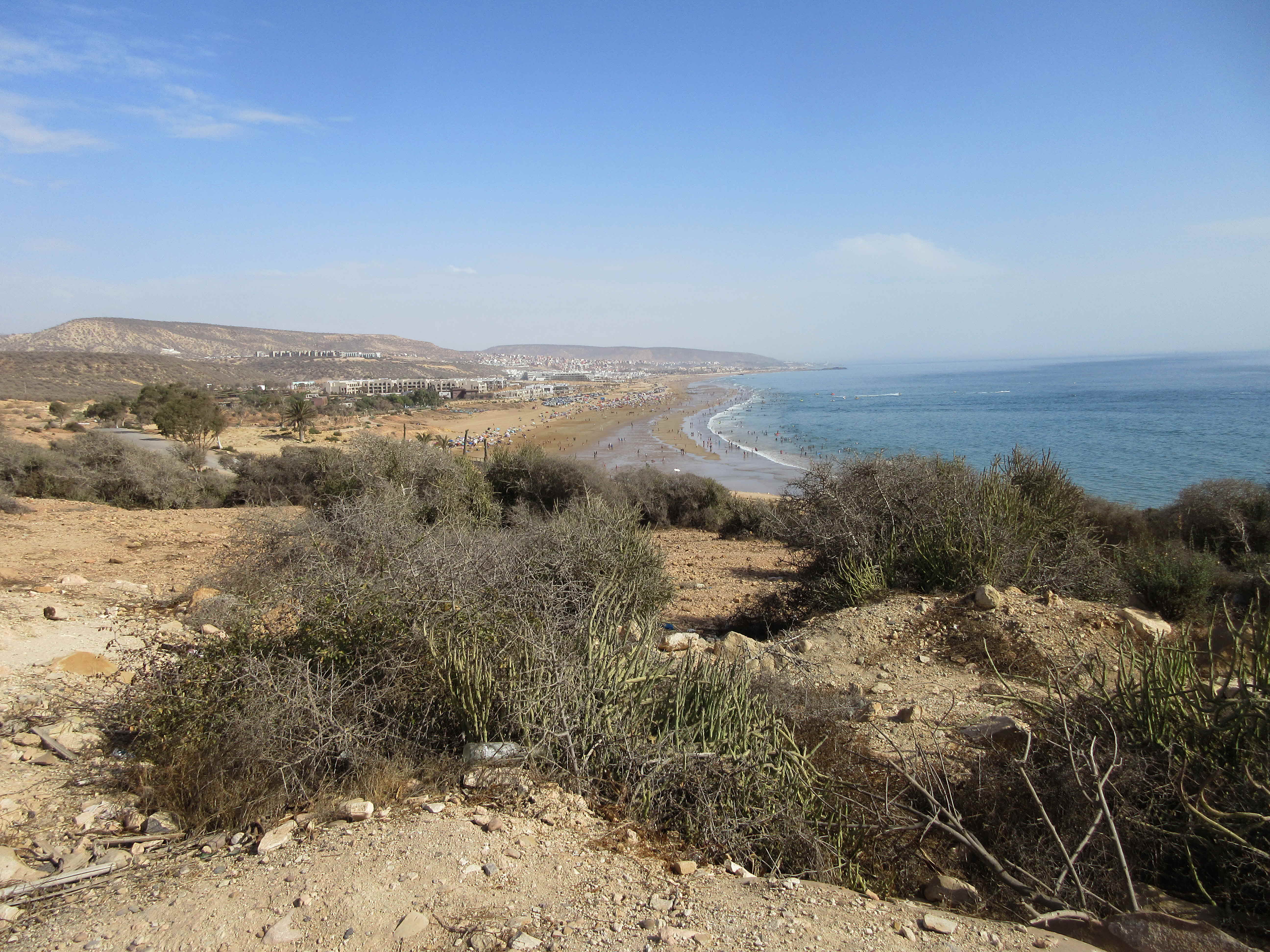
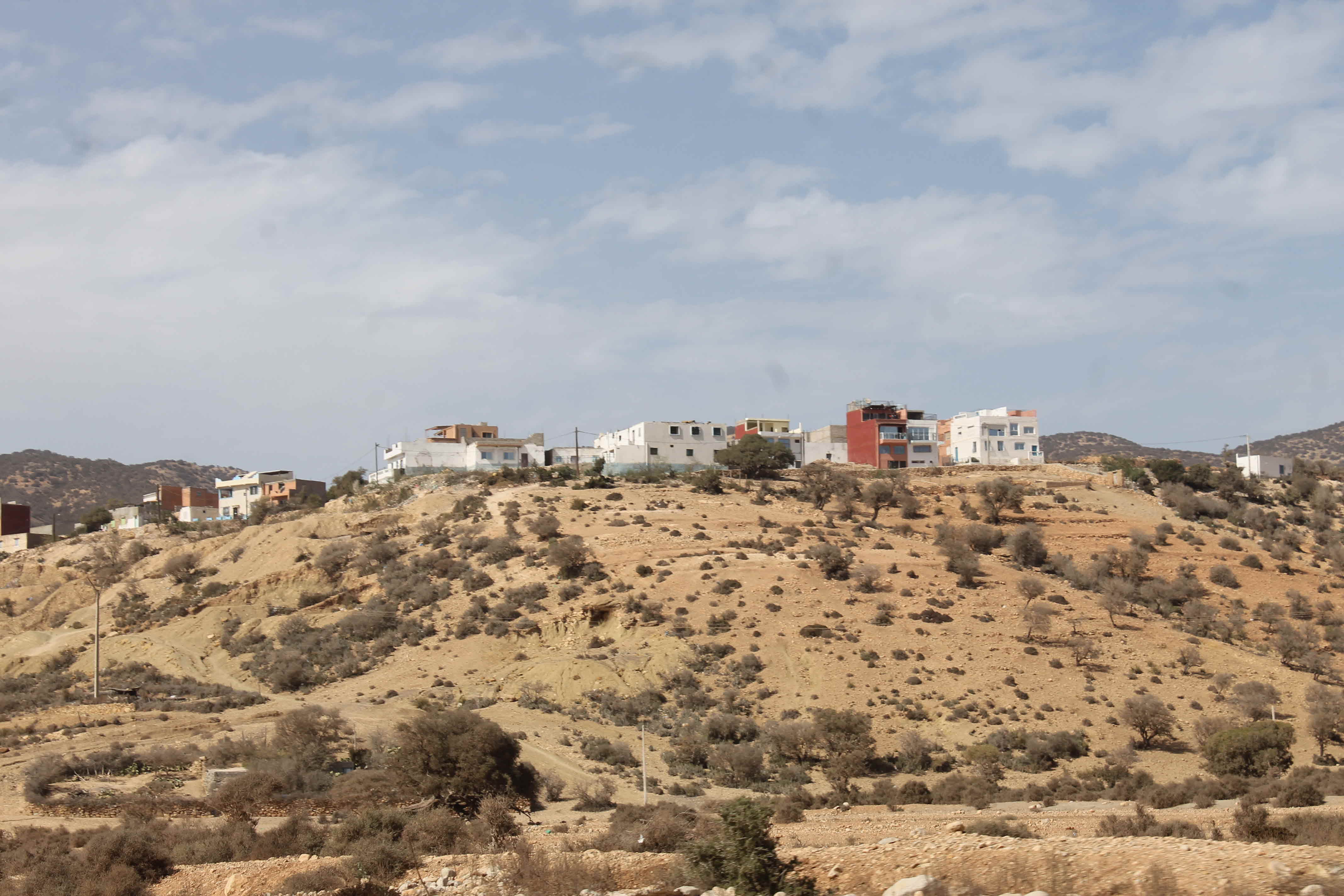
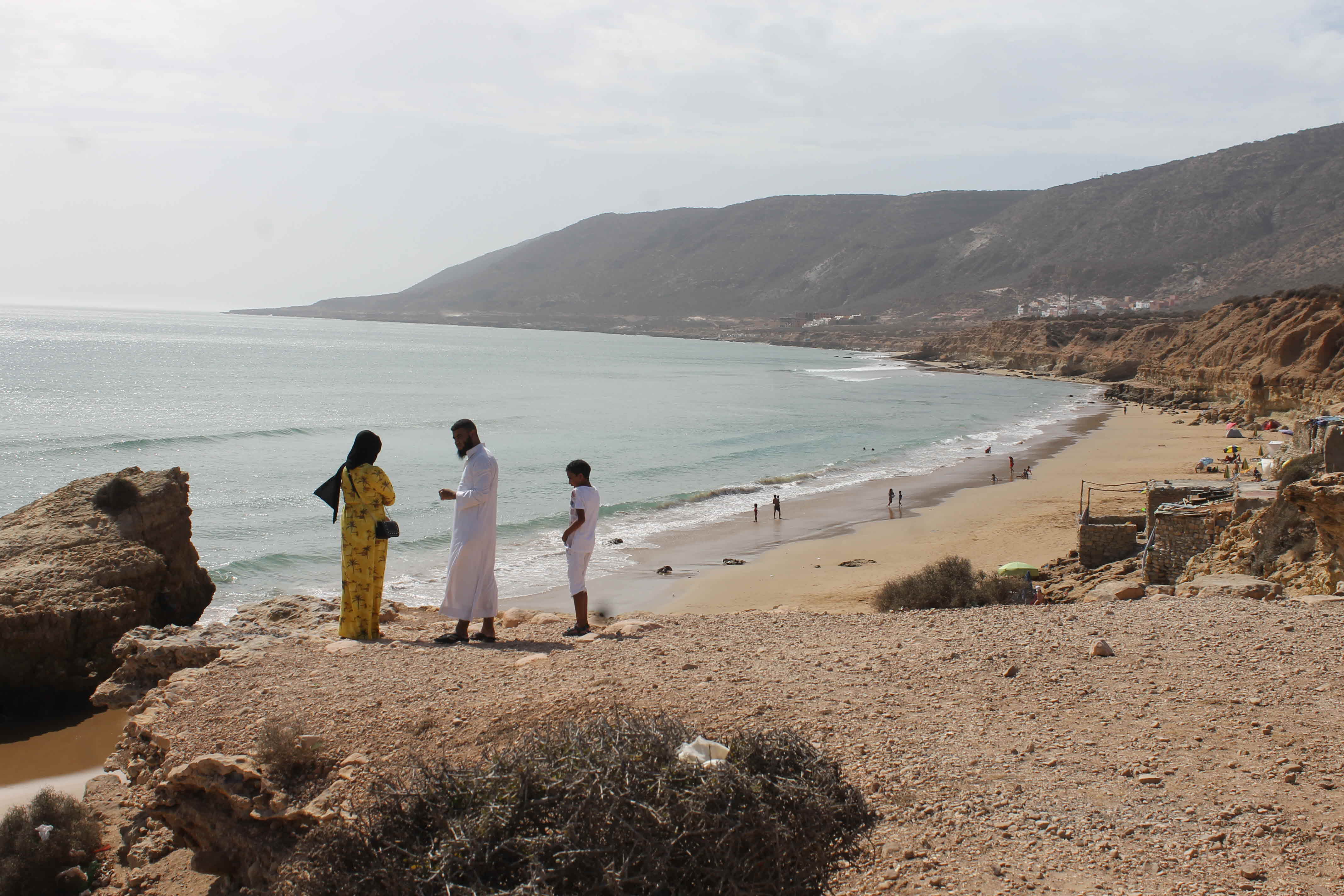
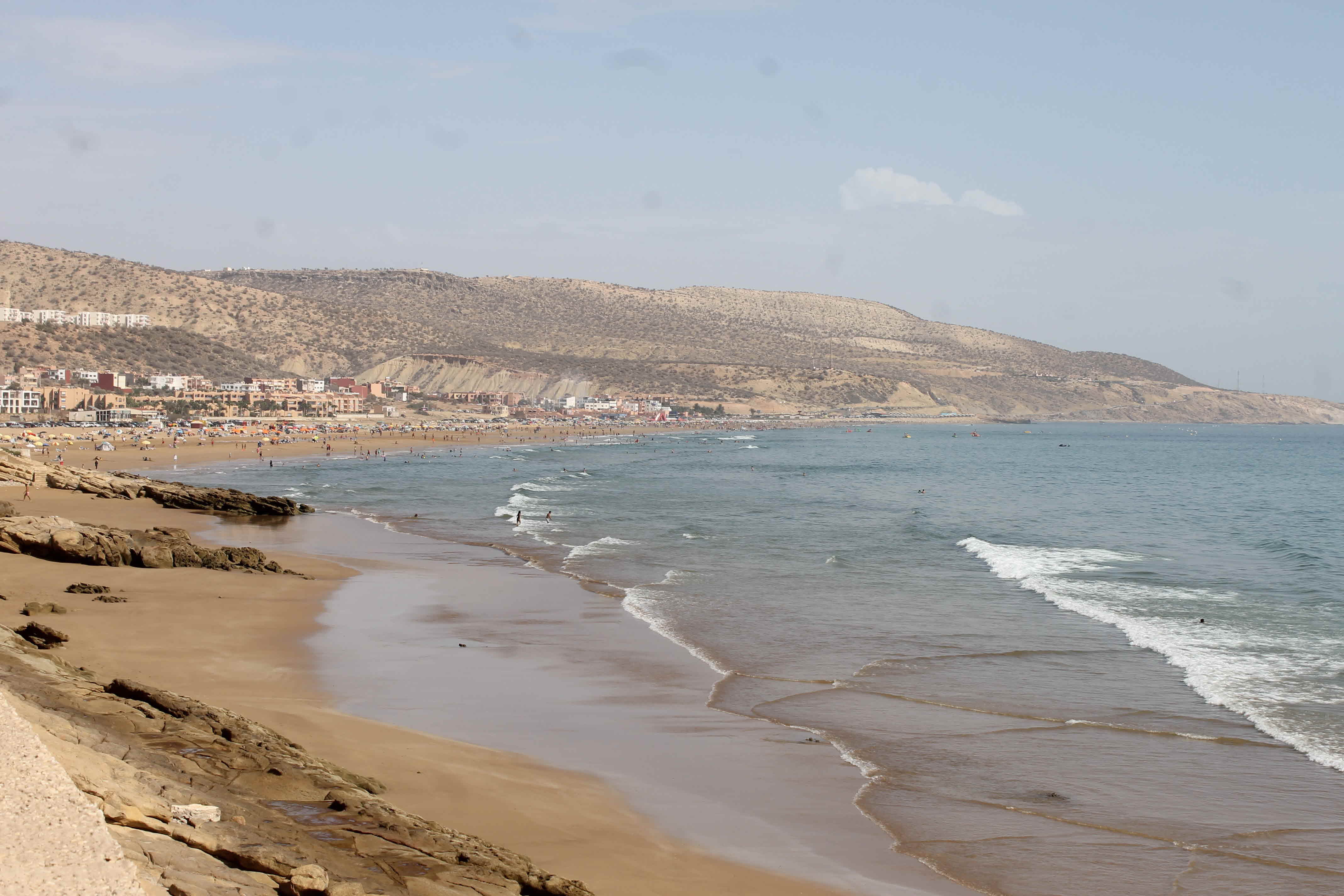
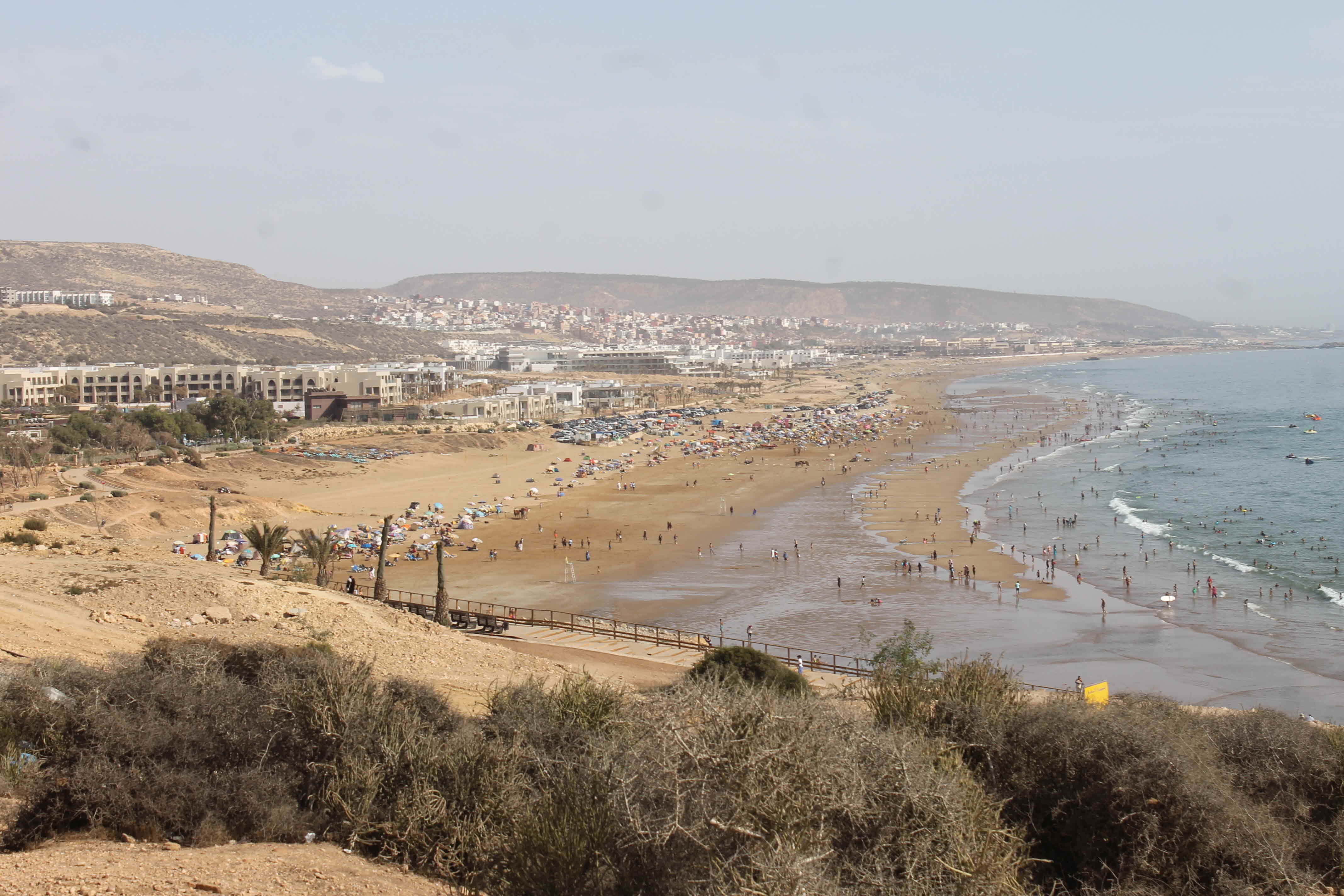
On our final afternoon, we took a short drive north of Agadir along the coast.
-

- enjoying the coast
-

- small cottage built on beach
-

- coast
-

- village

-

- village
-

- coast
-

- coast

-

- coast
-

- coast
-

- Agadir port

-

- entering Agadir
